
24/7 Customer Support

Free returns

Same-day & Next-day Delivery

Quality Guaranteed

Unlock Your Welcome Offers: FREE Delivery | Up to 80% OFF | Free 30-day JoyPlus trial
Download the APP
A stainless steel steamer pot can simplify vegetables, fish, dumplings, seafood and family meals, but product listings often make similar cookware look interchangeable. The differences are usually hidden in the base, tier construction, lid and cleaning instructions.
For UK households, the right choice should suit the number of people you cook for, your hob type and the space available in your kitchen. This guide from the Joybuy Product Recommendation Officer explains what to check before buying and highlights practical options for different cooking habits.
A stainless steel body does not automatically mean induction compatibility. Induction hobs require a suitable magnetic base, so check the product specification for an induction-compatible steamer or a magnetic-conductive composite base.
This is also important if you use more than one heat source. A pot described as suitable for induction, gas and ceramic hobs offers more flexibility when moving between appliances or replacing a cooker.
A wide opening is helpful for plates, fish and larger vegetables, but the overall capacity depends on the depth and tier arrangement. A 24cm pot may suit three to five people, while a 30cm multi-tier set may be more suitable for larger family meals or entertaining.
Check whether the listed capacity refers to the usable cooking area or simply the total volume of the base pot. Also consider cupboard height: stacked tiers require more vertical storage than a single steaming insert.
Steam can cause burns quickly, particularly when removing a lid or lifting a hot tier. Look for stable handles, heat-resistant grips and a lid that sits securely. A steamer pot with lid should allow steam to circulate while helping you monitor cooking progress.
Cleaning claims also need careful reading. Some stainless steel cookware is dishwasher-safe, while other products specifically recommend hand washing. Silicone handles, ceramic coatings and glass lids may have different care requirements from the stainless steel body.
304 stainless steel is widely used in food-contact cookware because it is corrosion-resistant and suitable for high-temperature cooking when used as directed. However, the grade alone does not tell you everything. Check the full material description, including the base, handles, lid and any external coating.
An uncoated or sanded stainless steel interior can be useful for buyers who want to avoid a chemical non-stick coating inside the cooking area. Stainless steel can still develop water spots or rainbow colouring after overheating; these marks are generally managed with suitable cleaning rather than abrasive scouring.
A thickened multi-layer or composite magnetic base can help distribute heat across the bottom and support use on induction hobs. For a versatile stainless steel cooking pot, confirm compatibility with your specific hob, especially if you use ceramic, halogen or electric cooking surfaces.
Do not rely solely on a product photograph. The written specification should identify the supported heat sources. Use moderate heat for steaming, keep flames within the base area and place the pot on a stable, level ring.
A multi-tier steamer pot allows different foods to cook at the same time, but tiers should fit securely and leave enough room for steam movement. A reversible or detachable design can be practical when you need the base as a soup, noodle or boiling pot.
For a family-sized steamer, consider:
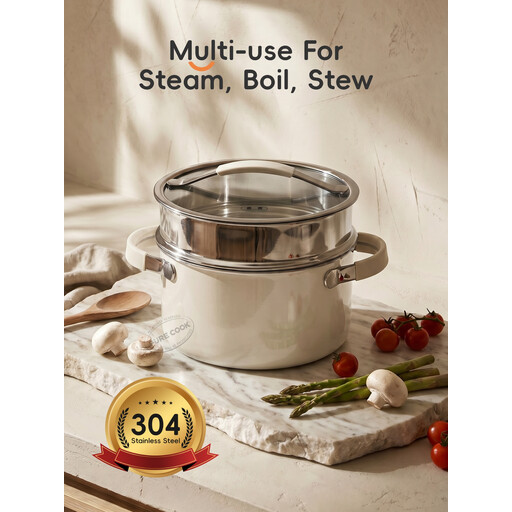
Why This Fits Their Persona: A compact option for smaller households wanting one pot for steaming, boiling, soup and noodles across induction, gas and ceramic hobs.
The specification states a 24cm diameter, 5.64-quart capacity and two-tier detachable steaming design, rather than relying only on a vague “large” label.
304 stainless steel interior, tempered glass lid, silicone heat-insulated handles and a magnetic-conductive composite base.
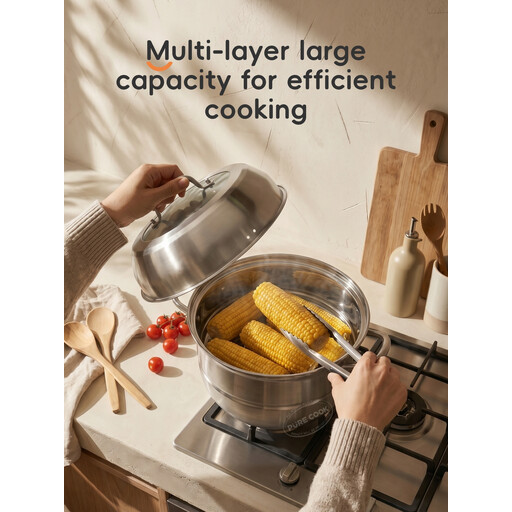
Why This Fits Their Persona: Suitable for households that want several configurations for steaming, soups, porridge, hot pot and larger shared meals.
The set lists its components, 30cm diameter and six-to-eight-person serving guidance, making the storage and capacity decision clearer.
304 stainless steel construction, tempered glass lid, multi-layer magnetic base and dishwasher-safe cleaning guidance.
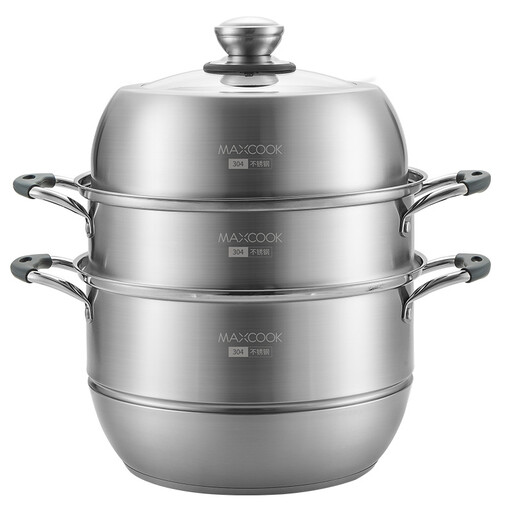
Why This Fits Their Persona: A practical match for frequent batch cooking, larger portions and meals where several ingredients need steaming at once.
The product states that it is hand-wash only, so buyers are less likely to assume it is a dishwasher-safe steamer pot.
Three-tier stackable structure, 304 stainless steel, composite base and compatibility with induction, gas, electric and ceramic hobs.
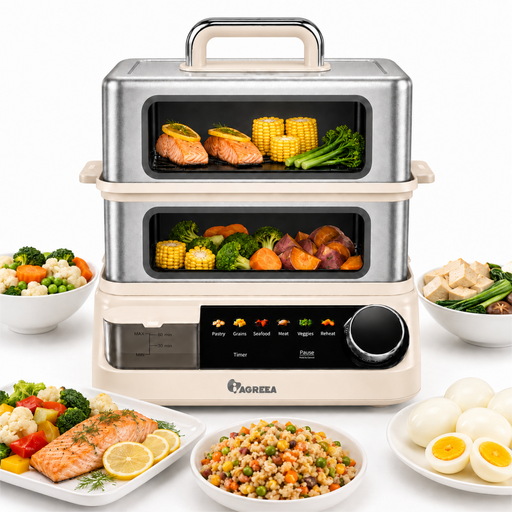
Why This Fits Their Persona: Designed for cooks who need two steaming levels, preset programmes and a separate water tank without occupying a hob ring.
Its 14L capacity, two removable trays and 2.5L external tank are specified, helping distinguish usable steaming space from a small single-basket appliance.
2000W power rating, six presets, timer and viewing windows across both tiers.
Before first use, wash cookware with mild detergent and a soft sponge. Some stainless steel products may retain polishing residue from manufacturing, so follow the supplied care instructions. Avoid steel wool, abrasive powders and metal utensils where the product has a coated exterior.
Use oven gloves when handling hot lids, tiers or handles. Lift the lid away from your face and keep children away from escaping steam. For electric models, never immerse the appliance, plug or power cord in water. Allow cookware to cool before washing and avoid sudden temperature changes to glass lids or hot metal.
We have compiled a complete, real-time list of products that fully satisfy these strict selection criteria and UK safety regulations.
Only when the product has a magnetic-compatible base. Look for explicit induction compatibility or a magnetic-conductive composite base in the specification. A stainless steel body by itself is not sufficient.
Longevity depends on material quality, heat levels, cleaning and storage. Dry the pot after washing, avoid overheating an empty base and use non-abrasive utensils. Stainless steel can remain practical for extended household use, but lids, seals and silicone grips may require more care than the metal body.
Steaming can avoid fully submerging food and may allow several dishes to cook from one heated base. Actual energy use depends on the hob or appliance, cooking time, quantity and lid fit. Keep the lid closed during cooking where practical and use only enough water to generate steady steam.