
24/7 Customer Support

Free returns

Same-day & Next-day Delivery

Quality Guaranteed

Unlock Your Welcome Offers: FREE Delivery | Up to 80% OFF | Free 30-day JoyPlus trial
Download the APP
Carrying a full supermarket bag up UK stairs can be uncomfortable, particularly for older shoppers, flat dwellers and anyone managing reduced mobility. A stair-climbing shopping trolley can make grocery transport more manageable, but not every trolley advertised with climbing wheels is equally practical.
Before buying, look beyond phrases such as “heavy-duty”, “large capacity” or “elderly-friendly”. Check the construction, folding mechanism, wheel arrangement and handling requirements. The right grocery trolley for stairs should match your home layout, shopping habits and ability to control a loaded cart safely.
A multi-wheel stair-climbing system can help the trolley move over stair edges, but it does not remove the need for controlled handling. A heavily loaded cart may still require lifting, pulling or careful support, especially on narrow, steep or uneven stairs.
Look for clear safety instructions and use the trolley at a controlled pace. The stair-climbing feature is an assistance mechanism, not an automatic stair lift.
A large bag can appear useful, but capacity and maximum supported weight are different measurements. A large-capacity shopping trolley may hold bulky groceries while its frame or wheels has a separate weight limit.
Always check:
Avoid exceeding the manufacturer’s stated limit, even if there appears to be room inside the bag.
A folding shopping trolley can be convenient in a flat, hallway or car boot, but folded dimensions vary considerably. Some models collapse mainly at the frame, while the wheels or handle may still occupy space.
Measure your intended storage area before ordering. Check whether the folded trolley can stand securely and whether the locking mechanism needs to be released manually. A collapsible grocery cart that is difficult to fold may end up being left unused.
A stair-climbing trolley normally uses multiple wheels arranged around an axle. As the trolley is pulled, the wheel cluster rotates over individual stair edges. This may be helpful on short flights, kerbs and uneven pavements.
However, performance depends on:
For UK homes, also consider whether the trolley can be manoeuvred through a front door, communal hallway or tight landing.
Oxford fabric is commonly used for reusable grocery bags because it is flexible and can be wiped clean. A metal frame can provide structure, but buyers should still inspect the hinges, base support and locking points.
The heavy-duty shopping cart category includes products with different load ratings, so do not rely on the label alone. Ask whether the listing provides a precise maximum weight. If no capacity is stated, contact the seller before purchasing.
For routine supermarket trips, a moderate load may be easier to control than a fully packed bag. Heavy tins, bottles and laundry should be distributed evenly to prevent the trolley from tipping backwards.
An ergonomic-handle shopping trolley should offer a grip that feels secure without forcing the wrist into an awkward angle. Handle height is also important: a very low handle can encourage bending, while a fixed handle may not suit every user.
A lightweight shopping trolley is easier to lift and store, but a very light frame may feel less stable under a heavy load. Compare the trolley’s unladen weight with its intended use, especially if it must be carried up steps or lifted into a vehicle.
The product should also include practical instructions covering opening, locking, folding, cleaning and safe stair use. UK buyers should review the seller’s product information, returns terms and responsible-person details where provided.
The following selection focuses on different household needs rather than one universal choice. Product details and availability can change, so check the current listing before ordering.
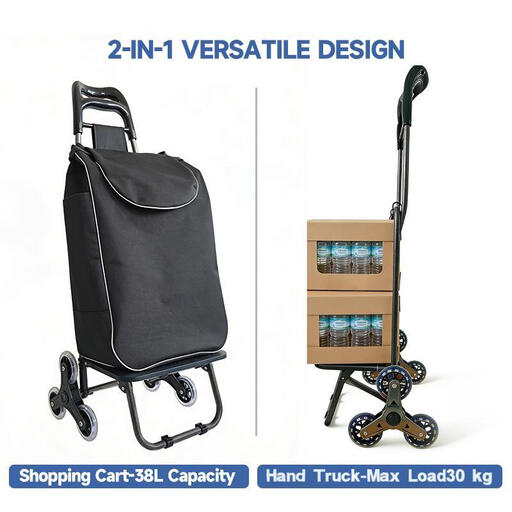
Why This Fits Their Persona: Its listed stair-climbing design, foldable format and lightweight positioning suit shoppers wanting one trolley for regular supermarket trips without a complicated setup.
The listed folding and ergonomic-handle features address storage and grip concerns. Confirm the maximum load before filling the large bag.
Stair-climbing wheel design; foldable format; ergonomic handle; large-capacity positioning.
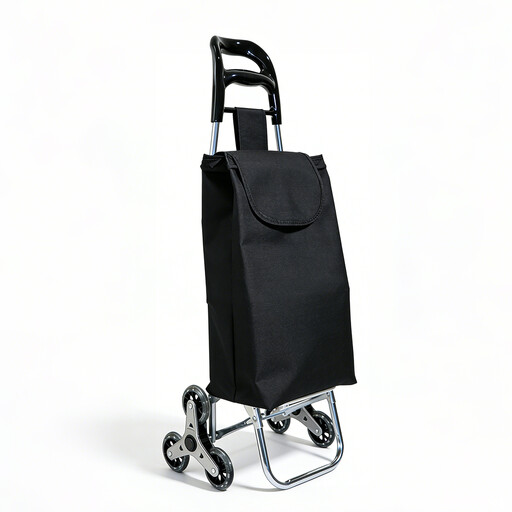
Why This Fits Their Persona: The Oxford fabric bag, metal frame and large-size format are suited to shoppers who prioritise structured storage for weekly groceries, laundry or market trips.
The stated materials make the construction easier to assess than a vague “premium” label. Keep the frame dry and check screws and wheel function periodically.
Oxford fabric bag; metal frame; stair-climbing wheels; no installation required.
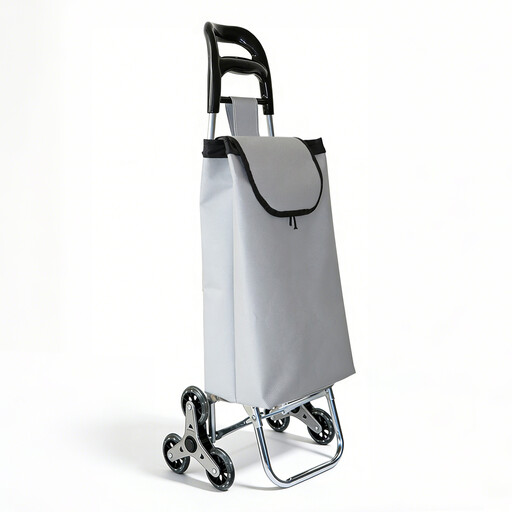
Why This Fits Their Persona: This large-size option is positioned for households transporting substantial grocery loads, laundry or supplies across mixed surfaces.
Its listed heavy-duty and large-capacity features should still be matched against the stated weight limit, rather than judged by bag size alone.
Large-size folding format; ergonomic handle; stair-climbing design; intended for heavier shopping use.
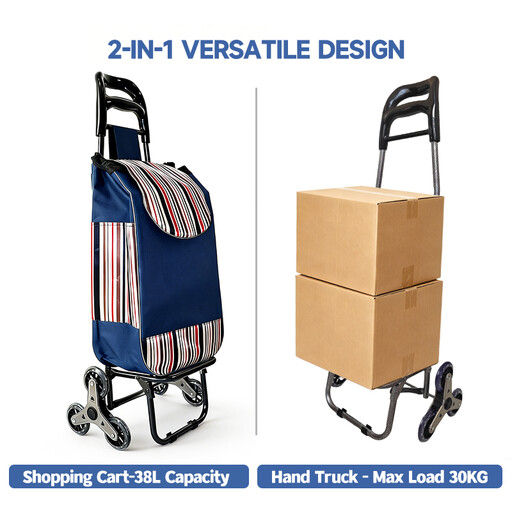
Why This Fits Their Persona: The compact collapsible format is more suitable for smaller hallways, occasional grocery runs and users who do not need a full-size bag every week.
The compact design directly addresses storage concerns. Check the folded dimensions and available capacity before using it for a large weekly shop.
Compact stair-climbing format; foldable construction; suitable for grocery and general home use.
We have compiled a complete, real-time list of products that fully satisfy these strict selection criteria and UK safety regulations.
Before loading, fully unfold the trolley and confirm that all locking mechanisms are engaged. Place heavier items at the bottom and keep the load balanced. On stairs, maintain a firm grip and move one step at a time. Do not use the trolley to transport children.
Wipe Oxford fabric with a damp cloth and mild soap where appropriate. Keep the metal frame dry to reduce the risk of corrosion, and periodically check wheel movement, fasteners and the condition of the bag. Replace or stop using the trolley if the frame bends, the wheel assembly loosens or the locking mechanism no longer holds securely.
A stair-climbing trolley has no battery or fuel requirement, so its ongoing running costs are generally limited to cleaning and possible replacement parts. Its usable lifespan depends on load frequency, stair surfaces, storage conditions and maintenance rather than the advertised model year alone.
They can assist with moving groceries over stair edges, but suitability depends on the user’s strength, balance, grip and stair layout. The trolley should be used within its stated load limit and handled slowly. Anyone uncertain about stair use should consider assistance from another person.
There is no universal lifespan. Regularly carrying loads above the recommended limit, leaving the trolley outdoors or using it on rough surfaces can accelerate wear. A wipe-clean bag, dry frame and regularly checked wheels may help maintain everyday performance.
Most conventional grocery trolleys with stair-climbing wheels are manually operated and do not need electricity, charging or fuel. The user still provides the pulling force and must control the trolley carefully on stairs, kerbs and uneven ground.