Small-kitchen cake bakers
If you mainly want hands-free mixing for apple cake but put the machine away afterwards, compare its stored dimensions, weight and opening clearance before choosing by bowl size.


Start with the mixer’s stored dimensions and the space needed to open it, then compare its stated cake-batter limit with your recipe. A compact stand mixer can suit an ordinary apple-cake batch; consider a larger machine if you regularly make bigger batches, while allowing for the extra space and effort involved in moving it.
If you mainly want hands-free mixing for apple cake but put the machine away afterwards, compare its stored dimensions, weight and opening clearance before choosing by bowl size.
If you often make larger cake batches, compare your usual recipe weight with each model’s stated cake limit. A machine with more capacity must still fit where you plan to use and store it.
If apple cake is only the starting point, consider the specific slicing, grating or other attachments you would use later. Check compatibility with the exact mixer model and leave room to store the accessories.
Measure the place where the mixer will work and be stored before comparing cake capacity. Bowl volume is useful, but the exact model’s cake-batter limit is the more relevant check for your recipe.
| Concern | What to check | Who this matters to |
|---|---|---|
| Storage and access | Measure the stored footprint and height, plus clearance to open the mixer in its working position. Check its weight if you will lift it out for each bake. | I need the mixer to fit away between bakes and be manageable to retrieve; around 46% of consumers put storage and access first. |
| Cake-batter capacity | Compare your recipe’s batch weight with the exact model’s stated cake limit, not just its bowl volume. | When I regularly make a family-size or doubled cake, I need the machine to accommodate that batch; around 36% of consumers prioritise cake-batter capacity. |
| Future food-prep use | Check whether the exact model supports the attachments you want and which tools come with it. | I want to use the machine for other preparation tasks as well as cake, so compatible attachments shape my choice; around 18% of consumers put future versatility first. |
Bowl volume does not tell you the maximum cake quantity. KitchenAid lists a 1.8kg cake limit for its 3.3L 5KSM3311X, while Bosch Home UK lists up to 2.4kg of cake batter for its Series 2 comparison with a 3.8L bowl; the figures have different model scopes.
Check the cake-batter limit for the exact model against the weight of your usual recipe.
A tilt-head mixer needs room above it when you raise the head. A shelf measurement alone will not tell you whether you can use the machine comfortably beneath a wall cabinet.
Measure width, depth, height and opening clearance in the place where you will mix.
A mixer can occupy relatively little space yet still be awkward to lift from a low or high cupboard. Kenwood lists the Go KZM35.000RD at 6.3kg.
Check the exact model’s weight and whether you can move it safely from its planned storage position.
Kenwood’s Go KZM35.000RD is a reference point if cupboard height and the tools supplied for cake mixing are central to your choice.
KitchenAid’s 3.3L tilt-head format is worth considering if you prefer a smaller machine with access to the bowl from above.
Bosch positions Series 2 as a compact mixer route for shoppers who may also want compatible food-prep attachments.
These Kenwood stand mixers offer options to consider for apple-cake batter, from models to measure for compact storage to models worth checking for larger batches. Compare each exact model’s cake limit and the space it needs in your kitchen.
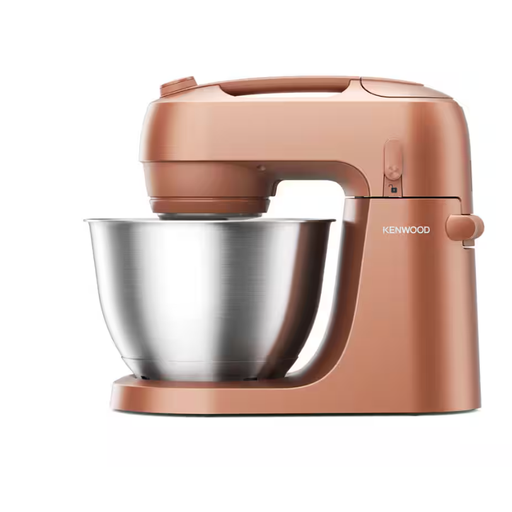 No image available
Consider this model if storing a mixer between apple-cake bakes is the main concern. Kenwood GB lists a 30cm height, 4L bowl, 1.8kg cake capacity and included K-Beater; also account for its listed 6.3kg weight and head-opening clearance.
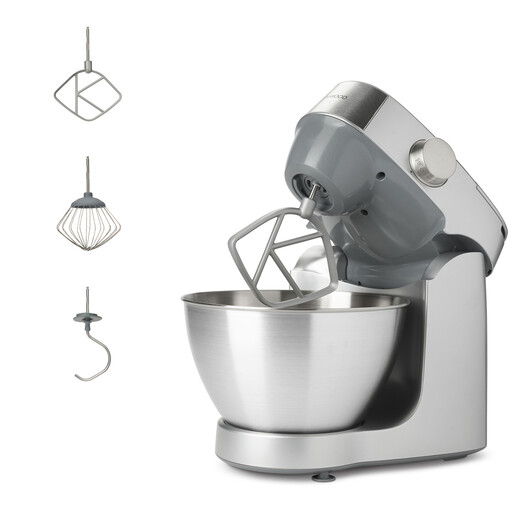 No image available
For apple-cake batter, check this model’s cake limit against your recipe rather than treating its 4.3L bowl as a batch limit. Its product name specifies three bowl tools; confirm which beater is supplied for cake mixing.
 No image available
Consider this model if your usual cake batch calls for more capacity. Compare the exact model’s cake limit with your recipe, then check its weight, stored dimensions and head-opening clearance before choosing a place for it.
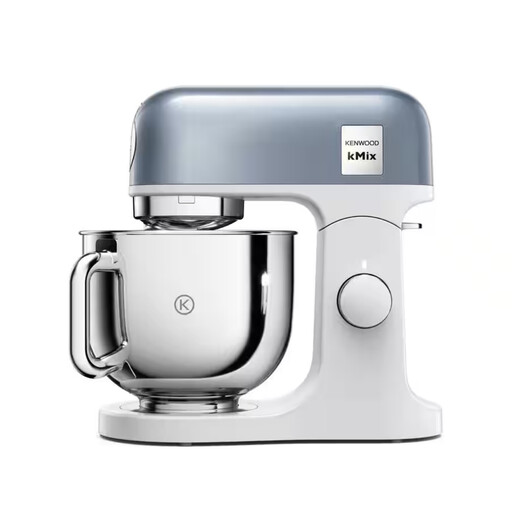 No image available
If you regularly make larger apple-cake batches, check this variant’s stated cake-mix limit against your recipe. Measure the space needed to store and open it, and check its weight if you will move it after each use.
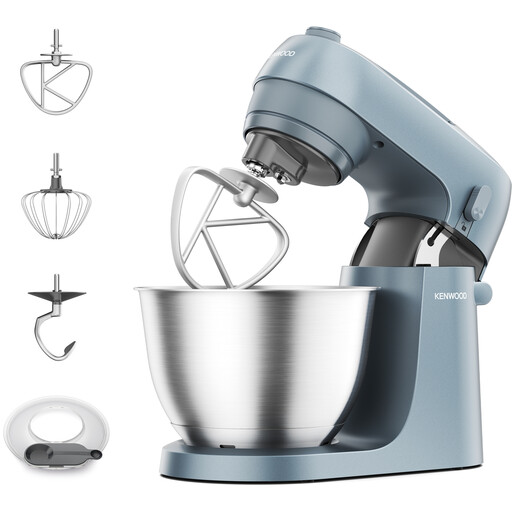 No image available
For apple cake in a small kitchen, compare this exact model’s cake-batter limit with your recipe and measure its stored footprint. Allow enough working space to open its head; do not apply the capacity stated for a different Go variant.
It can be large enough for a batch within the exact model’s stated cake limit. KitchenAid UK lists 1.8kg for its 3.3L 5KSM3311X, and Kenwood GB lists 1.8kg for the 4L Go KZM35.000RD. Weigh the batch you normally make rather than relying on bowl litres alone.
Check the clearance with the mixer open, not just its closed height. A tilt-head machine needs space above it to raise the head and reach the bowl; measure both its storage position and the worktop position where you will use it.
Not simply for an ordinary batch that fits a compact model’s stated cake limit. KitchenAid UK describes bowl-lift mixers as a larger-capacity route; consider one if larger batches or heavy mixing are regular tasks, while checking that it fits your kitchen.
Check the exact model, its intended market and supplied plug, instructions and warranty information before ordering. GOV.UK states that the Electrical Equipment (Safety) Regulations 2016 govern electrical equipment placed on the Great Britain market; that does not establish whether an individual listing meets the requirements or determine the rules for Northern Ireland.