Shared-kitchen cake bakers
If other people need the sink and worktop after you, the bowl, attachments and storage routine matter alongside the mixer's suitability for cake batter.


For a single apple cake in a shared kitchen, look for a suitable cake-mixing beater and a bowl and attachments you can clean and put away promptly. Match capacity to your usual batch rather than choosing by motor wattage alone; a larger bowl or extra equipment is worth accommodating when you regularly make bigger batches or use a second bowl.
If other people need the sink and worktop after you, the bowl, attachments and storage routine matter alongside the mixer's suitability for cake batter.
If you usually make one cake, measure the space available for using and storing the mixer before making a larger bowl a priority.
If you regularly prepare several mixtures or other recipes, greater batch capacity or an extra bowl may be useful, provided you have room to store and clean the equipment.
Decide how the mixer will be cleaned and handed over, then check its cake-mixing tool, batch capacity and storage fit. Give extra attachments a place in the decision only if you expect to use them.
| Concern | What to check | Who this matters to |
|---|---|---|
| Cleaning and handover | Check which supplied parts can go in a dishwasher and how the bowl, beater and any splash guard are cleaned. Agree a separate cleaning and storage routine if allergens are a concern. | If I need to hand back the sink promptly, I want tools I can clean, dry and return without holding up other users. Around 36% of consumers put cleaning and handover first. |
| Batter and batch fit | Confirm that a flat beater, paddle or stirrer is included; compare your recipe quantity with the stated bowl and cake-mixture capacities where available. | When I make apple cake, I need the supplied tool and bowl to suit my usual quantity rather than relying on a wattage figure. Around 29% of consumers make batter and batch fit their primary concern. |
| Worktop and storage space | Measure the storage position and worktop, including overhead clearance for a tilt-head mixer; check the exact model's dimensions and weight. | If the mixer must be moved after every bake, I need it to fit the available space and be manageable to put away. Space and storage come first for around 21% of consumers. |
| Wider baking use | List the other tasks you expect to do, then check which bowls and attachments come with the exact package. | If I also plan to whisk or knead regularly, I may accept more equipment to store in exchange for tools I will use. Around 14% of consumers prioritise wider baking use. |
Wattage does not tell you whether the supplied tool and bowl suit your apple cake recipe.
Check the exact model's cake-mixing attachment, bowl size, stated cake-mixture capacity where available and speed controls.
A mixer can suit the batch but be awkward to move whenever someone else needs the worktop. Kenwood GB lists its KMX760AGR at 9.3 kg.
Measure the cupboard, worktop and route between them, and decide who will move the machine before choosing a larger capacity.
A second bowl or splash guard adds parts to wash and keep together. Dishwasher guidance can differ by model and component.
Check the exact package and cleaning instructions, then agree where shared accessories will be dried and stored.
Residue on the bowl, attachments or nearby surfaces can be a cross-contact concern. A food-business kitchen also needs appropriate food-safety controls.
Ask users about allergy needs and agree how equipment and surfaces will be cleaned and stored; if the kitchen is part of a food business, follow its food-safety procedures.
Bosch offers compact-to-mid-size MUM mixers worth comparing when shared worktop space is limited.
The kMix KMX760AGR is a reference point for a 5.0 L bowl and supplied baking tools.
Its cited Artisan packages offer different ways to handle staged baking or recurring large batches.
These stand mixers are relevant to mixing apple cake batter, with different considerations for shared-kitchen storage, batch size and clean-up. Check each exact model's supplied tools and cleaning instructions against your routine.
 No image available
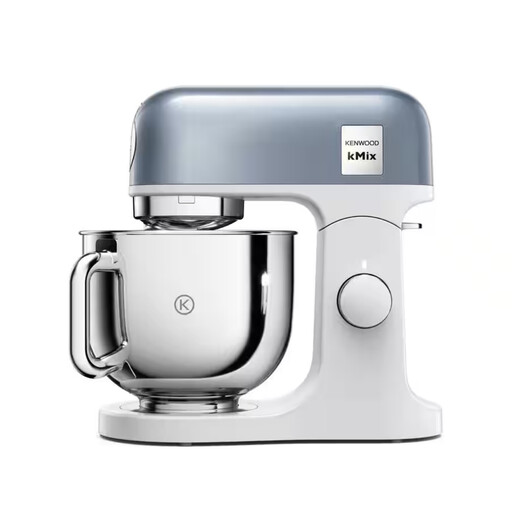
Consider this model if you need a cake-mixing setup that can be put away after using the shared worktop. Its product name specifies a 4.3 L bowl, three bowl tools and a 1000 W rating; check that your usual cake batch fits the bowl rather than treating its dough limit as a cake capacity.
 No image available
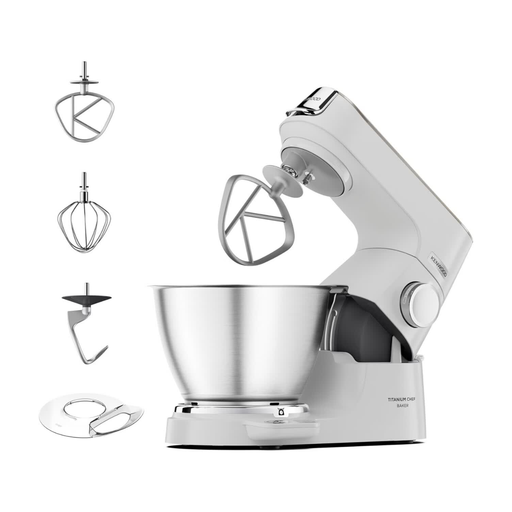
Consider this version if you regularly make larger cake batches and have a place to keep a heavier mixer. Before buying, check the exact package's cake-mixture capacity and dishwasher instructions against your recipe and shared clean-up routine.
 No image available
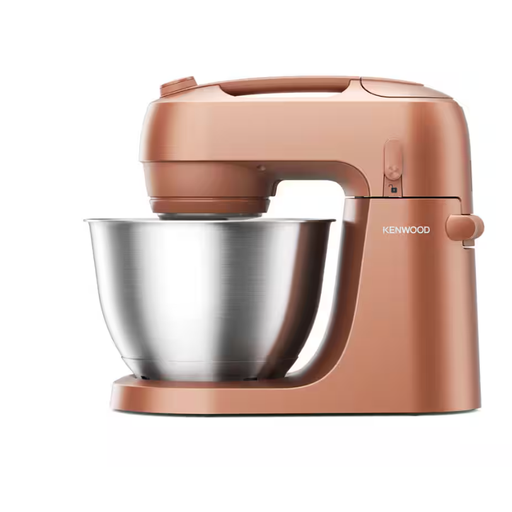
Consider this mixer if cake-batch fit and a repeatable clean-up routine are priorities. Check its stated cake capacity and the cleaning instructions for the supplied parts, and plan a storage position that does not require inconvenient lifting after every use.
 No image available
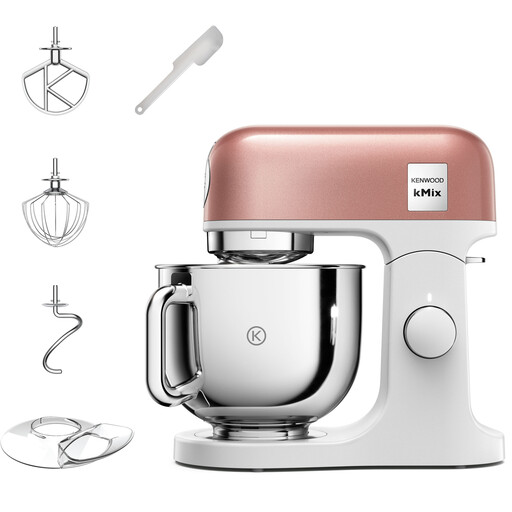
Consider this model where cupboard or worktop fit is a leading concern. Check that its bowl suits your usual apple cake batch, measure the intended storage space and consult the exact cleaning instructions before relying on dishwasher access.
 No image available
Consider this version if you want to assess a kMix cake-mixing setup for a regular home batch. Check that the stated bowl capacity fits your recipe and follow the exact model's instructions for each bowl and attachment before putting any part in the dishwasher; also consider how often it would need moving.
Use the flat beater, paddle or stirrer intended for general cake mixing, and confirm that it comes with the exact package. KitchenAid UK lists a paddle or flex-edge beater with its cited Artisan packages; a dough hook alone is not the cake-mixing tool to look for.
Not necessarily: choose a bowl and cake-mixing tool that suit your usual recipe, then weigh any extra batch room against the space the machine takes. Larger capacity is more relevant if you regularly make several cakes or bigger mixtures.
Clean and dry the removable bowl, beater and any splash guard according to the model's instructions, then return them to an agreed place. If the kitchen is part of a food business, its operator must also follow the applicable food-safety system; GOV.UK says a food business must be able to demonstrate effective cleaning.
Not automatically: the cited GOV.UK food-business guidance addresses people running a food business, not every private household sharing a kitchen. Household users can still agree practical cleaning and allergen-separation routines; if food is prepared there as part of a business, the operator must follow a food-safety management system.
Where a mixer is portable electrical equipment under workplace control, include it in an appropriate maintenance plan. The Health and Safety Executive describes user checks, formal visual inspection and testing as appropriate to the equipment and its use; this is not a universal domestic testing requirement.