Batch-focused bake-sale baker
You want to prepare enough bagel dough in fewer mixing cycles, so a stated dough capacity matters more than the bowl’s appearance or volume alone.


Choose a stand mixer for bake-sale bagels by its model-specific dough limit and kneading tool, rather than bowl volume or wattage alone. A bowl-lift model with a stated bread-dough capacity is worth considering for repeated large batches; a smaller mixer may suit modest output if its dough guidance covers your planned batch and it is easier to store.
You want to prepare enough bagel dough in fewer mixing cycles, so a stated dough capacity matters more than the bowl’s appearance or volume alone.
You regularly make firm yeast dough and want to check the bowl arrangement, kneading tool and model-specific instructions before committing to a mixer.
You need a mixer for bagels and other baking, but its storage footprint and the attachments you would actually use matter alongside batch size.
Work out the finished weight of a planned bagel batch before comparing model-specific dough limits. Then weigh the number of mixing cycles you can accommodate against the space the mixer will occupy afterwards.
| Concern | What to check | Who this matters to |
|---|---|---|
| Firm-dough handling | Check the exact model’s dough guidance and whether the appropriate kneading tool is supplied. | When I regularly mix firm bagel dough, I need a machine intended for that work rather than relying on a wattage figure. Around 36% of consumers put firm-dough handling first. |
| Batch size | Compare your finished batch weight with the model’s stated dough limit, allowing headroom for your recipe. | If I have many bagels to prepare before the sale, fewer mixing cycles matter to my schedule. Batch size comes first for around 29% of consumers. |
| Other baking tasks | Check the supplied tools and compatibility of any optional attachments you would use. | I want the mixer to earn its space after the bagel sale through other baking or preparation tasks. Around 21% of consumers primarily value that wider use. |
| Storage space | Measure worktop, cupboard and overhead clearance, then check that the smaller model can handle your planned batch. | For an occasional event, I need to put the mixer away without choosing a machine too small for the dough. Storage is the main concern for around 14% of consumers. |
A bowl’s volume does not tell you the maximum weight of firm dough the mixer is intended to knead. KitchenAid UK states up to 3.7 kg of bread dough for its 5KSM60SPX, while Kenwood GB states 2.42 kg of dough for the Chef XL KVL4100W; those manufacturer figures use different dough descriptions.
Calculate your planned finished-dough weight and consult the exact model’s capacity and operating instructions. Do not assume either published maximum applies unchanged to your bagel recipe.
Neither figure confirms which kneading tool comes with a particular variant or how much dough its instructions permit.
Check the supplied tool, the stated bread- or yeast-dough limit and the instructions for the precise model you intend to buy.
An event venue may require you to use a different outlet from the one you use at home. The Health and Safety Executive advises checking that electrical equipment is suitable for its supply and intended work.
Confirm the appliance’s rating and intended supply before use, and check the plug and cable for damage.
Ingredients vary between bagel recipes, and the Food Standards Agency distinguishes allergen information for loose food from rules for food prepacked for direct sale.
Decide how the bagels will be offered, keep an accurate ingredient and allergen record for each recipe, and ask the local authority about requirements that depend on your event arrangements.
Its Artisan bowl-lift models are relevant if you are considering larger dough batches and can accommodate a substantial mixer.
The Chef XL KVL4100W offers a stated dough figure for planning a larger home-baking batch, alongside options for other preparation tasks.
Its smaller MUM routes are worth considering when a modest batch and convenient storage matter more than mixing a large amount at once.
These mixers offer different bowl sizes and tool configurations for home baking and bake-sale preparation. Check each model’s permitted dough batch against your bagel recipe before deciding how many mixing cycles it could take.
 No image available
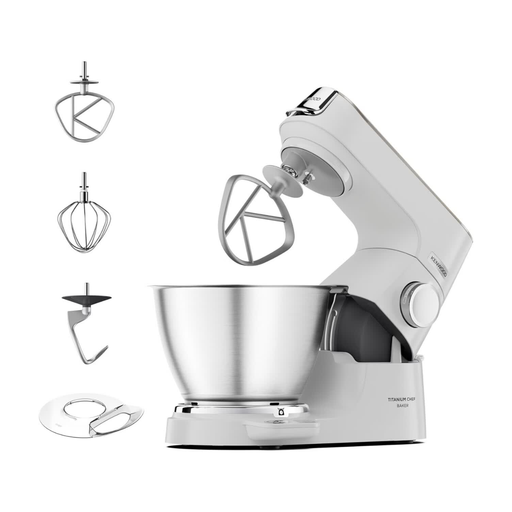
Consider this for smaller preparation sessions where you also want a mixer for other baking, subject to its dough instructions.
The product name specifies a 4.3L bowl, three bowl tools and 1000W. Check the permitted finished-dough weight for your recipe; a flour-based quantity is not the same as the weight of a completed batch.
 No image available
Consider this model if your planned batch fits its dough guidance; confirm the permitted weight and operating instructions for firm bagel dough before buying.
The product name identifies the white KVC65.001WH variant. Check which tools are included with that variant and whether its electrical rating suits your intended outlet.
 No image available
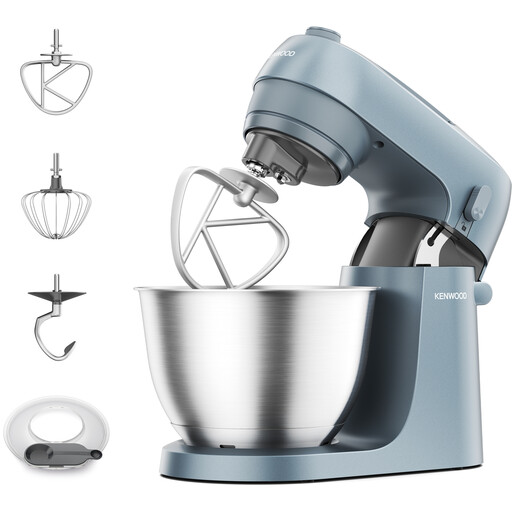
Consider this for an occasional bake-sale batch if storing the mixer afterwards matters to you. Confirm its permitted dough quantity and operating guidance before planning the number of batches.
The product name identifies the KZM35.000GY variant as blue; confirm the supplied colour if that affects your choice.
 No image available
Consider this if bowl space and a supplied dough hook are priorities, but establish the permitted weight and mixing instructions for dense bagel dough before choosing a batch size.
The product name specifies a 6.5QT bowl, ten speeds, a dough hook, whisk and beater. Check the exact variant’s electrical rating for your intended outlet.
 No image available
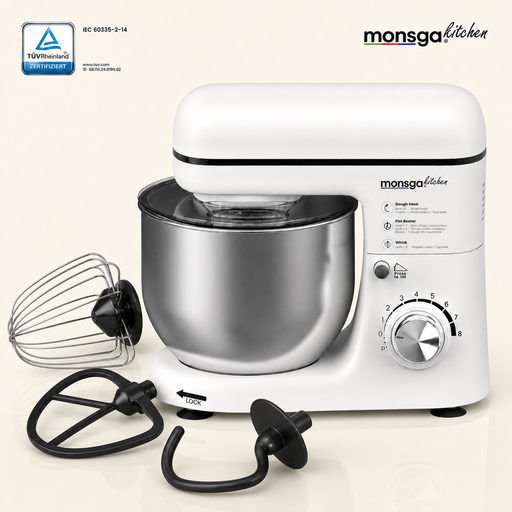
Consider this for bagel preparation alongside other home baking, provided its model-specific dough instructions accommodate your planned batch.
The product name specifies a 5.0L bowl, eight speed settings, a dough hook, whisk, beater and splash guard. Confirm the exact product’s electrical rating before use at your intended outlet.
Start with the finished weight of one planned batch and look for an exact-model dough limit that accommodates it. KitchenAid UK lists up to 3.7 kg of bread dough for the Artisan 5KSM60SPX, while Kenwood GB lists 2.42 kg of dough for the Chef XL KVL4100W. The descriptions and manufacturers’ methods may differ, so follow the chosen model’s instructions for your bagel recipe rather than treating the figures as interchangeable.
A bowl-lift mixer is worth considering if you regularly prepare large or firm batches and have room for it. KitchenAid describes its Artisan bowl-lift arrangement as intended for heavy mixtures, but the bowl mechanism alone does not establish a safe batch weight for every bagel formula; check the exact model’s dough limit and instructions.
Check that the mixer’s electrical rating suits the available supply and that its plug and cable are undamaged. The Health and Safety Executive advises checking electrical equipment for suitability for its supply and intended work; also follow the venue’s equipment requirements.
If your activity is a food business, the Food Standards Agency says to register with the local authority at least 28 days before trading or food operations start. Whether a particular bake sale falls within that category depends on its circumstances, so check with the local authority rather than assuming that a one-off event is exempt.
Keep an accurate ingredient and allergen record for each recipe, and establish whether the bagels will be sold loose or prepacked for direct sale. The Food Standards Agency gives different allergen-information requirements for those formats; ask the local authority if you are unsure how your event’s sales arrangement is classified.