Frequent lunchbox batch baker
If you regularly make several portions or double a recipe, compare its quantity with a stated dough or flour limit. A larger bowl on its own does not establish the permitted load.


Choose a stand mixer with a dough hook and a published dough or flour limit that fits your usual bagel recipe; bowl size and wattage alone cannot establish how much firm dough it can handle. A larger machine may suit frequent batches, while an everyday or compact mixer may make more sense for varied baking or limited space, provided its exact-model limit fits the recipe.
If you regularly make several portions or double a recipe, compare its quantity with a stated dough or flour limit. A larger bowl on its own does not establish the permitted load.
If the mixer will also make cakes and other occasional doughs, check the usable capacity and supplied tools alongside the bagel-dough limit. Which? also identifies mixing time, ease of use and how well attachments reach the bowl as practical differences between mixers.
If you make modest batches and store the mixer between uses, its dimensions and access to the bowl matter. Still check the exact model’s dough guidance and whether a hook is supplied.
Start with the quantity in your usual bagel recipe, then decide how much space and versatility you need. Manufacturers express mixer limits in different ways: Kenwood gives a finished-dough capacity for the Chef XL KVL4100W, while KitchenAid’s chart gives a flour limit for its 4.8L Artisan family. Those figures should not be compared as though they measure the same thing.
Consider it when: You regularly double lunchbox recipes or make larger bread batches; Kenwood lists a 2.42kg dough capacity for its 6.7L Chef XL KVL4100W.
Trade-off: Allow room to use and store a larger machine, and do not assume its stated maximum describes how it handles a very small batch.
Consider it when: Bagels are one of several baking tasks and your recipe fits the exact mixer’s published limit.
Trade-off: KitchenAid’s 1kg flour limit applies to its 4.8L Artisan family; it is not a finished-dough rating or a limit to assume for every similar-sized mixer.
Consider it when: Storage space is the main constraint and you usually make smaller batches. Bosch positions its Series 2 range for occasional baking.
Trade-off: Compact styling does not establish a dough limit; check the current model’s capacity, hook and clearance for removing the bowl.
| Concern | What to check | Who this matters to |
|---|---|---|
| Kneading capacity | Compare your recipe with the exact model’s dough or flour limit on the same measurement basis, and confirm that a dough hook is supplied. | If I often double a firm bagel-dough recipe, I need to know the mixer can take that quantity rather than judging by its bowl size. Around 42% of consumers put kneading capacity first. |
| Storage footprint | Check the model’s dimensions and the clearance needed to raise its head or remove its bowl. | When cupboard or worktop space is tight, I need a mixer I can store and set up without overlooking my batch size. For around 25% of consumers, space is the primary concern. |
| Everyday versatility | Check the supplied beater, whisk and hook separately from optional attachments, and confirm compatibility with the exact mixer line. | If the same appliance will make bagels and handle routine cakes or whisking, I care about the tools I can actually use. Versatility comes first for around 33% of consumers. |
Neither figure tells you the permitted quantity of firm bagel dough. Kenwood lists 2.42kg of dough for the Chef XL KVL4100W, whereas KitchenAid lists 1kg of flour for its 4.8L Artisan family; these are different measures.
Note the flour quantity in your usual recipe and check the exact mixer’s instructions against the relevant stated limit.
Bosch marks the MUMS2EW00G as no longer available, although its specifications remain useful for understanding that model. They do not establish the features or availability of a replacement.
Check the live listing, exact model number, warranty information and spare-parts route for the machine you intend to order.
Attachment compatibility varies by mixer line. Kenwood says kMix cannot take high-speed attachments such as a blender or juicer, even though its Chef range has a broader attachment system.
Confirm the supplied hook, whisk and beater, then check any optional accessory against the exact mixer line before making it part of your decision.
A familiar model name does not, by itself, tell you which plug and voltage arrangement the particular item has.
Before ordering for use in Great Britain, check the exact item’s plug, voltage and seller-provided electrical information. Do not treat a plug adaptor alone as confirmation that the appliance is suitable.
These brands provide useful model-line comparisons, not a shortcut around checking the particular mixer and bundle you plan to buy.
Kenwood offers both Chef-style and kMix machines, but their capacity information and attachment systems should be checked by line.
The Artisan tilt-head line is relevant when bagels share the workload with everyday mixing and optional accessories.
Bosch’s Series 2 and Series 6 illustrate different compact and larger-format choices.
ProCook’s 6L Stand Mixer is a consideration for buyers comparing supplied mixing tools.
Smeg is relevant to shoppers considering a mixer with a dough hook and optional food-preparation accessories.
These stand mixers cover compact and everyday baking choices as well as a larger-bowl option. For lunchbox bagels, use each exact model’s dough guidance to decide whether it fits your recipe; a bowl figure alone is not a kneading-capacity rating.
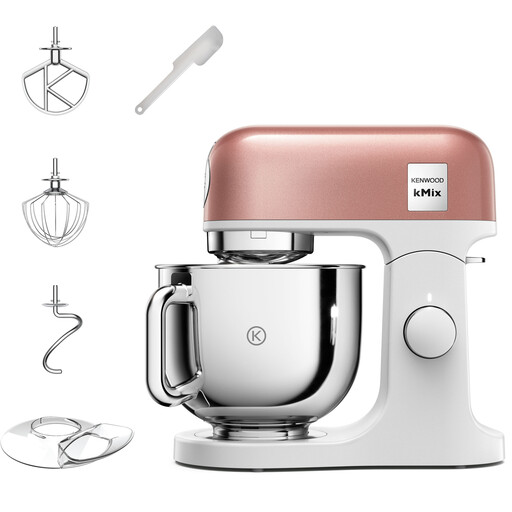 No image available
Consider this kMix if you want a mixer for bagels and other baking, subject to checking its exact-model dough limit and supplied tools against your recipe.
If future accessories matter, check kMix compatibility separately: Kenwood says high-speed attachments such as a blender or juicer cannot be added to the line.
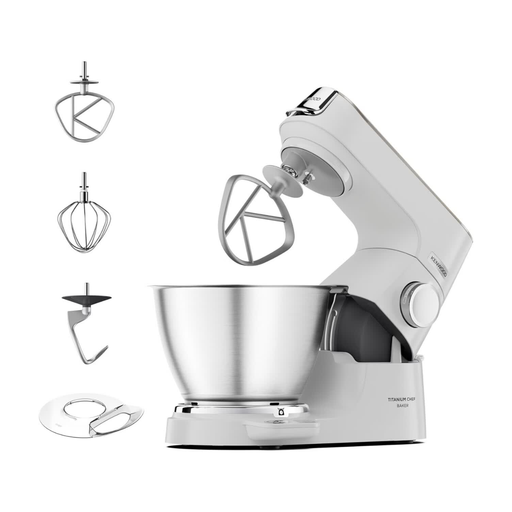 No image available
This Chef Baker is worth considering if you want one mixer for dough and routine baking. Compare your firm bagel-dough recipe with the exact model’s instructions rather than assuming that another Chef model’s capacity applies.
 No image available
This is a compact-route choice for smaller lunchbox batches if the exact-model dough guidance fits your recipe.
The stated 4.3L bowl size and 1000W rating do not replace a check of the permitted firm-dough load or the tools in the chosen bundle.
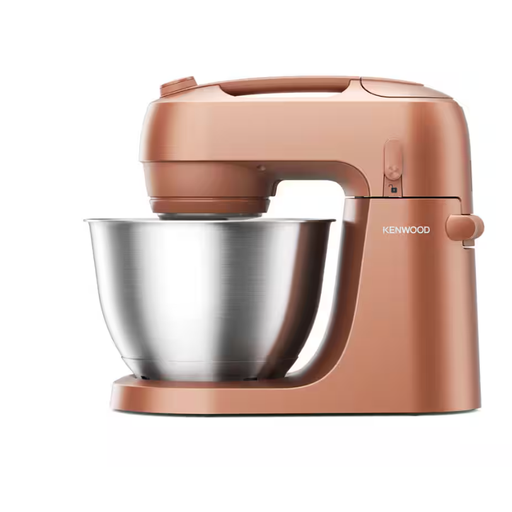 No image available
Consider this option when storing the mixer between smaller baking sessions is important. Before using it for firm bagel dough, check the exact model’s permitted load and supplied dough tool.
 No image available
This larger-bowl option lists a dough hook, whisk and beater for bagels and other mixing tasks. Check its exact-model dough limit before deciding how much firm dough to make at once.
The 6.5QT bowl size and 10 speed settings describe the listed configuration, not a maximum bagel-dough load.
No. Bowl volume is not a maximum dough-load rating. Kenwood gives a 2.42kg finished-dough capacity for the Chef XL KVL4100W, while KitchenAid gives a 1kg flour limit for its 4.8L Artisan family. Check your recipe against the applicable maker guidance without treating those different measures as directly comparable.
Confirm that a dough hook is supplied if kneading bagel dough is your main reason for buying the mixer. KitchenAid lists one with the 5KSM175, and ProCook lists a dough attachment with its 6L mixer; check the contents of the exact model and bundle you choose.
Check the exact item’s plug, voltage and seller-provided electrical information before ordering. A plug adaptor alone does not establish that an appliance is suitable for your intended use; confirm which version is being supplied rather than relying on a model name shared across markets.