One-off birthday-party bakers
You need enough dough for one or a few manageable batches, with easy ingredient additions and straightforward clean-up, rather than capacity chosen for frequent large-scale baking.


Choose a stand mixer by the amount of biscuit dough your recipe requires, checking a model-specific batch limit where one is available rather than relying on bowl volume or wattage alone. For a few home batches, consider bowl access and the supplied beater; for repeated preparation, weigh the value of extra bowl capacity against the machine’s size and weight. Check the exact package, cleaning instructions and electrical suitability for your delivery region before ordering.
You need enough dough for one or a few manageable batches, with easy ingredient additions and straightforward clean-up, rather than capacity chosen for frequent large-scale baking.
You plan to make repeated dough batches, icing or other components in one session. Bowl capacity, access to a second bowl and the space needed for a larger machine may affect your choice.
You want the mixer to remain useful for ordinary home baking after the birthday. Supplied tools, storage space and the cleaning routine matter alongside the party batch.
Work out your recipe quantity first, then decide which preparation tasks the mixer should simplify. Check whether its everyday footprint and supplied tools still make sense after the party.
| Concern | What to check | Who this matters to |
|---|---|---|
| Biscuit batch size | Compare your recipe with the exact model’s stated cookie capacity or relevant flour and dough limits. Do not treat bowl litres as a biscuit yield. | If I need enough biscuits for the party without repeatedly mixing small batches, capacity is my priority. Around 44% of consumers would put batch size first. |
| Preparation and clean-up | Check for a suitable beater, bowl access and any included second bowl or pouring shield; follow the care instructions for each part. | When I am preparing dough alongside other party food, I want ingredient additions and washing up to interrupt me less. Roughly 33% of consumers would make that workflow their main concern. |
| Use after the party | Measure storage and operating clearance, then review the supplied tools for the baking you plan to do regularly. | If birthday biscuits are an occasional project, I do not want the mixer to be awkward to store for the rest of the year. About 23% of consumers would prioritise everyday use and space. |
A power rating does not tell you how much biscuit dough an exact model can mix. The capacity figures published for the Bosch and Kenwood models discussed here use different measures, so wattage cannot turn them into a like-for-like biscuit-yield comparison.
Start with your recipe quantity and the manufacturer’s applicable batch guidance. Confirm that the package has a suitable mixing beater.
KitchenAid UK’s figure of up to 108 standard 5.1 cm cookies applies to specified 4.8L Artisan models. It is not a capacity figure for every mixer with a similar-sized bowl.
Use a published cookie figure only for the named model family and cookie size. For another mixer, compare your recipe with its own relevant limits.
A larger machine still needs a practical place to operate and be stored. Kenwood lists its Titanium Chef Baker XL KVL85.004SI at 11.5 kg, a consideration if you expect to move it between uses.
Measure the counter and storage space, including clearance to raise a tilt head or use a bowl-lift mechanism.
A listing alone may not settle which plug and supply arrangement comes with the exact variant. Government guidance on electrical equipment also distinguishes provisions applying in Great Britain from those applying in Northern Ireland.
Confirm the product’s electrical details, conformity information and intended delivery region with the seller before ordering.
Relevant if you want to compare tilt-head and bowl-lift formats, or need model-specific guidance for planning a biscuit batch.
Relevant if several baking components must be prepared in one session and a larger machine fits your kitchen.
Relevant if you are considering a 3.9L kitchen machine with a supplied set of baking tools.
These stand mixers are options to assess against your birthday-biscuit recipe. Compare the exact model’s batch guidance, supplied mixing tool and kitchen footprint before choosing.
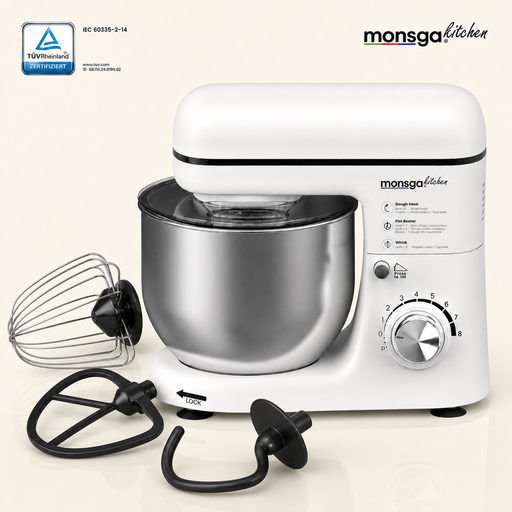 Image unavailable
Consider this model if its stated 5.0L bowl and included beater suit your preparation plans. The title also lists eight speeds, a whisk, dough hook and splash guard; compare your recipe with the exact model’s biscuit-dough guidance before deciding on batch size.
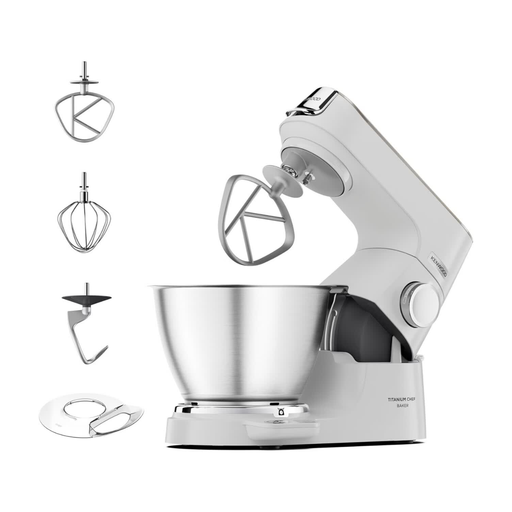 Image unavailable
For birthday biscuits, check whether the exact model’s batch instructions fit your recipe and whether the supplied mixing tool suits it. Confirm the bowl configuration and space needed where you will use the mixer.
 Image unavailable
Consider the 4.3L bowl alongside your planned biscuit batch and available worktop space. The title lists a 1,000W rating and three bowl tools; confirm which tool to use and follow this model’s recipe-specific capacity guidance.
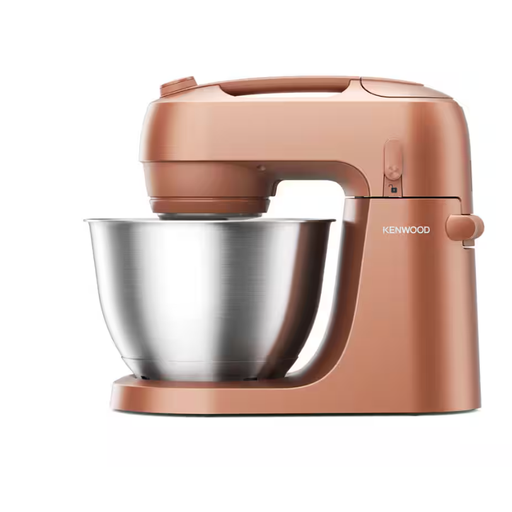 Image unavailable
Check this model’s bowl size, supplied beater and biscuit-dough guidance against your party recipe. Measure its operating and storage space before choosing it for regular use.
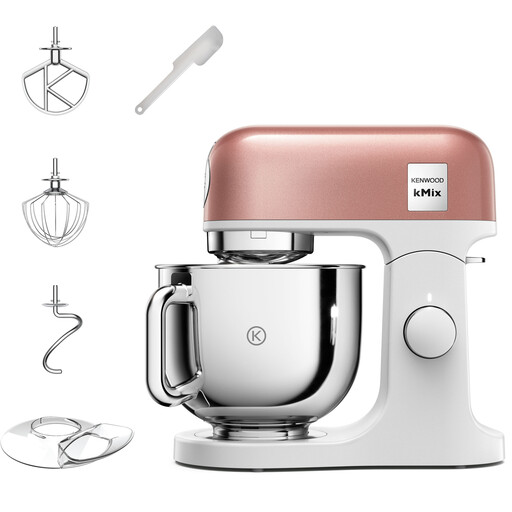 Image unavailable
For a biscuit batch, confirm the supplied mixing tool and compare your recipe quantity with the exact model’s instructions. Check its weight and the clearance needed to use and store it.
Start with your recipe yield and the exact mixer’s stated batch guidance, not bowl litres alone. KitchenAid UK lists up to 108 standard 5.1 cm cookies for specified 4.8L Artisan models; that figure should not be transferred to another model. If you cannot use a model-specific cookie figure, compare your flour and dough quantities with the applicable manufacturer limits.
Choose the format around batch size, ingredient access and kitchen space. KitchenAid describes its tilt-head models as ranging from 3.3–4.7L and its bowl-lift models from 4.8–6.9L; those are ranges for KitchenAid’s line, not capacities that apply to every brand or a guarantee of biscuit yield.
For a creamed biscuit recipe, check that the package includes a paddle or flat beater rather than assuming the dough hook is the right tool. Follow the recipe and the exact mixer’s instructions for attachment and speed choice.
Follow the care instructions for each component of your exact model. KitchenAid says the bowl, paddle and dough hook supplied with its cited Classic 5K45SS can go in the dishwasher, while its whisk should be washed in warm soapy water; that instruction does not apply automatically to other mixers.
Confirm the exact variant’s plug, supply requirements, conformity information and intended delivery region with the seller. Government guidance on the Electrical Equipment (Safety) Regulations 2016 addresses equipment placed on the Great Britain market and notes that provisions may differ in Northern Ireland, so a UK-site listing alone should not settle suitability for your destination.