Choose a stand mixer around your usual biscuit batch, then check that its supplied beater suits your recipe and that the machine fits where you will use it. A compact model may suit occasional baking, while a higher stated pastry-flour capacity is worth considering for repeated batches; bowl volume alone does not establish a biscuit-dough limit. Integrated scales are useful if you want to weigh into the bowl, but they vary by model.
Who is this for?
Occasional baker with limited space
If your mixer must fit beneath cupboards or be put away after use, measure its storage position as well as your worktop. Kenwood GB lists the Kenwood Go KZM35.000GY at 30 cm high with a 4 L bowl; check the dimensions of the particular model you choose.
Regular home biscuit baker
If you make biscuits frequently, check for a supplied paddle or K-beater and a capacity measure relevant to your batches. KitchenAid UK lists a paddle with the 5KSM125, while Kenwood GB specifies a K-Beater in its speculoos recipe.
Baker who prefers weighing into the bowl
If separate weighing interrupts your preparation, an integrated scale may simplify that step. Bosch GB lists one on the MUM5XW49GB; confirm the feature on the exact model rather than assuming it comes with every Bosch MUM mixer.
What matters when choosing?
Start with the amount of biscuit dough you normally make and the tool your recipe calls for. Then check where the mixer will stand and which convenience features you would actually use.
| Concern |
What to check |
Who this matters to |
| Batch capacity |
Look for the exact model’s stated cookie or pastry-flour capacity and confirm that the supplied beater suits your recipe. |
If I regularly make larger biscuit batches, I need a stated capacity that relates to the ingredients I use, not just a large bowl. Around 37% of consumers put batch capacity first. |
| Kitchen fit |
Measure the available width, depth and height, including space to raise a tilt-head and remove the bowl. |
When my worktop and storage space are limited, I need to know that I can set up and put away the mixer. Roughly 27% of consumers prioritise kitchen fit. |
| Preparation and cleaning |
Check whether the exact model has a scale and which parts its instructions say can go in the dishwasher. |
I want fewer separate preparation and washing-up steps when I bake. About 18% of consumers make that workflow their primary concern. |
| Use beyond biscuits |
Check which attachments come in the box and which optional ones fit the exact model. |
If I also plan to use the machine for other recipes, I want an accessory system I will actually use. Around 18% of consumers put versatility first. |
Buying pitfalls
-
Choosing by wattage alone
Wattage does not tell you how large a biscuit batch the mixer is rated to handle or which beater is supplied.
Check the exact model’s relevant capacity figure and box contents instead.
-
Comparing unlike capacity figures
A bowl volume, a pastry-flour weight and a cookie count measure different things. None converts directly into a biscuit-batch limit for another model.
Use the measure closest to your recipe and retain the manufacturer’s stated conditions when comparing models.
-
Assuming every attachment is supplied
An accessory offered for a mixer range may be optional or may not fit the exact model you are considering.
Check both the box contents and model-specific compatibility before choosing an attachment-led system.
-
Measuring only the stored height
A mixer that fits beneath a cupboard may still need more room when you lift its head or remove its bowl.
Measure the intended working position as well as the storage space, and allow access to fit and remove the tools.
Brands to consider for biscuit dough
Kenwood
Kenwood’s Go and Chef lines offer different sizes and stated pastry-flour capacities. Kenwood GB uses a K-Beater in its speculoos biscuit recipe.
- Kenwood GB lists the Go KZM35.000GY at 30 cm high with a 0.5 kg pastry-flour capacity, and the Chef KVC3100W at 1.3 kg pastry flour.
- Those capacities belong to the named models; check the tools and capacity of any other Kenwood variant separately.
KitchenAid
KitchenAid’s 5KSM125 tilt-head mixer is an option to examine if a supplied paddle and published capacity guidance matter to you.
- KitchenAid UK lists a paddle, 10 speeds and a 4.7 L bowl for the 5KSM125.
- KitchenAid UK’s figure of up to 108 standard 5.1 cm cookies applies to named 4.8 L Artisan models and that cookie size, not every recipe or KitchenAid mixer.
Bosch
Bosch MUM models are worth comparing if compact dimensions or weighing ingredients into the bowl are important to your routine.
- Bosch GB lists the MUMS2VM40G at 266 × 266 × 277 mm with a 3.8 L usable bowl, and lists an integrated scale on the MUM5XW49GB.
- Dimensions, scales and accessory bundles vary by model; check the exact configuration before buying.
Joybuy stand mixers for biscuit dough
These stand mixers cover different biscuit-baking priorities, from a compact kitchen setup to models to consider for regular batches or weighing as you prepare. Check each model’s beater, relevant batch capacity and working clearance against your recipe and space.
 No image available
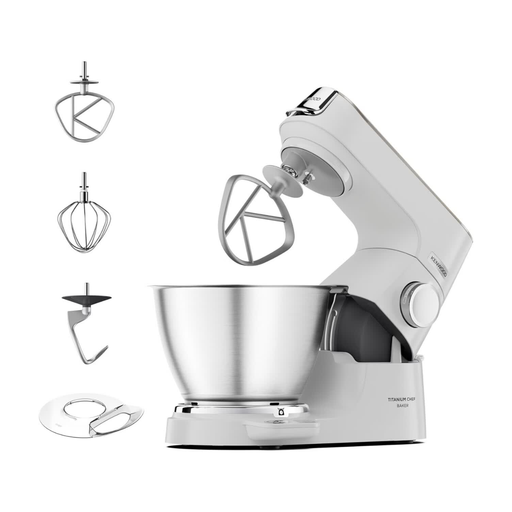
Kenwood Chef Baker KVC65.001WH Stand Mixer, White
Consider this model if weighing ingredients as you mix appeals to you. Check its supplied K-beater and stated pastry-flour capacity against your biscuit recipe; a pastry-flour rating is not a biscuit-recipe maximum.
View on Joybuy
 No image available
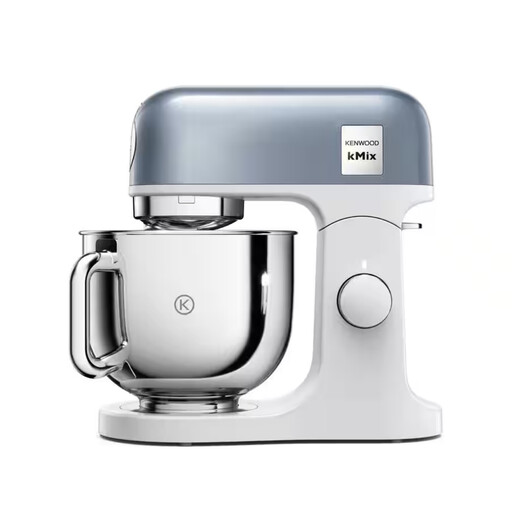
Kenwood kMix Editions Stand Mixer, Blue
This is a model to consider for regular home baking when your recipe calls for a K-beater. Check the permitted biscuit or pastry batch size separately: bowl volume alone cannot establish it.
View on Joybuy
 No image available
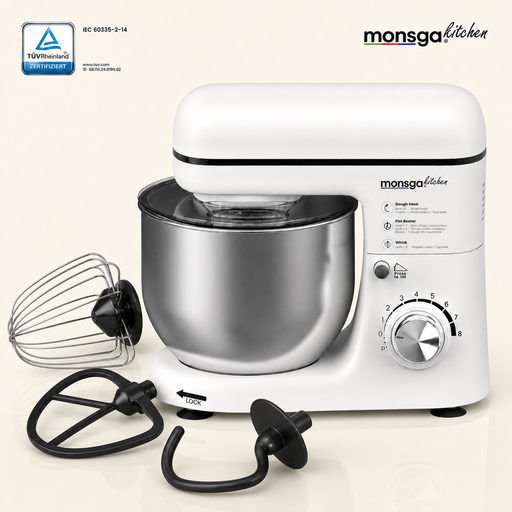
MONSGA SM100 Stand Mixer, Cream White, 5.0 L
Consider the SM100 if you want a flat beater among your mixing tools, but check that its rated batch size suits your biscuit recipe. The product name specifies a 5.0 L stainless-steel bowl, eight speed settings and 1000 W peak power; none of these is a biscuit-capacity rating.
View on Joybuy
 No image available
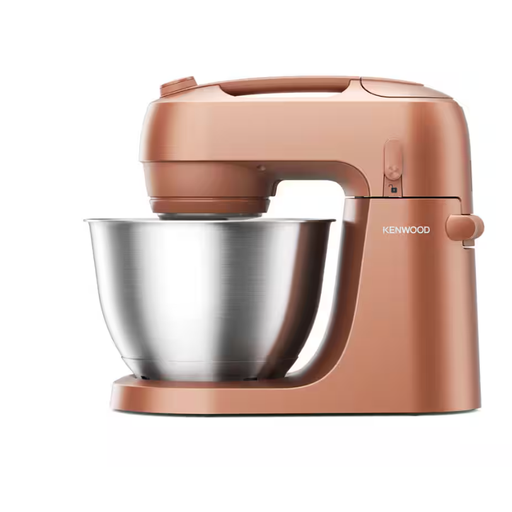
Kenwood Go Stand Mixer, Red Clay
Consider this compact option if storage height is a priority and you usually make modest batches. Measure the space needed to access its bowl and tools, and check its batch guidance for your particular biscuit recipe.
View on Joybuy
 No image available
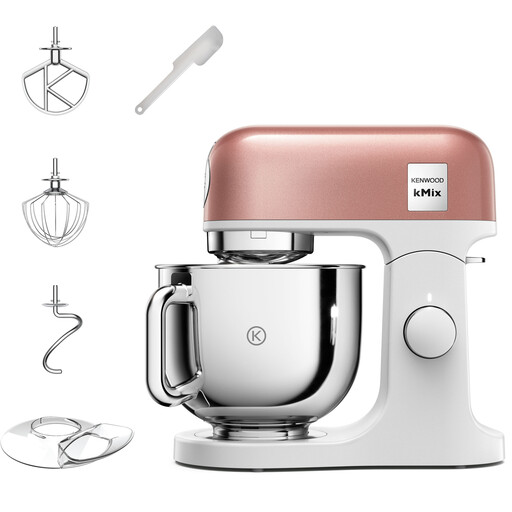
Kenwood kMix Editions KMX760API Stand Mixer, Apricot Pink
This is another model to consider for home biscuit batches that call for a K-beater. Confirm its permitted batch size and consult its care instructions before putting the bowl or tools in a dishwasher.
View on Joybuy
Common questions
Which beater should I look for when making biscuit dough?
Look for the tool specified by your recipe and check that it comes with the exact mixer. Kenwood GB instructs bakers to fit a K-Beater for its speculoos recipe, while KitchenAid UK lists a paddle with the 5KSM125; a dough hook is not automatically the right tool for every biscuit recipe.
How do I tell whether a mixer can handle my biscuit batches?
Start with capacity guidance for the exact model and compare it with your recipe’s ingredients and batch size. KitchenAid UK lists up to 108 standard 5.1 cm cookies for named 4.8 L Artisan models, while Kenwood GB lists 1.3 kg flour for pastry for the Chef KVC3100W. These are different measures, so neither gives a direct conversion for the other mixer.
Do I need a mixer with an integrated scale?
No: a scale changes how you prepare ingredients, not whether biscuit dough requires a stand mixer. Bosch GB lists direct weighing into the bowl or accessories for the MUM5XW49GB; check the exact model if that step matters to you.
What should I check before putting mixer parts in the dishwasher?
Follow the care instructions for each part of your exact model. Do not assume that a dishwasher-safe accessory means the bowl, splashguard and every supplied beater can be cleaned the same way.


