High-volume bake-sale baker
You plan several substantial mixes close together and need enough bowl room, appropriate support and a manageable way to handle a full bowl.


Choose a stand mixer around the size and frequency of your biscuit-dough batches, then check that the exact model has a suitable beater and a bowl you can handle when full. A larger bowl offers more room for repeated mixes, while a compact mixer may suit staged batches and limited storage. Published dough and mixture capacities use different measures, so they cannot be treated as interchangeable biscuit yields.
You plan several substantial mixes close together and need enough bowl room, appropriate support and a manageable way to handle a full bowl.
You want a predictable weighing and mixing routine across batches, rather than choosing a mixer by its wattage alone.
You can divide the recipe into batches, but the mixer still has to fit your worktop and storage space.
Decide how much dough you need to make at a time before weighing up storage space and workflow features. Use the exact mixer’s instructions to plan batches: a published limit for another type of mixture is not a biscuit-dough limit.
Consider it when: You need to prepare several larger mixes and have a suitable worktop position.
Trade-off: Check the machine’s dimensions and the weight of its filled bowl; extra bowl volume does not establish how much biscuit dough it can mix.
Consider it when: You can split the recipe and worktop or cupboard space is a deciding constraint.
Trade-off: More mixing cycles may also mean more bowl cleaning between recipes.
| Concern | What to check | Who this matters to |
|---|---|---|
| Batch size and bowl support | Check bowl volume, the exact model’s applicable mixture limit and how its bowl is secured. | If I have several large batches to make in a short window, I need room to add ingredients without overfilling the bowl. Around 50% of consumers put batch capacity and support first. |
| Repeatable preparation | Check the included beater, speed controls and whether the exact model has integrated scales. | When I repeat a biscuit recipe, I want weighing and mixing to follow a routine I can manage. For around 30% of consumers, that workflow is the primary concern. |
| Space and staged batches | Measure operating and storage space, including clearance to raise a tilt head if applicable. | I can mix smaller portions in turn, but I need the machine to fit comfortably in my kitchen. Space and staged-batch practicality come first for around 20% of consumers. |
A bowl’s volume does not tell you how much of your recipe it can mix. Kenwood GB, Bosch Home UK and KitchenAid UK publish capacities for different mixtures, which are not a common biscuit-dough measure.
Check the exact model’s instructions against your recipe and leave room for creaming and adding dry ingredients.
A power rating does not describe the included tools, usable batch size or space the machine needs.
Compare the exact model’s bowl, beater, applicable capacity guidance, dimensions and controls before using wattage to distinguish otherwise suitable choices.
Using a stand mixer does not change the need to supply safe food. Food Standards Agency guidance for community and charity events covers England, Northern Ireland and Wales; requirements can depend on how regularly food is supplied and how it is packaged.
Keep ingredient records and check the event’s food and allergen requirements with the relevant local authority, particularly if the activity is regular or organised.
A product title or photograph alone is not enough to establish whether the exact appliance suits your intended market and use.
Before ordering, check the plug and voltage, supplied instructions and conformity documentation for the exact listing.
These ranges provide useful points of comparison for bowl size, mixer format and workflow; check the specifications of the particular model you are considering.
Its Chef and Chef XL kitchen machines offer a larger-bowl reference for repeated baking batches.
Its documented tilt-head and bowl-lift models give buyers two formats to assess against batch plans and available space.
Its MUM range offers different bowl sizes, with integrated scales on a documented Series 6 model.
These mixers offer different bowl sizes and approaches to staged batches and recipe preparation. Check each model’s instructions before deciding how much of your biscuit dough to mix at once; the listed bowl sizes use their original units.
 Image unavailable
Consider its 4.3L bowl if you can divide your biscuit recipe into staged batches.
The product name specifies 1000W and three bowl tools; confirm which tools are supplied and follow the model’s batch instructions.
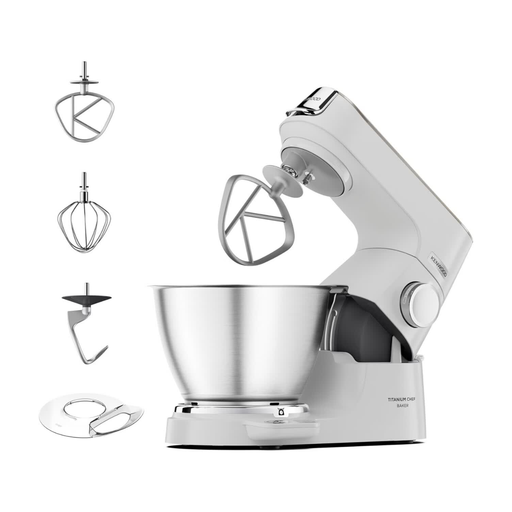 Image unavailable
Consider this model if weighing ingredients as you repeat a recipe is important to your workflow.
Check the in-bowl scales and K-beater described for this listing against the exact supplied configuration. Its listed 9.5kg weight also matters if you expect to move it into storage.
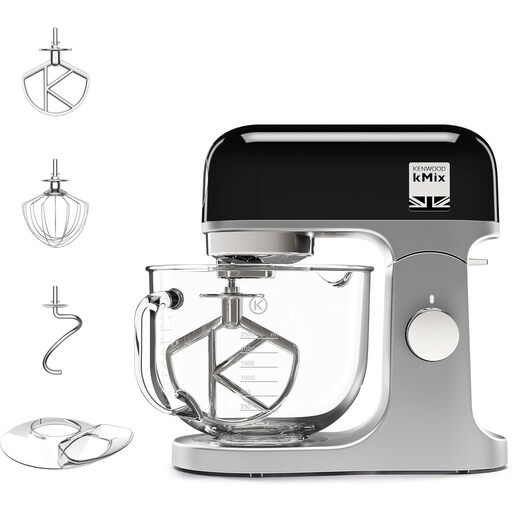 Image unavailable
Its 5L bowl makes this a model to assess for planned biscuit batches, subject to its mixing instructions.
The product name specifies 1000W, a K-beater, whisk and dough hook. Confirm the bowl material with the seller before ordering, as the listing gives conflicting descriptions.
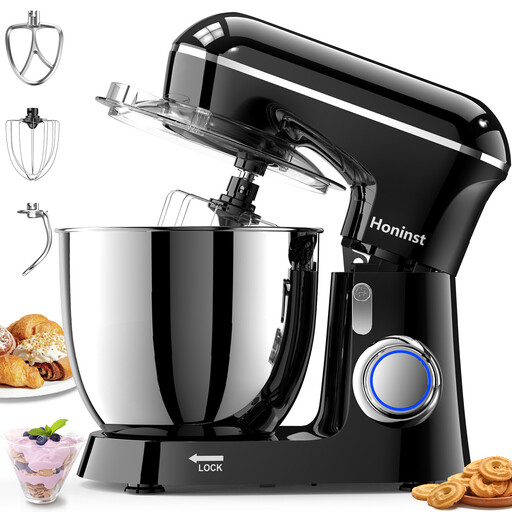 Image unavailable
Consider the larger stated bowl size if you need room to plan batches, but check the model’s instructions before setting a biscuit-dough quantity.
The product name lists a beater, whisk and dough hook. Its instructions describe domestic use only; confirm suitability if bake-sale preparation is regular or organised for commercial supply.
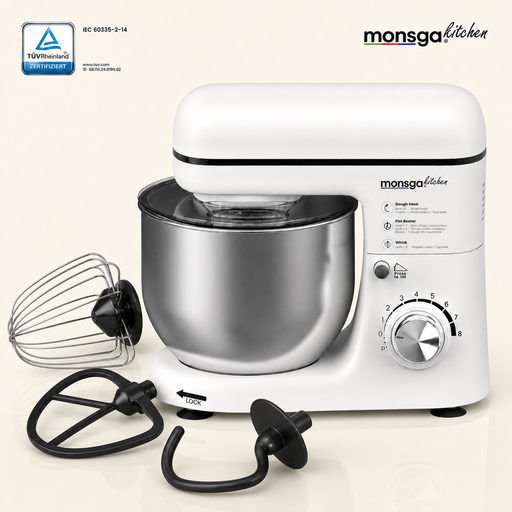 Image unavailable
Consider its stated 5.0L usable bowl size for staged batches rather than treating a full-to-the-brim volume as mixing capacity.
The product name lists eight speeds, a beater, whisk, dough hook and splash guard, with 1000W described as peak power. Check appliance dimensions and the model’s batch guidance for your worktop and recipe.
Choose the bowl around your planned batch size, not a universal litre threshold. Kenwood GB and Bosch Home UK document larger 5.5–6.7L models, while Bosch Home UK and KitchenAid UK document 3.8–4.3L options that can be considered for staged batches; check the exact model’s instructions before deciding how much of your recipe to mix.
A dough hook need not be your primary biscuit-mixing tool. Check whether the exact mixer includes a paddle or flat beater for your recipe, rather than assuming that a supplied dough hook covers every mixing step.
No: food responsibilities arise from supplying the biscuits, not from the appliance used to make them. Food Standards Agency guidance says food supplied at community or charity events in England, Northern Ireland and Wales must comply with food law and be safe to eat; ask the relevant local authority about requirements for your event, particularly if you supply food regularly.
Keep an accurate record of the ingredients and check which labelling and allergen-information requirements apply to the way you package and supply the biscuits. For a community or charity event, confirm the details with the relevant local authority, especially in Scotland or if the activity is regular or organised.