Frequent multi-loaf bread bakers
You regularly prepare double batches or several loaves and need a dough-load figure that covers your usual batch, not just a generous-looking bowl.


Choose a stand mixer around your largest regular bread batch, using the exact model’s stated dough or flour limit rather than bowl litres or wattage alone. A compact mixer may suit modest batches and mixed baking; frequent larger batches call for a machine whose published dough limit covers them, with enough space to use it comfortably. Which? also identifies mixing time, ease of use and how well tools reach the bowl as differences worth considering.
You regularly prepare double batches or several loaves and need a dough-load figure that covers your usual batch, not just a generous-looking bowl.
You make bread alongside cakes and whisked mixtures, but need room to position the mixer and change its tools beneath your cupboards.
You put dough handling and access to manuals, spare parts and warranty information ahead of extra features you may rarely use.
Start with the dough load you make regularly, then decide which design you have room to use and which additional tasks matter to you.
Consider it when: Bread batches are modest and you also want ready access to the bowl for other baking.
Trade-off: A smaller format still needs clearance to raise its head, and its ingredient limit may not cover larger batches.
Consider it when: You regularly make larger batches and the exact model’s published dough limit covers them.
Trade-off: Allow more worktop or storage space; capacity figures from another model or brand do not transfer to this one.
Consider it when: Bread dough is the main job and you are comfortable learning a different tool arrangement.
Trade-off: Its setup and mixing workflow differ from a conventional planetary mixer, so review the model’s instructions before choosing.
| Concern | What to check | Who this matters to |
|---|---|---|
| Bread-dough batch capacity | Match your normal largest batch to the exact model’s stated dough or flour maximum; check whether it distinguishes stiff and soft dough. | When I make several loaves at once, my usual batch needs to stay within the mixer’s stated limit; around 42% of consumers put batch capacity first. |
| Kneading and dough tools | Check the included dough tools and the maker’s instructions for your dough style; do not treat wattage as a kneading result. | If I make firmer dough regularly, I want tools and a mixing routine that suit it; roughly 33% of consumers prioritise kneading. |
| Space and handling | Measure the worktop position and overhead clearance, then check the exact model’s dimensions and weight. | I need to raise the head or remove the bowl beneath my cupboards without struggling for room; about 17% of consumers put space and handling first. |
| Other uses and ownership | Check included versus optional accessories, exact-model compatibility, warranty terms and access to support. | Once my bread batches are covered, I want the same machine to serve other baking tasks and remain practical to maintain; around 8% of consumers prioritise those extras. |
A large bowl does not establish how much bread dough its mixer can handle. Which? also identifies differences in mixing time, ease of use and how well attachments reach the bowl.
Compare your usual batch with the exact model’s stated dough or flour limit, then check its tools and dimensions.
Kenwood warns that exceeding its published Chef and Major capacity limits could damage the machine; its guidance distinguishes between dough types.
Follow the manual for your exact model and reduce the batch if its limit for your dough is lower.
Kenwood and Bosch offer additional attachments for selected machines, but the relevant connection and compatibility depend on the model.
Check the full model code, compatibility list and included tools before choosing accessories.
Optional tools also need storage space.
A tilt-head mixer needs room above it when opened, while a larger machine may occupy more of the worktop. Which? treats ease of use and cleaning as meaningful points of difference.
Measure the intended position and consider how you will remove, clean and replace the bowl and tools after each bake.
Its mixer range includes compact machines and larger Chef models, giving bread bakers different size and attachment options to investigate.
Its tilt-head and bowl-lift ranges offer different approaches to bowl access and batch size.
Selected kitchen machines combine dough tools with features such as integrated scales.
The Assistent Original offers a rotating-bowl arrangement for bakers willing to use a different dough-mixing workflow.
These stand mixers offer dough tools alongside options for mixed home baking. Compare each exact model’s dough limit with your regular batch before deciding whether its size and tools suit you.
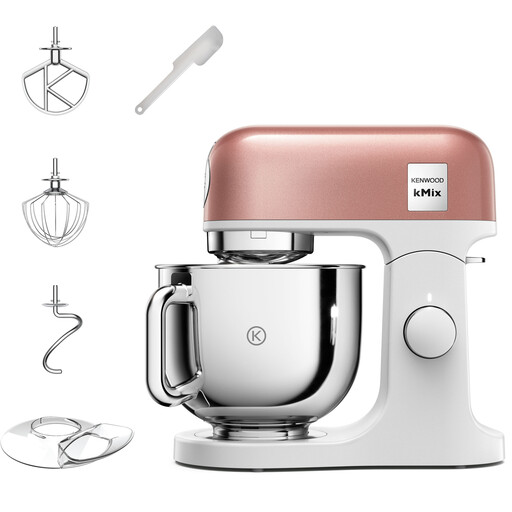 Image unavailable
Consider this model if you want a stand mixer for bread and other baking tasks. Check the exact manual’s dough limit for your recipe, as well as the plug and electrical details for your intended use.
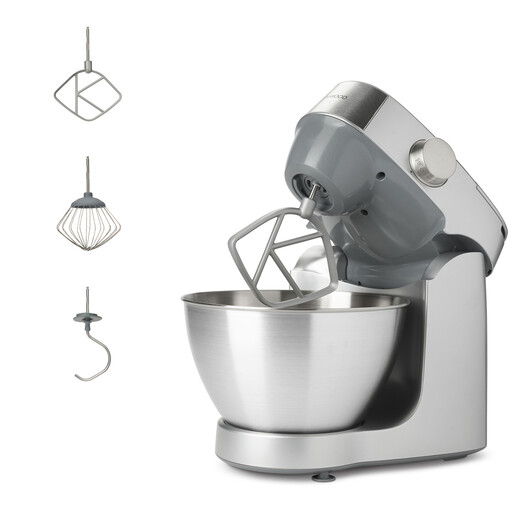 Image unavailable
Consider this 4.3L model if worktop space and mixed baking matter alongside bread. Its name specifies 1000W and three bowl tools; confirm the exact dough limit for your recipe and the plug and electrical details before purchase.
 Image unavailable
Consider this Chef Baker model if bread and ingredient-weighing features are both relevant to your routine. Check the manual’s dough guidance for your recipe, and confirm the plug and electrical details before buying.
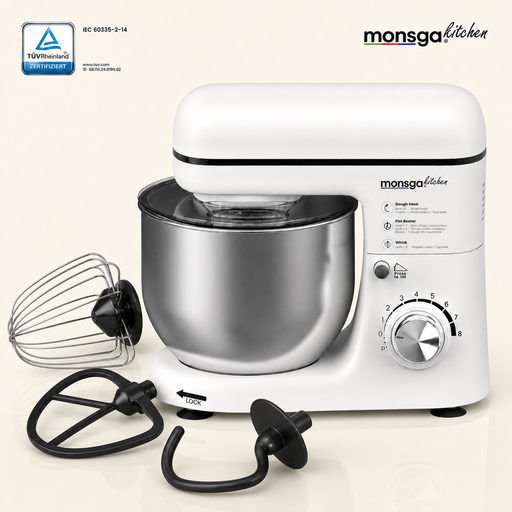 Image unavailable
This model may suit mixed baking if its bread-dough limit covers your usual batch. Its name specifies a 5.0L bowl, eight speed settings, a dough hook, whisk, beater and splash guard; the 1000W figure is described as peak power, not a kneading result. Confirm the dough limit, plug and electrical details before buying.
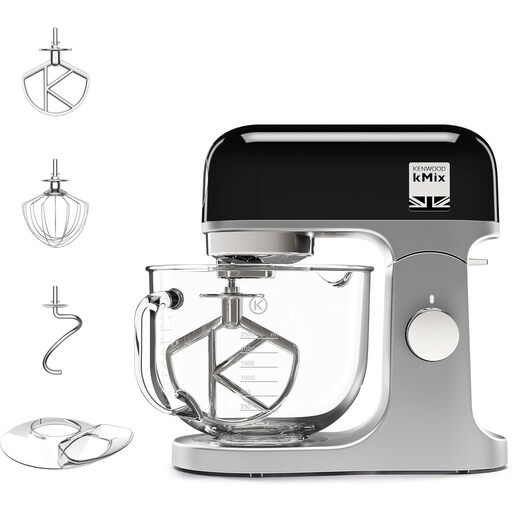 Image unavailable
Consider this model if you want a dough hook alongside tools for whisking and mixing. Its name specifies a 5L capacity, 1000W, K-beater, whisk and dough hook. Check the dough limit and bowl material for the exact item, plus its plug and electrical details.
Choose by your normal largest batch and the exact model’s stated dough or flour limit, not bowl litres alone. Kenwood, Bosch and KitchenAid publish capacity figures for specific models or families, so check that the figure applies to the dough you make.
Choose the design that accommodates your regular batch and fits where you will use it. KitchenAid describes tilt-head models as offering convenient bowl access and suggests larger bowl-lift models for frequent, heavier use; check the exact model’s limits and the clearance each design needs.
Do not exceed the stated maximum for your mixer and dough type. Kenwood warns that going beyond its published capacity limits could damage a machine; consult your exact model’s manual and divide an oversized batch instead.
Check the warranty terms, any registration conditions, manuals and spare-parts support for the exact model. Ankarsrum, for example, provides UK manuals and spare-parts information and states a 7-year warranty whose terms should be reviewed before purchase.
Check the exact product’s plug and electrical ratings against your intended household supply, and read its instructions and safety information. Do not assume that an unfamiliar plug or a general certification claim establishes suitability for your use.