Space-limited regular bread bakers
If you make routine loaves but have a narrow worktop or limited storage, compare the mixer’s full dimensions and the room needed to reach its bowl. A bowl capacity alone will not tell you whether it fits.


Start with the space available for storing and operating the mixer, then match its stated dough or flour limit to your usual bread batch rather than choosing by bowl size or wattage alone. A compact model may suit smaller batches, while a larger machine can offer more stated dough capacity but needs more room and may be harder to move or use beneath cabinets.
If you make routine loaves but have a narrow worktop or limited storage, compare the mixer’s full dimensions and the room needed to reach its bowl. A bowl capacity alone will not tell you whether it fits.
If you often double recipes or make several loaves, start with the exact model’s stated dough or flour limit. A machine that accommodates your batch may also take up more space and be harder to store.
If the mixer must also handle cakes and whisking, check which tools come with the exact model and where you would keep them. Extra functions are useful only if the machine still suits your bread batches and kitchen space.
Measure the space first, check your usual bread-batch quantity against the exact model’s limit, then decide whether its other baking tools would earn their storage space.
| Concern | What to check | Who this matters to |
|---|---|---|
| Footprint and access | Measure the stored position and the clearance needed to reach the bowl or raise the head. Bosch UK lists its Series 4 at 28 × 28 × 27 cm; check dimensions for the exact model you choose. | If my worktop is narrow, I need a mixer I can leave accessible or put away without difficulty. Around 46% of consumers would make space and access their primary concern. |
| Bread-batch capacity | Compare the exact model’s stated dough or flour limit with your recipe, keeping those measures distinct. Bosch UK lists up to 1.9 kg yeast dough for Series 4; Kenwood GB lists 2.42 kg dough for the Chef XL KVL4100W. | When I regularly make larger batches, I need the documented limit to cover my usual dough rather than relying on bowl litres. For around 36% of consumers, batch capability would come first. |
| Other baking tasks | Confirm the dough hook and any whisk or beater included with your chosen variant, and consider where the tools will be stored. | If one appliance needs to cover bread and everyday baking, I care about the tools I will actually use. This would be the primary need for around 18% of consumers. |
Bowl volume is not a dough limit, and peak and rated power are different figures. The Joybuy listing for the MONSGA SM100, for example, distinguishes 1000W peak power from 600W rated power.
Check the exact model’s dough or flour limit, dimensions and included hook before deciding whether it suits your bread batches.
A mixer may fit where it is stored yet leave too little room to add ingredients or access its tools. Kenwood GB lists the Chef XL KVL4100W at 38.5 × 28 × 34.5 cm and 7.84 kg, both relevant if you plan to move it between uses.
Measure the intended worktop and storage position, including the clearance the mixer’s head or bowl needs during use.
Manufacturers may specify flour, finished dough or a particular dough type. Comparing those figures as though they measured the same thing can lead to a batch that exceeds the chosen model’s instructions.
Follow the capacity and dough-type limits in the exact model’s manual, adjusting your recipe quantity where needed.
Electrical Safety First advises keeping kitchen appliances and leads in good condition and avoiding overloaded sockets and water near electrical equipment.
Choose a dry, stable working position away from the sink, and check the plug and lead before use.
Bosch UK publishes dimensions and yeast-dough capacities for its kitchen-machine ranges, making the size-versus-batch decision easier to check by series.
KitchenAid distinguishes its smaller tilt-head format from larger bowl-lift machines, a useful choice when bowl access and space beneath cabinets matter.
Kenwood’s Chef XL format is worth measuring if larger batches and additional food-preparation functions matter more to you than compact storage.
These models offer different ways to fit bread kneading alongside limited kitchen space or other baking tasks. Check each mixer’s working clearance and its exact bread-batch limit before choosing; a bowl size is not a dough-capacity figure.
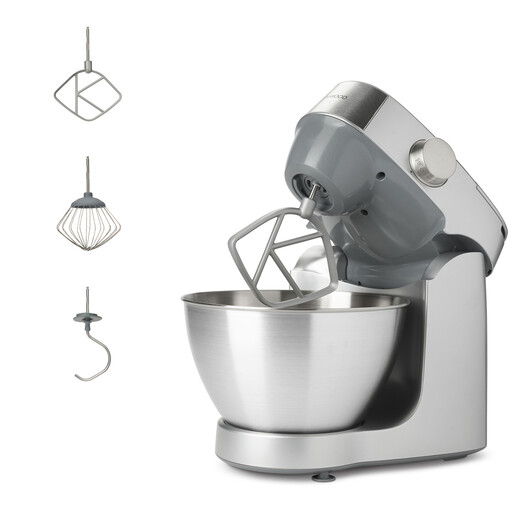 Image unavailable
Consider this model if you want to compare a smaller-bowl mixer with your usual bread recipe and available storage space.
The Joybuy listing identifies a 4.3L bowl and 1000W power; it states up to 1.2 kg flour for heavy doughs. Keep the flour figure distinct from the weight of finished dough.
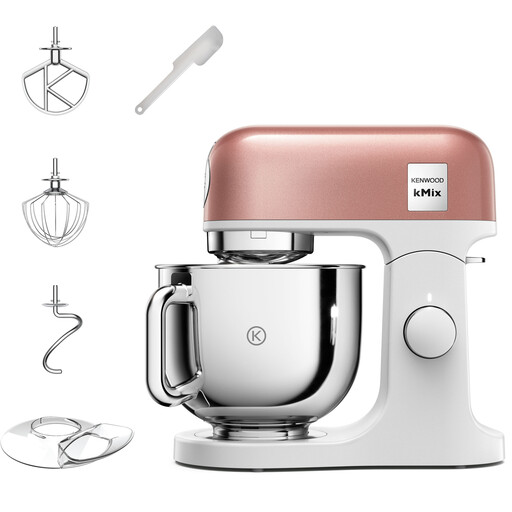 Image unavailable
Consider this model if bowl access for regular baking matters alongside bread kneading. Check the clearance needed to raise its head and compare the model’s dough-type limit with your recipe.
 Image unavailable
Consider this model if you want a bread-dough mixer that will also be used for other baking. Measure the worktop depth and storage position, then check the exact model’s dough limit against your usual batch.
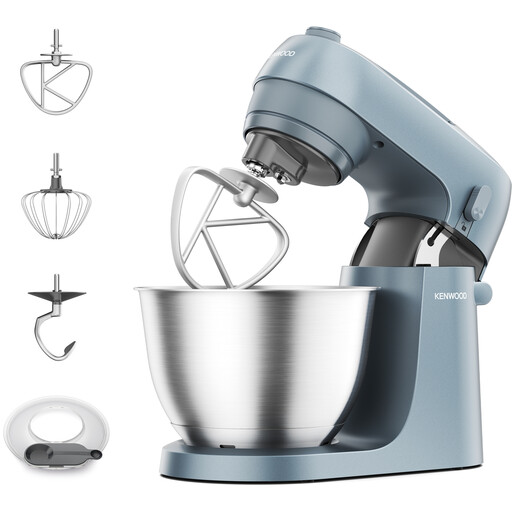 Image unavailable
Consider this model where storage space is the deciding factor, while allowing room to access the bowl. Confirm its permitted dough quantity and type before planning a bread batch.
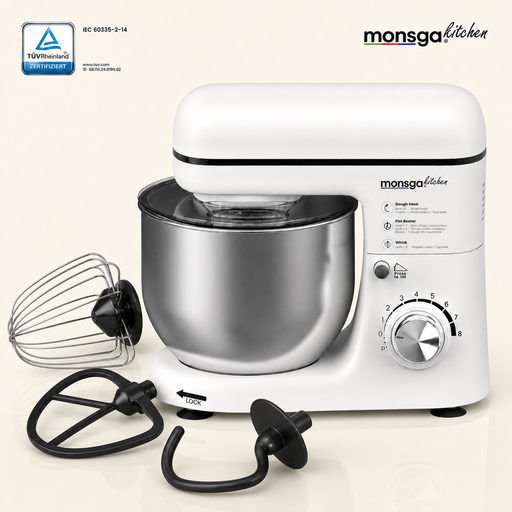 Image unavailable
Consider this mixer if you want tools for bread and other baking, but establish both its fit and its bread-batch limit before choosing it for a small kitchen.
The Joybuy listing identifies 1000W as peak power. Its 5.0L bowl figure does not establish how much bread dough the mixer can knead.
No: a bowl-lift design is not a requirement for every bread batch. KitchenAid says buyers making bread frequently or preparing double or triple batches may prefer a larger bowl-lift model; whichever format you choose, check the exact mixer’s stated dough or flour limit against your recipe.
Not on its own. A larger bowl does not establish dough capacity or whether the whole mixer will fit where you use it. Compare the exact model’s dimensions, working clearance and stated dough limit before giving up worktop or storage space.
Wattage alone cannot establish a mixer’s bread-batch limit. Look for the exact model’s stated capacity and whether it refers to flour, finished dough or a particular dough type; follow its manual when preparing heavier batches.
Use it on a dry, stable worktop with enough room to reach the bowl and controls, away from the sink. Electrical Safety First advises keeping kitchen appliances and leads in good condition and avoiding overloaded sockets.