Single-batch party bakers
If you want to knead the whole butter-rich brioche recipe at once, start with the exact mixer’s stated dough limit and check that a dough hook is included.


Choose a stand mixer by comparing your complete brioche recipe with the exact model’s stated dough limit, rather than judging capacity from bowl size alone. A larger machine may suit a single party-sized batch, while a mid-size model can make more sense for occasional baking if its dough limit covers your recipe and its size suits your kitchen.
If you want to knead the whole butter-rich brioche recipe at once, start with the exact mixer’s stated dough limit and check that a dough hook is included.
If this is an occasional birthday bake, a moderate-capacity mixer may suit you without committing worktop space to a larger machine. Your recipe still needs to fit its stated dough limit.
If the mixer must share a crowded worktop or be stored between uses, check its dimensions, weight and clearance as well as its dough capacity.
Work out the finished weight of your brioche dough first; then check the kneading equipment and whether the mixer will fit where you intend to use and store it.
| Concern | What to check | Who this matters to |
|---|---|---|
| Single-batch capacity | Compare the complete recipe, including butter, eggs and liquids, with the exact model’s stated limit for the relevant dough type. | I want to knead the whole party batch at once rather than divide it. Around 46% of consumers put single-batch capacity first. |
| Kneading workflow | Confirm that a dough hook is included; check for built-in scales if weighing directly into the bowl would help. | While preparing other parts of the party, I want the right kneading tool and fewer separate weighing steps. For around 27% of consumers, that workflow is the primary concern. |
| Storage and occasional use | Check the exact model’s dimensions, weight and clearance above the machine. | I may use the mixer only for occasional bakes and need to move or store it afterwards. Manageable size comes first for around 27% of consumers. |
A large bowl does not establish how much enriched dough the mixer can knead. Bosch Home UK, for example, publishes different yeast-dough limits across its stand-mixer series.
Calculate your finished dough weight and compare it with the limit for the exact model and dough category.
If your recipe exceeds the model’s stated dough limit, a smaller mixer may require you to divide the recipe.
Choose sufficient stated capacity for one batch, or plan separate batches without exceeding the model’s limit.
Separate batches also mean more mixing time and cleaning.
A heavy mixer can be awkward to move, while a raised head or top-mounted attachment may need space above the worktop.
Measure the intended location and compare it with the exact model’s dimensions and weight before ordering.
Mixers within a brand range can have different dough limits, bowls and included tools.
Match the complete model identifier and the specifications relevant to your recipe before relying on a comparison.
The Series 2, 4 and 6 give brioche bakers a range of sizes to compare.
Kenwood’s range includes smaller mixers and larger Chef models, but capacities need to be checked model by model.
KitchenAid offers tilt-head and bowl-lift mixers; the bowl-lift format is a route to consider for larger batches.
These mixers offer dough-hook options across moderate-batch and space-conscious choices. Compare each exact model’s dough guidance with your birthday brioche recipe before deciding whether to make one batch or split it.
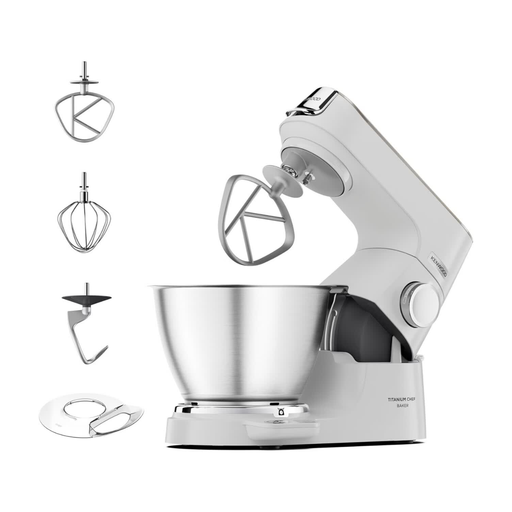 No image available
Consider this for a brioche batch within its stated dough limit. The Joybuy listing gives a 1.3 kg dough capacity and describes a dough hook and weighing directly into the bowl; compare the limit with your complete recipe.
Check whether its weight suits the place where you plan to use or store it.
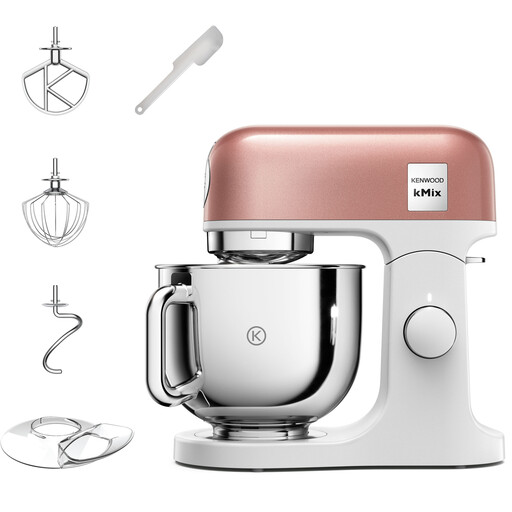 No image available
This dough-hook model is worth considering if its guidance for stiff yeast dough applies to your brioche recipe and covers the batch you intend to make.
For heavy mixtures, follow the listing’s guidance to limit operation to 10 minutes at a time and allow 45 minutes between batches.
 No image available
Consider this compact, dough-hook option if storage matters and your recipe fits its dough guidance. Its stated 1.2 kg heavy-dough figure is expressed in terms of flour, so do not treat it as a finished-dough limit.
Check both the flour quantity and the full enriched recipe against the exact model’s instructions.
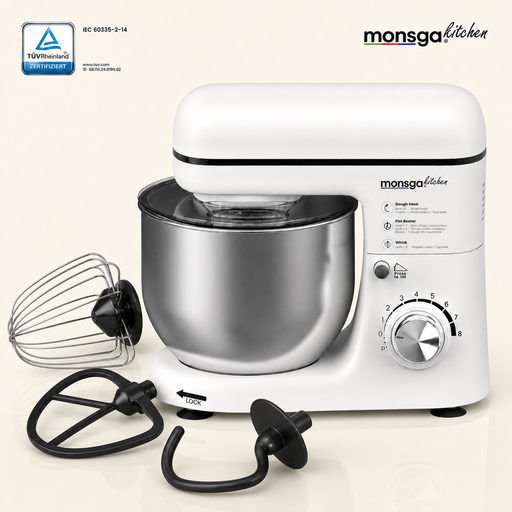 No image available
Its named dough hook makes this a mixer to assess for kneading brioche, but the 5.0 L bowl alone cannot establish whether your full batch fits.
Confirm the SM100’s applicable dough limit and product dimensions against your recipe and intended worktop.
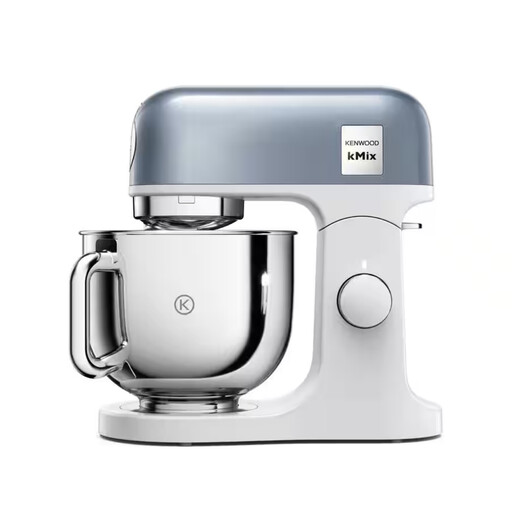 No image available
This dough-hook option may suit a brioche recipe that fits the exact model’s kneading guidance. Check its dough limit rather than relying on bowl volume to judge single-batch suitability.
Also consider whether moving or storing the mixer will be practical in your kitchen.
Compare the finished weight of the entire dough with the exact mixer’s stated limit for the relevant dough type. Count the butter, eggs and liquids as well as the flour; bowl capacity by itself does not establish how much dough the machine can knead.
Not necessarily: a mid-size mixer can suit brioche when its stated dough limit covers your recipe. KitchenAid positions its bowl-lift format for larger batches, making it more relevant if you expect to knead substantial quantities regularly.
Integrated scales let you weigh ingredients into the mixer bowl, which may save a separate weighing step during party preparation. They do not increase dough capacity; Bosch lists scales on the MUMS6ZM00G, and Kenwood lists direct-to-bowl weighing on the KVL85.004SI.
Yes, check the exact mixer’s conformity information and supplied plug before ordering for use in Great Britain. GOV.UK says CE marking continues to be recognised for products placed on the Great Britain market where the applicable conditions are met; that general guidance does not establish the status of an individual mixer.