Frequent buffet batch bakers
If you regularly make brioche for large gatherings, compare your planned dough weight with the exact mixer’s stated limit. That may determine whether you can make one batch or need to split it.


Choose a stand mixer by the exact model’s stated dough limit, not its bowl volume alone, and check the manual against your brioche recipe. A larger bowl-lift machine is worth considering for frequent heavy batches if you have room for it; for occasional buffets, a smaller mixer may suit you if you can divide the dough into batches.
If you regularly make brioche for large gatherings, compare your planned dough weight with the exact mixer’s stated limit. That may determine whether you can make one batch or need to split it.
If consistent kneading matters more than making the largest batch, look for a supplied dough hook and follow the model’s instructions for quantity, speed and mixing time.
If buffet baking is occasional and cabinet clearance is tight, a smaller mixer with planned split batches may fit your kitchen better than a large bowl-lift machine.
Plan the weight of your brioche batch first, then check the mixer’s dough instructions and the space it needs. Bowl volume is useful to know, but it is not a dough-weight limit.
| Concern | What to check | Who this matters to |
|---|---|---|
| Batch capacity | Compare your planned finished dough weight with the exact model’s stated limit, noting whether that limit refers to bread dough, another dough type or flour. | I would rather make fewer batches for a buffet, but need a stated limit that covers my recipe. Around 36% of consumers would put single-batch capacity first. |
| Kneading control | Check that a dough hook is supplied and follow the model’s instructions for quantities, speed and mixing time. | If I make rich yeast dough regularly, predictable kneading matters more to me than the largest bowl. Roughly 27% of consumers would prioritise dough handling. |
| Preparation workflow | Decide whether you would use integrated scales or optional preparation attachments, and confirm what comes in the box. | When brioche is one part of a larger spread, I want equipment that also helps with preparation. Around 19% of consumers would make that workflow their main concern. |
| Kitchen fit | Measure the worktop, overhead clearance and storage space with the mixer in the position needed for use. | I can split an occasional buffet batch, but the mixer must fit where I will use and store it. For about 18% of consumers, space and access would come first. |
A bowl’s volume does not tell you its permitted dough load. Kenwood specifies a 2.42 kg dough capacity for the Chef XL KVL4100W despite its 6.7 L bowl; manufacturers also describe dough limits on different bases.
Check the exact model’s dough or flour limit against your recipe, and split a batch rather than assuming spare bowl space permits a heavier load.
Speed guidance is model-specific. KitchenAid advises using a dough hook at speed 2 for yeast breads on its stand mixers and cautions that higher speed is harder on the motor.
Follow your mixer’s manual and recipe instructions rather than applying KitchenAid’s setting to another brand.
KitchenAid describes its bowl-lift machines as taller and larger than its tilt-head models. That difference matters beneath wall cupboards and when moving a mixer into storage.
Measure the intended worktop and storage positions before choosing a larger format. If clearance is the limiting factor, consider a smaller mixer and planned split batches.
Its tilt-head and bowl-lift ranges give buyers a format choice when balancing kitchen space against frequent heavy mixing.
The Chef XL KVL4100W is a large-bowl option for buyers considering dough mixing alongside other buffet-preparation tasks.
The MUMS6ZM00G combines ingredient weighing with a stated dough limit for buyers who value both parts of the preparation process.
These stand mixers have dough hooks relevant to brioche preparation. For a buffet, check each model’s dough instructions before deciding whether to make one batch or several; the capacities stated below do not all use the same basis.
 Image unavailable
Consider this model if you want to weigh ingredients during preparation and can size your brioche batches to the maker’s instructions.
The listing specifies a 4.6 L bowl, built-in scales, a supplied dough hook and a 1.3 kg maximum dough load. Check how that limit applies to your enriched-dough recipe.
 Image unavailable
Consider this compact mixer if you have limited kitchen space and are prepared to divide larger buffet quantities.
The listing specifies a 4.3 L bowl, a supplied kneading hook and a 1.2 kg flour-based dough maximum. Do not compare that figure directly with a finished-dough-weight limit; consult the manual for your recipe.
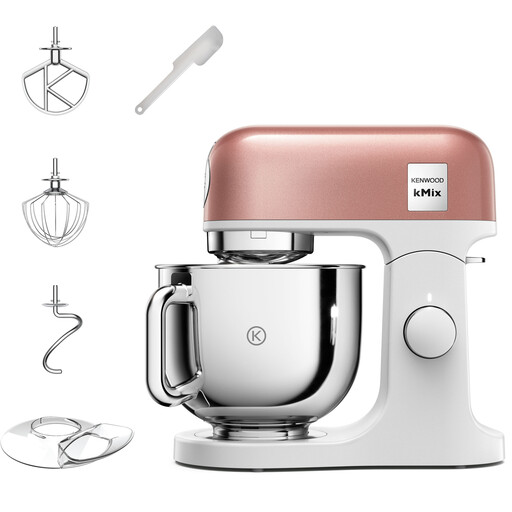 Image unavailable
Its tilt-back head may appeal if access to the bowl matters alongside planned yeast-dough batches.
The listing specifies a 4.6 L bowl, a dough hook and a 1.35 kg maximum for stiff yeast dough. Check the manual’s limit and operating-time guidance for your brioche recipe.
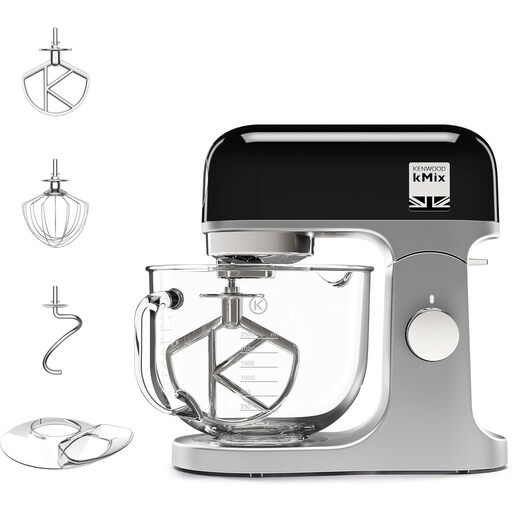 Image unavailable
Consider this tilt-back mixer if bowl access is important, but confirm its permitted dough load before planning buffet quantities.
Its listing specifies a 5 L bowl and a supplied dough hook. Check the manual for kneading limits, and confirm the supplied bowl material with the seller before choosing this variant.
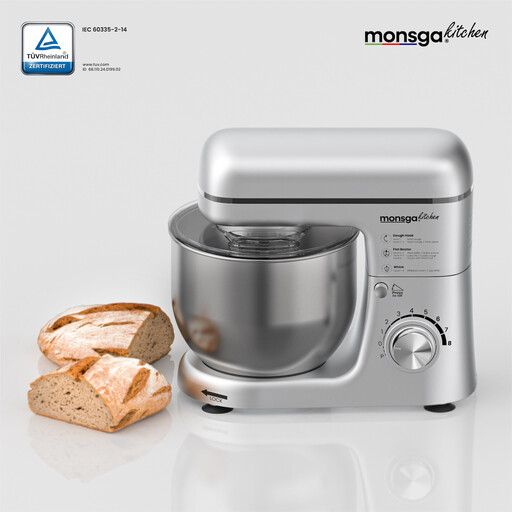 Image unavailable
This is an option to investigate if you want a supplied dough hook and a tiltable head for bowl access.
The listing specifies a recommended usable bowl capacity of 5.0 L and eight speed settings. Confirm the permitted dough weight and kneading instructions before planning a buffet batch; bowl volume alone cannot establish the load.
Start with the finished dough weight your recipe requires, then check the exact mixer’s stated limit and how its maker defines that limit. If the planned load approaches it, divide the dough into batches rather than judging capacity by bowl litres.
It is a useful format to consider for frequent heavy batches, provided its stated limits cover your recipe and it fits your kitchen. KitchenAid describes its bowl-lift machines as suited to larger quantities; a smaller tilt-head can still suit bakers willing to split batches.
Follow the instructions for your exact mixer and recipe. KitchenAid advises using its dough hook at speed 2 for yeast breads, but that setting is not a rule for other brands or models.
Check the seller’s product documentation for the place where the mixer will be supplied and used. UK government guidance recognises CE marking alongside UKCA for applicable products placed on the Great Britain market, while Northern Ireland has separate processes; a marking alone is not a substitute for checking the particular appliance and seller information.
Check the guarantee terms for the exact model and purchase channel, along with the route for repairs, spare parts and service. Do not assume terms stated for one model apply across a brand’s range.