Weekly lunchbox brioche baker
You make modest batches repeatedly. A supplied dough hook and guidance that covers your recipe matter, alongside a machine you can keep accessible for regular baking.


Choose a stand mixer for lunchbox brioche by comparing your recipe with the exact model’s dough guidance, then consider how often you bake and where the machine will stand. A smaller everyday mixer can suit modest batches where space matters; a larger bowl-lift format is worth considering for regular, larger batches if it fits your kitchen. Published bread-dough and flour limits are not interchangeable brioche ratings.
You make modest batches repeatedly. A supplied dough hook and guidance that covers your recipe matter, alongside a machine you can keep accessible for regular baking.
You make brioche occasionally and want the mixer to fit your available space while also handling other baking tasks, such as cake mixing or whisking.
You often scale up recipes or make several loaves. Compare model-specific dough limits and allow enough room to operate and store a larger machine.
Start with the weight and ingredients of your usual brioche recipe. Then check the exact mixer’s dough guidance, the space it needs and whether you regularly make more than one batch.
| Concern | What to check | Who this matters to |
|---|---|---|
| Kneading brioche dough | Check for a supplied dough hook and compare the exact model’s flour or dough limit with your recipe. Do not treat a bread-dough rating as a brioche test. | If I bake brioche repeatedly, I want to know that the hook is supplied and that my batch fits the model’s guidance; around 40% of consumers put this kneading need first. |
| Space and everyday use | Measure the worktop and storage space, including clearance to raise a tilt head or handle the bowl. Check which tools are supplied for other baking tasks. | When kitchen space is tight, I need a mixer I can keep within reach and use beyond dough; around 30% of consumers prioritise space and everyday versatility. |
| Larger batches | Compare your scaled-up recipe with the exact model’s stated dough limit, and check the machine’s operating dimensions. | If I regularly make several loaves, I would rather assess capacity before having to split a recipe; for around 30% of consumers, larger-batch capability is the primary need. |
Manufacturers may express limits as flour, yeast dough or bread dough. Those measures do not describe identical mixtures, and none alone establishes how a particular brioche recipe will mix.
Compare your ingredient quantities with the manual for the exact model. If a recipe exceeds its applicable guidance, divide the dough into smaller batches.
KitchenAid describes its larger bowl-lift format as taller and bigger than its tilt-head models. Bowl volume does not tell you whether the whole machine fits beneath cupboards or in storage.
Measure the intended location and allow room to position and remove the bowl. For a tilt-head alternative, check the clearance needed to raise the head.
Kenwood offers optional attachments across its kitchen-machine range, but compatibility depends on the machine and accessory models.
Decide which tasks you need the mixer to perform, then check the supplied tools and the exact accessory code against Kenwood’s compatibility guidance.
Optional attachments also need storage space.
Food storage is a separate decision from mixer choice. Safefood advises keeping foods that spoil quickly, including dairy and meat, refrigerated.
Keep perishable additions chilled before packing and consider how the lunchbox will stay cool until it is eaten.
An insulated lunchbox or bag may be useful when the filling needs to stay cold.
Its UK range includes a 4.7L tilt-head model and a larger 5.6L bowl-lift model, giving bakers different formats to compare against their batch size and available space.
Its Chef and Chef XL kitchen machines may interest bakers who want to consider preparation tasks beyond mixing brioche dough.
The MUM58259GB is a smaller-bowl kitchen-machine reference for buyers comparing an everyday format with larger stand mixers.
These stand mixers cover everyday baking and dough-making choices. Compare each model’s supplied tools and dough guidance with your usual brioche batch rather than choosing by bowl size alone.
 Image unavailable
For modest brioche batches and other baking tasks, compare your recipe with this model’s dough guidance before choosing it.
The product name specifies a 4.3L bowl, 1000W rating and three bowl tools. Confirm which tools are supplied and the applicable dough limit for your recipe.
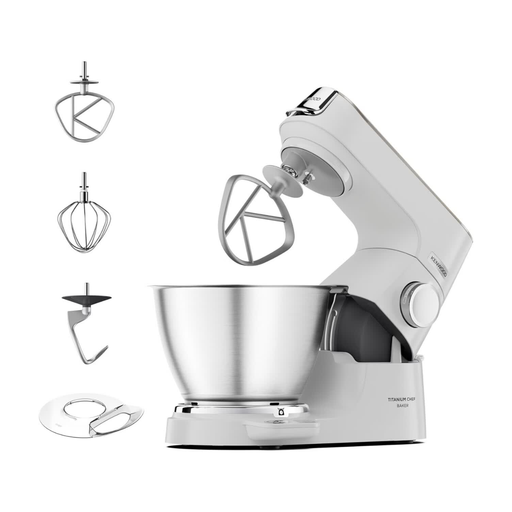 Image unavailable
This Chef Baker may suit someone who wants to knead brioche and use the mixer for other baking tasks. Check the supplied tools and compare the exact model’s dough guidance with your recipe.
If you plan to add Kenwood attachments, confirm compatibility using both the KVC65.001WH model and the accessory code.
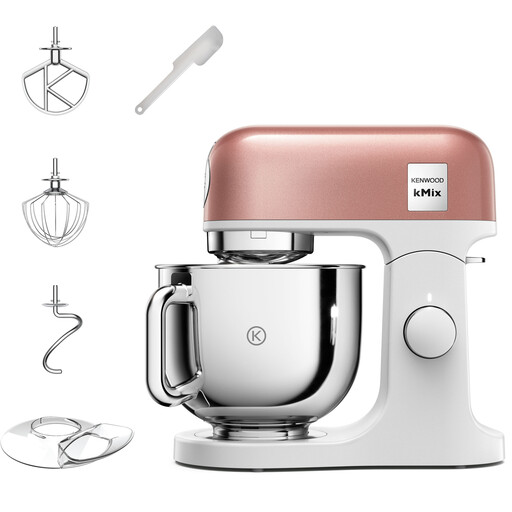 Image unavailable
For repeated brioche baking, check the KMX760API’s dough guidance against your recipe, particularly if you plan to make consecutive batches.
Confirm the manual’s operating and resting instructions for heavy mixtures before relying on it for frequent batch preparation.
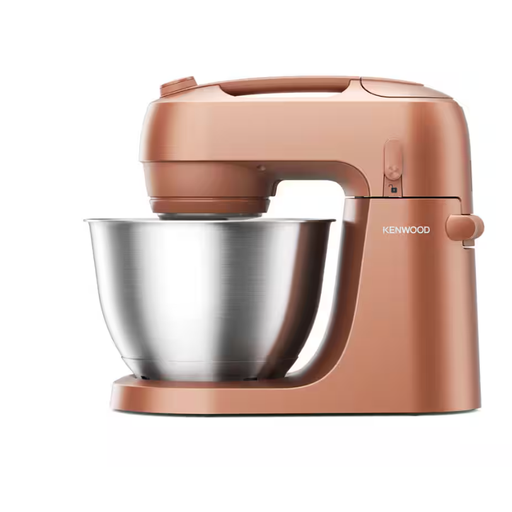 Image unavailable
This Go model is worth considering when storage space matters and you usually make a modest brioche batch.
Check its exact dimensions against your cupboard and confirm that its dough guidance covers the weight of your recipe.
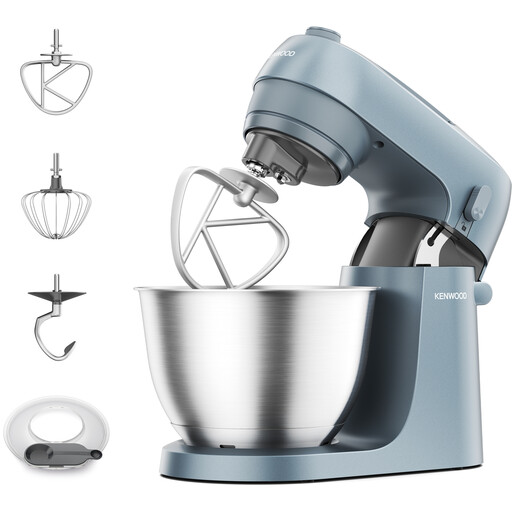 Image unavailable
For a modest batch in a kitchen with limited space, compare this Go model’s dimensions and dough guidance with your plans before buying.
Confirm the supplied colour with the seller if it matters to you: the product title says blue, while its description identifies the model colour as grey.
Choose according to your recipe weight and how often you scale it up, not a universal bowl-size threshold. A smaller everyday mixer may suit an ordinary batch if its exact dough guidance covers the recipe; consider a larger bowl-lift format when you regularly make several loaves and have room for the machine. KitchenAid’s published 3.7kg figure for the 5KSM60SPX refers to bread dough, not brioche.
No: wattage alone does not establish how a mixer will handle your brioche recipe. Check the supplied dough hook, the exact model’s applicable dough limit, your batch weight and the space the machine needs.
No. Kenwood’s attachment guidance distinguishes between machine models, so check both the exact stand-mixer model and the accessory code before choosing an attachment.
The filling needs its own storage plan regardless of which mixer made the dough. Safefood advises refrigerating foods that spoil quickly, such as dairy and meat; keep perishable additions chilled before packing and consider how they will stay cool until lunch.