Choose by the exact mixer’s stated dough capacity and supplied dough tool, rather than bowl size or wattage alone. For an occasional single brioche, check that the complete recipe fits the model’s dough guidance; for frequent or doubled batches, consider a higher-capacity machine while allowing for its worktop space and weight.
Who these mixers suit
Regular family-batch baker
If you make brioche or other yeast dough regularly, compare your usual and doubled batches with the stated dough limit. KitchenAid UK identifies frequent heavy use and larger quantities as reasons to consider its bowl-lift models, but capacity still depends on the exact machine.
Occasional gathering host
If you plan to make one brioche for guests, a smaller machine may meet your needs without occupying a permanent worktop position. Kenwood GB’s single-brioche recipe uses 450 g flour, five eggs and 200 g butter; check the whole recipe against the mixer’s batch guidance.
Space-conscious home baker
If storage and lifting matter as much as baking, check the machine’s dimensions, weight and room needed to access its bowl. Confirm the dough tool and operating guidance for the model rather than judging its kneading capacity by bowl volume or wattage.
What matters when buying
Decide whether you will make one brioche or repeat or double the recipe, then check dough capacity and kneading instructions before weighing up convenience features and kitchen fit.
| Concern |
What to check |
Who this matters to |
| Dough capacity |
Compare the complete planned batch with the exact model’s stated dough or yeast-dough limit; treat bowl litres as a separate check. |
If I might double a brioche recipe for guests, I need to know the mixer can handle the full batch. Around 33% of consumers put batch capacity first. |
| Kneading control |
Confirm the supplied dough tool and follow the model’s speed and operating instructions for dough. |
When I bake enriched dough regularly, I want a suitable tool and clear kneading instructions rather than relying on a power figure. Kneading is the primary concern for around 33% of consumers. |
| Useful features |
Check which attachments come with the exact bundle and whether extras such as weighing into the bowl would be used often. |
If I host only occasionally, I would rather cover the essential baking tasks than choose extras I seldom use. Around 20% of consumers prioritise that balance. |
| Kitchen fit |
Measure the worktop and overhead clearance, and consider the machine’s weight if it must be stored between bakes. |
In a kitchen with little free worktop space, I need a mixer I can place, access and put away comfortably. Space and handling come first for around 14% of consumers. |
Common buying mistakes
-
Using wattage as a dough-capacity rating
Motor wattage and the manufacturer’s dough limit describe different things. Bosch GB lists a 1,000 W rating and a separate maximum of 1.9 kg yeast dough for its MUM58W20GB; neither figure should be transferred to another model.
Find the dough limit for the machine you intend to buy, then compare it with your usual recipe and any batch you expect to double.
-
Assuming a large bowl permits a large dough batch
A 5 L label does not replace model-specific kneading guidance. Salter’s EK5620 manual gives a dough-hook guide of 585 g dry ingredients and 315 g wet ingredients and warns against high-speed bread kneading.
Check the exact manual for the supplied hook, ingredient limits and speed instructions before planning a brioche batch.
-
Forgetting clearance and lifting weight
A high-capacity machine can be awkward to use if it must be lifted out for every bake or cannot be accessed beneath a cupboard. Kenwood GB lists its Titanium Chef Baker XL KVL85.004SI at 11.5 kg.
Measure the intended position, including space above the mixer, and consider where it will stay between gatherings.
-
Leaving guests’ ingredient needs until serving time
Kenwood GB’s example brioche uses flour, eggs, milk and butter. Preparing a separate bake for someone with an allergy also calls for care with ingredients, equipment and work surfaces.
Ask guests about allergies or dietary requirements before baking, check ingredient packaging and clean shared equipment thoroughly when preparing an alternative.
Brands to consider for this task
Kenwood
Kenwood’s kitchen-machine range includes larger Chef Baker models for bakers considering repeated or bigger batches.
- Kenwood GB states a 2.56 kg dough capacity for the Titanium Chef Baker XL KVL85.004SI, with 7 L and 5 L bowls, a dough tool and weighing into the bowl.
- Those capacities and features belong to that specific model; check the variant, available accessories and kitchen space for any Kenwood machine you consider.
KitchenAid
KitchenAid offers tilt-head and bowl-lift formats, making the choice partly about how often you handle heavy dough and how you prefer to access the bowl.
- KitchenAid UK describes bowl-lift machines as generally preferred for frequent heavy use; select models have a PowerKnead spiral dough hook.
- Flour limits and supplied hooks vary by model. Check the chosen machine’s maximum quantity and how comfortably you can remove its bowl and attachments.
Bosch
Bosch’s MUM kitchen machines offer a model-specific capacity figure to compare with a planned brioche recipe.
- Bosch GB lists a 3.9 L bowl, kneading hook and maximum of 1.9 kg yeast dough for the MUM58W20GB.
- A different Bosch model may have a different limit or accessory set, so check its own details before planning repeated or doubled batches.
Salter
Salter’s Kuro stand mixer is an option to examine for occasional baking where the supplied tools and operating limits meet the recipe.
- Salter lists a 5 L bowl, dough hook, six speeds and pulse control for the researched Kuro model.
- Its EK5620 manual gives a specific dough-hook ingredient guide and cautions against high-speed bread kneading; do not treat the 1,200 W rating as a dough limit.
Joybuy stand mixers for brioche
These stand mixers are options to assess for a family brioche bake. Match your complete recipe and baking frequency to the exact model’s dough and operating guidance before choosing.
 No image available
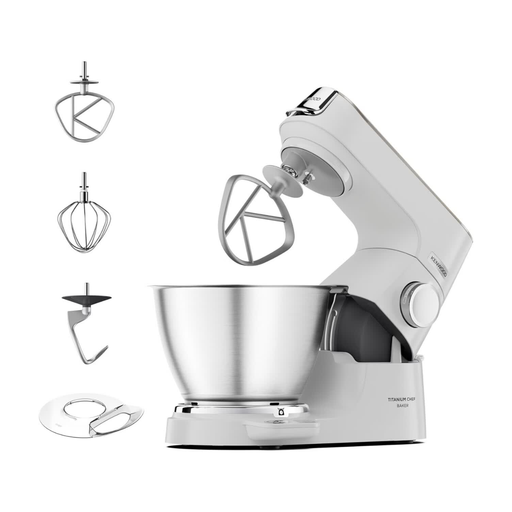
Kenwood Prospero+ KHC29.A0SI stand mixer, silver
For an occasional family bake, compare your complete brioche batch with this model’s dough guidance before choosing it.
The product name specifies a 4.3 L bowl and 1,000 W rating; neither establishes its brioche dough limit.
View on Joybuy
 No image available
Kenwood Chef Baker KVC65.001WH stand mixer, white
Consider how often you will bake and whether weighing ingredients into the bowl would be useful for your routine.
Before making brioche, check the KVC65.001WH manual for the applicable dough limit and kneading instructions, and allow for its weight if you plan to store it away.
View on Joybuy
 No image available
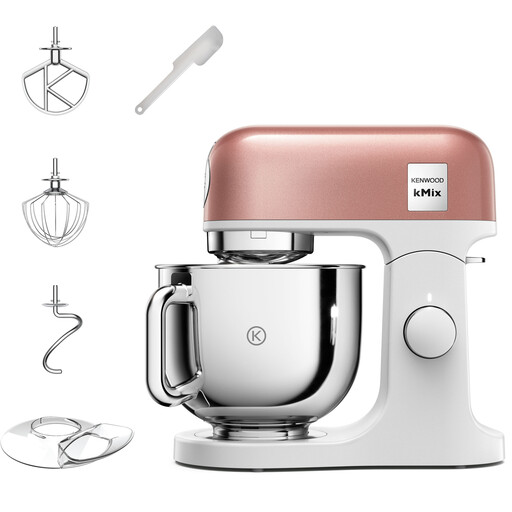
Kenwood kMix Editions KMX760API stand mixer, Apricot Pink
If you expect to make successive family batches, pay particular attention to this model’s heavy-dough operating and cooling instructions.
Check its manual before applying a stiff-yeast-dough limit to your enriched brioche recipe.
View on Joybuy
 No image available
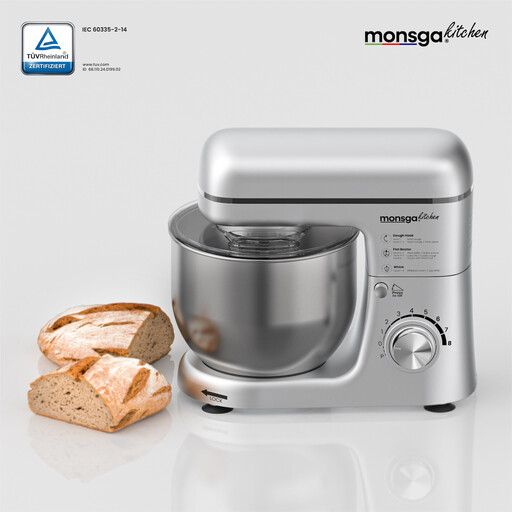
Monsga SM100 stand mixer, 5.0 L, 8 speeds
If you are considering this mixer for brioche, check the SM100’s maximum dough quantity and kneading instructions against your recipe.
Its product name specifies a 5.0 L bowl, eight speed settings and a dough hook; bowl volume and a peak-power claim do not establish a dough limit.
View on Joybuy
 No image available
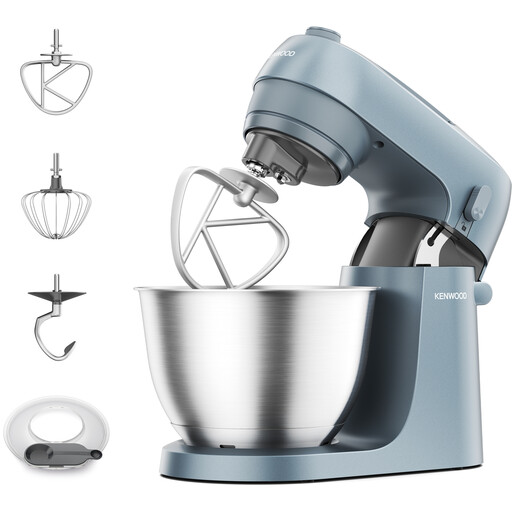
Kenwood Go KZM35.000GY stand mixer, blue
For a kitchen where storage matters, compare this model’s dimensions and handling with the space you have available.
Before choosing it for family brioche, confirm the maximum dough quantity, supplied tool and kneading guidance for the KZM35.000GY.
View on Joybuy
Questions about brioche mixers
Which attachment should I use for brioche dough?
Use the dough hook or dough tool specified for your mixer and recipe. Kenwood GB’s brioche method calls for its Dough Tool while the initial ingredients are mixed and after softened butter is added; check your own model’s supplied attachment and instructions.
Can I judge brioche capacity from the bowl size?
No: bowl volume describes available space, not the mixer’s rated dough load. Compare your complete recipe with the exact model’s published dough or yeast-dough limit, particularly if you intend to make two batches’ worth at once.
Should I knead brioche at high speed?
Use the speed and timing instructions for your exact mixer and recipe rather than assuming faster is appropriate. Salter’s EK5620 manual warns against high-speed bread kneading, while Kenwood GB’s brioche recipe changes speed after the butter is added; neither instruction is a universal setting for other machines.
What should I check before serving brioche to guests?
Ask guests about allergies and dietary requirements before choosing ingredients or preparing an alternative bake. Kenwood GB’s example brioche uses flour, eggs, milk and butter; check packaging and avoid transferring ingredients between bakes through shared bowls, tools or work surfaces.


