Large-batch buffet bakers
You are making a large quantity of filling, either in one batch or several close together. Bowl size and the time spent preparing the next batch matter more than the mixer’s colour.


For a large cheesecake-filling batch or several batches in succession, start with the recipe’s volume and consider a larger bowl or a two-bowl mixer; stated bowl capacity alone does not establish how much filling you can mix. A smaller tilt-head model can make sense for repeated home-sized batches when access to the bowl matters more than making everything at once. If the buffet is part of a food business, plan chilled storage and check the appliance’s intended-use terms separately.
You are making a large quantity of filling, either in one batch or several close together. Bowl size and the time spent preparing the next batch matter more than the mixer’s colour.
You want to control the mixing and reach the bowl easily when adding ingredients or checking the filling.
You need enough room for your cheesecake recipe, but the mixer must also fit your kitchen and work for smaller baking jobs.
Work out the filling volume and number of batches first, then decide how much bowl access, preparation convenience and counter space matter to you.
| Concern | What to check | Who this matters to |
|---|---|---|
| Batch capacity | Compare your recipe’s volume with the bowl size and the exact model’s mixture guidance; allow headroom. | I need enough filling for the buffet without repeatedly stopping to empty the bowl. Around 36% of consumers would put batch capacity first. |
| Mixing control | Check the included beater, speed settings and access for inspecting the filling. | If I want to watch the texture as I add ingredients, controlled mixing is my priority; it would come first for around 29% of consumers. |
| Preparation between batches | Check whether another bowl or integrated scales are included, and read the cleaning instructions. | When several batches follow one another, I want to organise ingredients without unnecessary transfers. Around 21% of consumers would prioritise that preparation routine. |
| Kitchen fit and access | Measure the mixer’s position and the clearance needed to raise a tilt-head or remove a bowl. | I host buffets occasionally and need a mixer I can use comfortably in my available space; that would be the main concern for around 14% of consumers. |
A stated bowl size does not tell you the maximum amount of your particular filling the mixer can handle, or how much room remains while it mixes.
Calculate your recipe’s volume, leave headroom and check the exact model’s mixture guidance before planning a single large batch.
Kenwood’s guarantee terms give no rights under that guarantee to someone acquiring an appliance for commercial or communal use. That matters if the buffet is part of a business.
Check the intended-use, guarantee and service terms for the exact appliance before buying it for catering.
For a food business, mixing does not replace suitable refrigerated storage and temperature monitoring where needed. The Food Standards Agency also sets out registration requirements for food businesses.
Plan chilled holding separately, and check whether the buffet activity requires food-business registration.
Opening a tilt-head and removing a bowl or beater require usable clearance, not just a place for the appliance to stand.
Measure the intended counter position and, where possible, try the bowl and attachment removal routine before choosing a configuration.
The Chef Baker and Chef Baker XL lines are relevant when bowl arrangements and staged preparation matter.
Its tilt-head and bowl-lift configurations offer different approaches to bowl access and frequent use.
The cited Series 6 model is a reference point for buyers comparing larger bowls and integrated weighing.
These mixers offer different stated bowl sizes and mixing arrangements for home buffet preparation. Match any model to your recipe volume and intended use rather than treating its bowl size as a cheesecake-filling limit.
 No image available
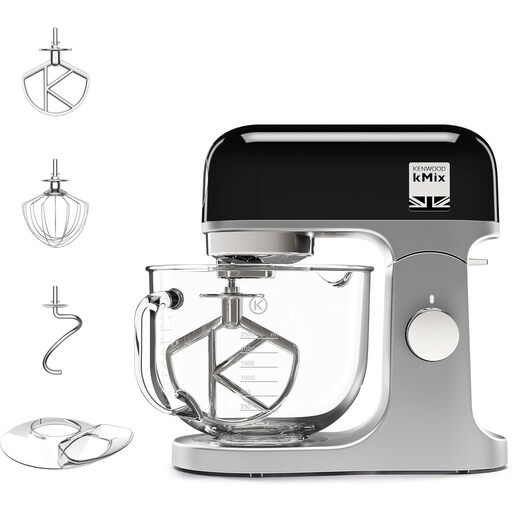
Consider this tilt-head model if access for adding ingredients matters during repeated batches.
Its name specifies a 5.0L stainless-steel bowl, eight speed settings, a beater, whisk and splash guard, and 1000W peak power.
Check your recipe volume and the model’s mixture guidance before deciding how much filling to mix at once.
 No image available
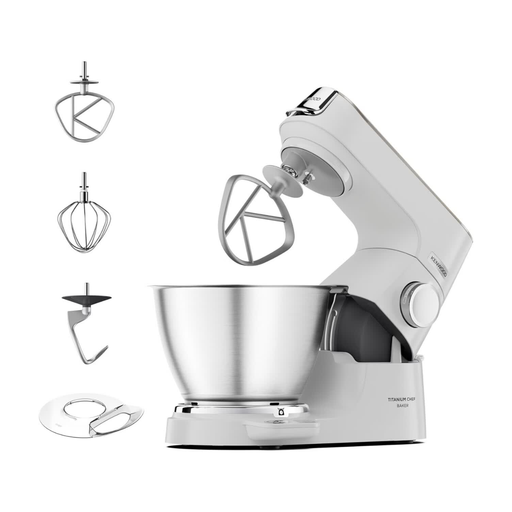
Consider this model if organising ingredients while preparing successive batches is a priority. Confirm the included bowl, tools and weighing features for this exact package.
Check its mixture guidance against your recipe and allow enough clearance to operate the mixer in its intended position.
 No image available
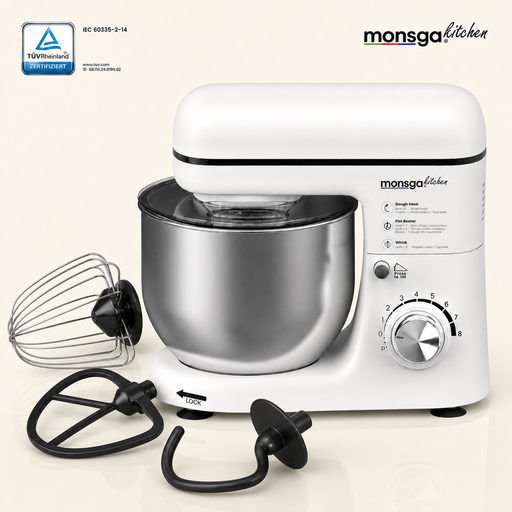
Consider its stated bowl size for your planned batches, while checking how much room your filling needs during mixing.
The name specifies a 5L bowl, 1000W, K-beater, whisk and dough hook. Confirm the bowl material for the exact variant before buying.
 No image available
Consider this mixer for a smaller filling batch, or for several batches if the recipe will not fit with sufficient headroom.
The name specifies a 4.3L bowl, three bowl tools and 1000W. Check the model’s guidance for your filling rather than applying a limit intended for dough.
 No image available
Consider this model if a larger stated bowl and tilt-head access are priorities for a home buffet.
Its name specifies 10 speeds and includes a beater, whisk and dough hook. Confirm the usable quantity for your filling; the product information describes the appliance as intended for domestic use.
Not necessarily: choose around your recipe’s volume, the number of batches and the headroom needed while mixing. Stated bowl litres are not a cheesecake-specific batch limit, so check the exact model’s guidance before assuming one batch will fit.
A tilt-head model suits buyers who prioritise quick access to the bowl and attachments; KitchenAid generally positions bowl-lift designs for frequent, heavier use. Neither mechanism alone establishes the texture of your cheesecake filling, so compare batch size and the space needed to operate it.
Check that the exact package includes the beater your recipe calls for, such as a flat paddle or flex-edge beater, and follow the manufacturer’s speed guidance. KitchenAid lists both a paddle and flex-edge beater with its 5KSM175PS package.
If you are starting or taking over a food business, the Food Standards Agency says to register with your local authority at least 28 days before trading or food operations start. Making a private, unpaid buffet at home does not, by itself, mean you are operating a food business.
Plan appropriate refrigeration and refrigerated storage separately from the mixer. The Food Standards Agency’s MyHACCP guidance also calls for temperature monitoring where needed to ensure food safety and suitability; the controls required depend on the operation.