Large-batch buffet hosts
If you want one mix to cover a substantial part of the buffet, start with the exact model’s stated dough limit. Bowl capacity alone will not tell you how much dough the machine is intended to knead.


Choose a stand mixer by the dough quantity you need to prepare before the buffet, using the stated limit for the exact model rather than bowl size or motor wattage alone. A larger-capacity machine makes sense when you need substantial or frequent batches; a smaller all-rounder can suit an occasional buffet if you have time and space to make and proof several batches. Published limits for dough, bread dough, yeast dough and flour are not interchangeable promises for every pizza recipe.
If you want one mix to cover a substantial part of the buffet, start with the exact model’s stated dough limit. Bowl capacity alone will not tell you how much dough the machine is intended to knead.
If pizza or bread dough is a regular task, look closely at the model’s dough instructions, supplied tool and stability during mixing. Consider where a larger machine will stand between uses.
If the buffet is an occasional event, you may prefer a mixer that also handles everyday baking. That choice works only if its permitted dough quantity fits a realistic schedule of separate mixes and proofing containers.
Work out your recipe’s finished dough weight and available preparation time before comparing machines. Then check whether the exact model and its supplied tools suit the batches you intend to make.
| Concern | What to check | Who this matters to |
|---|---|---|
| Dough-batch capacity | Compare the exact model’s stated dough limit with your recipe’s finished dough weight, keeping a margin for your particular formula. | If I need much of the buffet dough ready from one mix, an appropriate stated limit matters more to me than bowl litres; around 37% of consumers would put batch capacity first. |
| Heavy-dough suitability | Check the supplied dough tool and the model’s kneading instructions, including batch and operating limits. | When I make relatively stiff dough often, I want a machine intended to handle that repeated task; around 27% of consumers would make heavy-dough suitability their primary concern. |
| Preparation and cleaning | Confirm which bowls, tools and weighing features come with the exact package, and how its parts must be cleaned. | If several mixes and other buffet dishes are competing for my preparation time, changing and cleaning equipment matters; around 18% of consumers would prioritise that workflow. |
| Everyday flexibility | Check the machine’s dimensions and other supplied tools, then allow time and proofing space if its dough limit means multiple mixes. | For an occasional buffet, I may accept smaller batches in return for a mixer that fits my usual baking and storage space; around 18% of consumers would put everyday flexibility first. |
A bowl’s volume describes mixing space, not the quantity of dough a model is intended to knead. Published capacity figures may also refer to different measures, including finished dough and flour.
Calculate your recipe’s finished dough weight and consult the exact model’s dough limit and instructions before deciding how many batches you need.
A smaller permitted batch can also mean more mixes, proofing containers and preparation time.
A figure for bread dough, yeast dough or flour may not describe the same recipe or test conditions as yours. It cannot establish a like-for-like kneading comparison across brands.
Follow the exact model’s manual and plan an initial batch below its stated maximum rather than assuming every pizza formula can be mixed at the headline limit.
A machine that accommodates your batch plan still needs suitable counter and cupboard clearance, as well as a practical place to handle its bowl and tools.
Measure the available space and check the supplied bowls and cleaning instructions before choosing a larger model.
A machine that is awkward to move or wash can add work between buffet batches.
For a buffet run as a food business, mixing the dough is separate from managing food hygiene, holding temperatures and allergen information.
Plan those duties alongside the equipment choice. Food Standards Agency caterer guidance says hot food being held for service must be kept at 63°C or above; UK Government guidance requires food businesses to provide allergen information.
These model-specific figures can inform a batch plan, but their dough definitions differ. Check each exact model’s instructions rather than treating the figures as a cross-brand performance ranking.
The Titanium Chef Baker XL KVL85.004SI is an option to examine if you want a published dough limit alongside two bowl sizes and integrated weighing.
KitchenAid’s bowl-lift and tilt-head ranges give buyers different model-specific capacity measures to consider when scheduling buffet batches.
The Assistent Original is worth examining when reducing the number of mixes is a priority.
The MUM5XW40G offers a published yeast-dough quantity for hosts prepared to plan successive mixes.
These stand mixers are relevant to making pizza dough in planned batches alongside other home-baking tasks. Before choosing one for a buffet, check the exact model’s permitted dough quantity and operating instructions against your recipe; bowl size and the presence of a dough hook do not settle batch capacity.
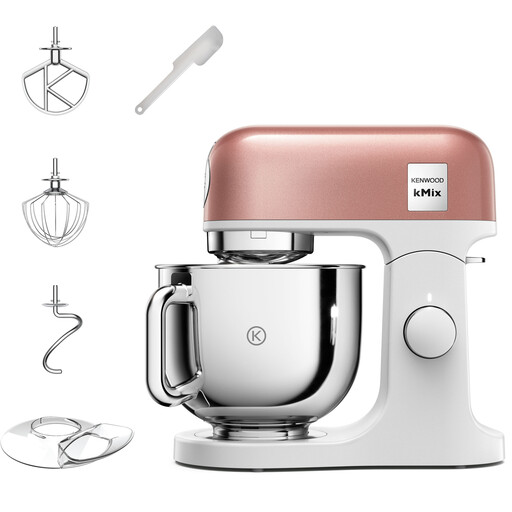 No image available
Consider this model if you can schedule separate dough mixes and want a stand mixer for other baking tasks too.
Check its permitted quantity for your dough and its operating and cooling instructions before setting a buffet timetable.
 No image available
This model is relevant if you want to organise buffet dough as separate batches while also using a mixer for other preparation.
Confirm the permitted dough quantity for your pizza recipe and allow a margin when planning each mix.
 No image available
Its 4.3 L bowl may be useful for smaller planned mixes, but bowl volume does not establish a safe dough batch size.
The product name specifies 1,000 W and three bowl tools. Check the exact dough instructions and what the stated quantity measures before dividing up your recipe.
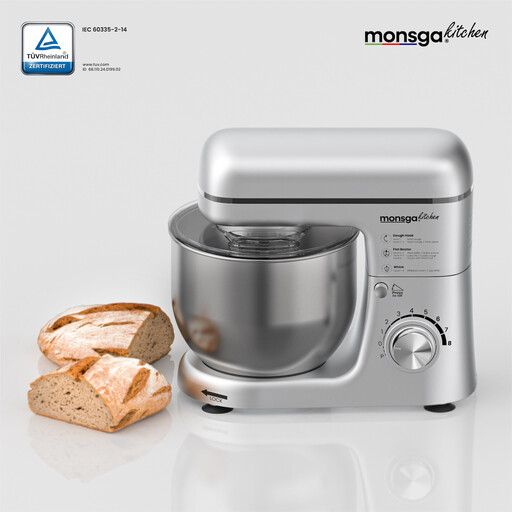 No image available
This is an option to examine if you want a dough hook alongside tools for other baking, provided its permitted dough quantity fits your batch plan.
The product name specifies a 5.0 L bowl and 1,000 W peak power. Neither figure establishes how much pizza dough the mixer can knead; check the exact model’s dough and operating instructions.
 No image available
Consider its dough hook and other named tools for household baking, but check the permitted dough quantity before relying on it for buffet batches.
The product name specifies a 6.5QT bowl, dough hook, whisk and beater; bowl volume is not a dough limit. The appliance is described as intended for domestic use only, so confirm suitability before considering it for a food-business buffet.
Calculate your recipe’s finished dough weight, then compare it with the exact mixer’s stated dough quantity and plan any additional batches. Do not substitute bowl volume for that limit or treat a flour maximum as finished dough weight: Kenwood lists 2.56 kg of dough for the Titanium Chef Baker XL KVL85.004SI, while KitchenAid UK gives specified 4.8 L Artisan tilt-head models a 1 kg flour maximum.
Use the dough hook or dough tool intended for yeast dough with your exact model, following its instructions for batch size, speed and running time. Having a hook does not establish that every pizza-dough recipe can be mixed at the machine’s maximum stated quantity.
Plan food holding and allergen management separately from the mixer purchase. Food Standards Agency caterer guidance says hot food held for service must be kept at 63°C or above, while UK Government guidance requires food businesses to provide allergen information and manage allergens during preparation.
A private home gathering is not automatically a food business, so the food-business duty described in UK Government allergen guidance depends on the nature of the event. It is still sensible to establish ingredients and avoid cross-contact when preparing food for guests with allergies.