Shared-counter bakers
If you make buttercream occasionally but must clear the worktop afterwards, check the machine’s dimensions, lifting weight and route back to its storage place before choosing a bowl size.


Choose a stand mixer around your usual buttercream batch and the route between storage and the worktop, then check the supplied beater, speed controls and bowl arrangement. A compact mixer suits a kitchen where it must be put away after use; extra bowls and larger capacity become more useful for repeated cakes, provided you have space to keep and clean the machine.
If you make buttercream occasionally but must clear the worktop afterwards, check the machine’s dimensions, lifting weight and route back to its storage place before choosing a bowl size.
If you cream ingredients often, a suitable beater, controllable speeds and a bowl you can scrape and wash matter alongside capacity. Check accessories against the exact model, rather than relying on the mixer’s motor rating alone.
If you prepare larger or consecutive mixes, extra bowl capacity may be useful. Allow for the space needed to store the machine and any additional bowls between decorating sessions.
For buttercream in a shared kitchen, decide which need takes priority: putting the mixer away, managing the mixing and clean-up, or preparing repeated batches.
| Concern | What to check | Who this matters to |
|---|---|---|
| Storage and access | Measure the storage route and available height; check the mixer’s weight and the clearance needed to use it. | If I have to clear a shared counter after each cake, I need to lift and store the mixer without making that a chore; around 42% of consumers put storage and access first. |
| Controlled mixing and clean-up | Check the exact model’s supplied beater, lower speed settings and splash-management accessories. | When I make buttercream regularly, I want to start icing sugar gently and clean up promptly; for around 33% of consumers, controlled mixing and clean-up are the primary concern. |
| Repeated-batch capacity | Compare the stated bowl capacities, whether a second bowl is included and the space required to store both. | If I decorate several cakes in a session, I need a bowl arrangement that works for consecutive mixes; larger-batch capacity comes first for around 25% of consumers. |
Capacity is less useful if retrieving and putting away the machine is awkward. Kenwood GB lists its Go KZM35.000RD at 6.3 kg and its Titanium Chef Baker XL KVL85.004SI at 11.5 kg, a difference worth considering when storage is shared.
Measure the shelf, the route to the worktop and the clearance needed while mixing. Choose the larger format when your usual batches justify keeping and moving it.
KitchenAid UK lists two bowls, a flex-edge beater and a pouring shield for the 5KSM175PS. A similar family name or product photograph is not a dependable substitute for the exact variant’s contents.
Check what comes in the box before relying on a second bowl, shield or particular beater.
Getting the accessory you want may mean choosing a different bundle or obtaining it separately.
For food-business use, Food Standards Agency guidance addresses allergen cross-contamination and adequate facilities for cleaning equipment and utensils. A shared mixer needs an agreed cleaning routine suited to that setting.
Establish who cleans the removable bowl and tools after use, and check the applicable allergen controls rather than assuming shared equipment is free of residues.
Kenwood’s cited range offers a choice between a compact mixer and a substantially heavier, larger-bowl format.
Bosch is relevant when you want to compare stated dimensions and bowl sizes against a constrained storage space.
The cited Artisan configuration is relevant if a second bowl and specific mixing accessories matter more to you than choosing by bowl size alone.
These stand mixers are relevant to beating buttercream when you are weighing up storage, bowl size and mixing accessories in a shared kitchen. Compare each exact variant with the space and batch size you normally use.
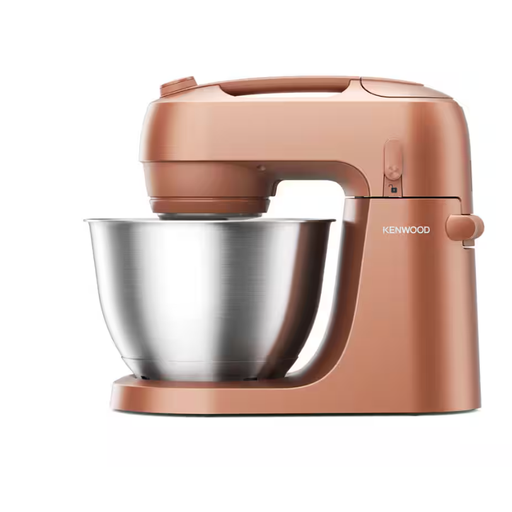 No image available
Consider this for buttercream if your mixer must be returned to storage after use. Check the exact variant’s bowl, supplied beater and weight against your usual batch and lifting route.
If housemates are sensitive to noise, seek a measurement for this model under relevant mixing conditions before deciding.
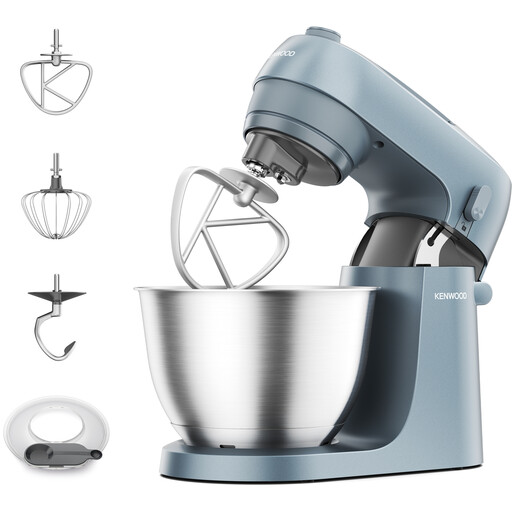 No image available
Consider this variant if you make smaller buttercream batches and need to store the mixer between uses. Check its stated dimensions, bowl and supplied tools against your available space and recipe.
Confirm the colour of the exact variant before buying, as the product information gives conflicting colour descriptions.
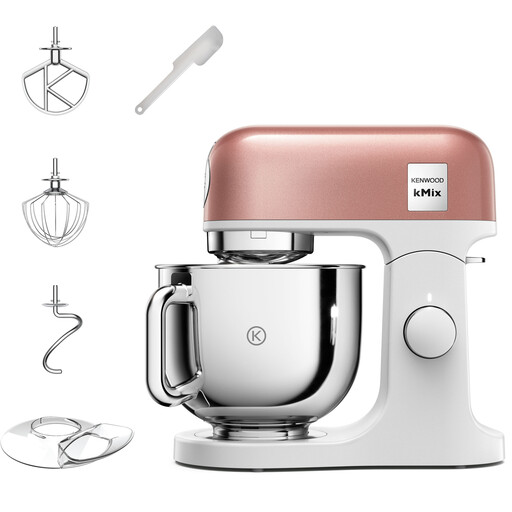 No image available
Consider this for regular buttercream preparation if its mixing tools and speed controls suit the way you add and cream ingredients. Check its lifting weight as well as its dimensions if it will live in a cupboard.
 No image available
The stated 4.3 L bowl and three bowl tools make this a model to compare with your usual cake batch. Its title specifies 1000 W; do not use that rating alone to judge buttercream results.
If containing icing-sugar splashes matters to other kitchen users, confirm the exact supplied accessories before buying.
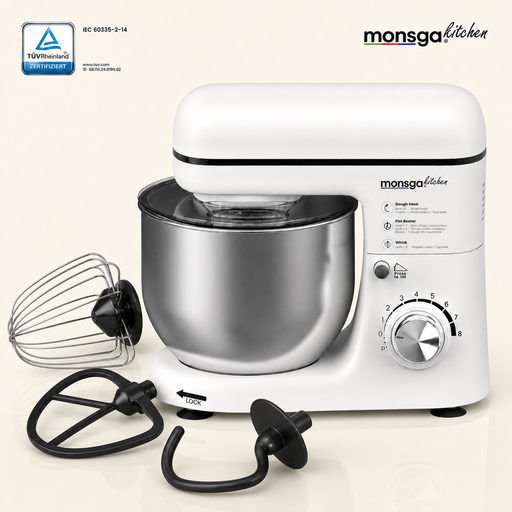 No image available
Consider the stated 5.0 L bowl and eight speed settings if you prepare repeated buttercream batches. Check the appliance’s dimensions against its intended storage place rather than using package dimensions as its footprint.
If noise matters in your shared kitchen, seek a model-specific measurement under comparable conditions; the product information gives conflicting noise figures.
Start with your usual recipe and the space available for storage, not the largest advertised bowl. Kenwood GB’s buttercream recipe uses its Go mixer and K-Beater for a two-layer 20 cm cake; a larger bowl arrangement is worth considering when you regularly prepare several mixes.
Check the exact mixer’s contents for a suitable paddle-style tool, K-Beater or flex-edge beater, alongside controllable lower speeds. Kenwood GB specifies a K-Beater in its buttercream recipe, while KitchenAid UK lists both a paddle and flex-edge beater for the 5KSM175PS configuration.
Start mixing gently and increase speed as the ingredients combine; use a pouring shield if one comes with your exact model. Kenwood GB’s buttercream instructions call for starting at minimum speed and increasing gradually, while KitchenAid UK lists a pouring shield for the 5KSM175PS.
Cleaning and allergen controls need particular attention in a food-business setting. Food Standards Agency guidance addresses protection against allergen cross-contamination and adequate cleaning facilities for equipment and utensils; establish the controls applicable to your operation rather than assuming that ordinary household sharing is the same situation.