
24/7 Customer Support

Free returns

Same-day & Next-day Delivery

Quality Guaranteed

Unlock Your Welcome Offers: FREE Delivery | Up to 80% OFF | Free 30-day JoyPlus trial
Download the APP
A stand mixer can make bread dough, cake batter, biscuits and whipped cream easier to prepare, but the wrong model may quickly become an expensive worktop ornament. Marketing often focuses on peak wattage, bowl volume and attachment count, while leaving out the details that affect everyday use.
The most common buying pitfalls include:
For regular home baking, look beyond the wattage printed in large type. A 1000W stand mixer may offer useful power for heavier mixtures, but you should also check whether the listing provides a rated power figure, overload protection and guidance on maximum dough quantities.
Speed range is equally important. An 8-speed mixer offers more adjustment than a basic model, allowing you to start slowly with flour, increase speed for cake batter and use a higher setting for whipping. Some mixers also include a pulse or fold function for short bursts and delicate ingredients.
For bread making, use the dough hook at a low or medium speed and follow the manufacturer’s capacity guidance. High speed with a heavy dough can put unnecessary strain on the motor and may cause the mixer to move across the worktop.
A 5L stand mixer is a practical size for many UK households, providing room for everyday cake mixtures, biscuit dough and moderate bread batches without taking up the space of a larger catering machine.
A stainless steel mixing bowl is durable, does not retain food odours easily and is generally simple to clean. A bowl handle is useful when transferring batter or lifting a heavy mixture. Check whether the advertised capacity is the full bowl volume or the recommended usable volume.
For example, the MONSGA SM100 description refers to a 6L maximum capacity with a recommended usable capacity of 5L. This is more helpful than treating the 6L figure as a suitable fill level for every recipe.
A versatile kitchen machine normally includes three core tools:
A mixer with planetary mixing action moves the attachment around the bowl while it rotates, helping it reach more of the ingredients. It still cannot replace scraping the bowl when a recipe requires it.
A splash guard can reduce flour clouds and liquid splashes, while dishwasher-safe accessories may shorten cleaning time. However, the motor housing should generally be wiped with a damp cloth rather than immersed in water. Always unplug the appliance before changing tools or cleaning.
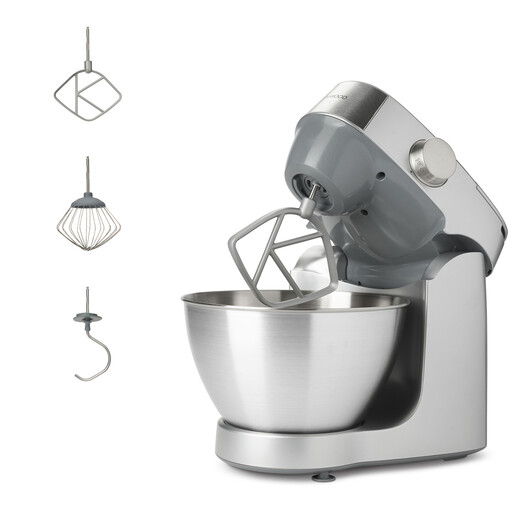
Why This Fits Their Persona: Its compact footprint and 4.3L stainless steel bowl suit beginners and smaller UK kitchens, while the three essential tools cover common baking tasks.
The listing states a 1.2kg flour-based dough limit, helping buyers judge capacity rather than relying only on the 1000W label.
Five speeds plus pulse; bowl, dough hook, beater and whisk are listed as dishwasher safe.
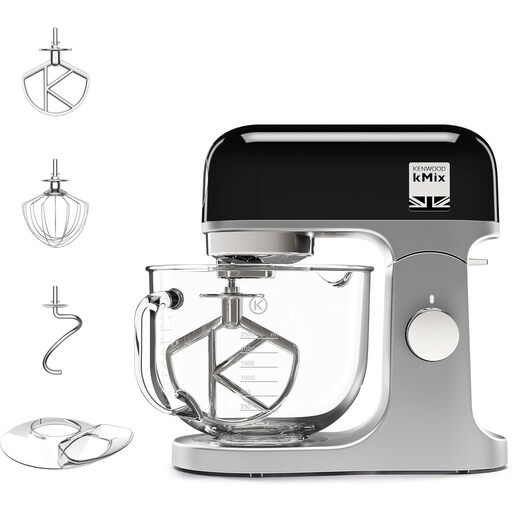
Why This Fits Their Persona: The 5L bowl and metal body suit frequent bakers who want a substantial machine with a design that can remain on the worktop.
Its stated 1000W motor, 5L bowl and six speeds provide clearer buying information than an attachment count alone.
Includes a K-beater, balloon whisk and dough hook, plus a fold function and slow-speed outlet for optional attachments.
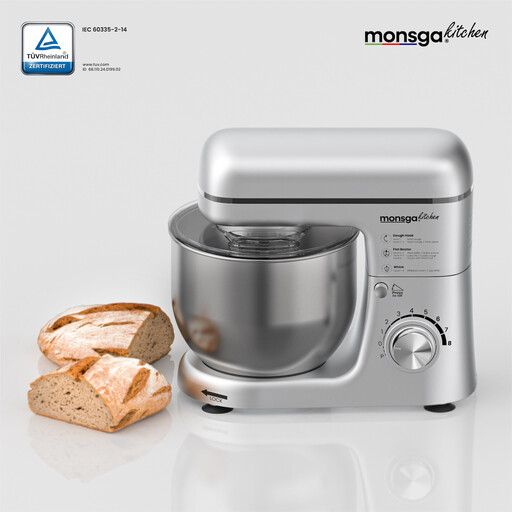
Why This Fits Their Persona: Families making larger batches of bread, cakes or biscuits may value its recommended 5L working capacity and multiple speed settings.
The product information distinguishes 1000W peak from 600W rated power and states a 75dB noise figure, giving useful context for expectations.
Eight speeds, planetary mixing action, tilt head, splash guard and dishwasher-safe accessories are listed.
We have compiled a complete, real-time list of products that fully satisfy these strict selection criteria and UK safety regulations.
It can be suitable for home bread making, but wattage alone does not determine capability. Check the rated power, dough capacity, motor protection and manufacturer’s instructions. Start with a low speed and avoid exceeding the stated flour limit.
For many households, a 5L stand mixer offers a useful balance between batch size and worktop space. It can handle common cake, biscuit and moderate bread recipes, but the practical capacity varies by ingredient and dough type.
Running cost depends on the appliance’s actual power draw and how long it operates. The simple calculation is: watts ÷ 1,000 × hours used × your electricity tariff. A mixer rated at 600W running for 10 minutes would use approximately 0.1kWh, although real consumption can vary during operation.