
24/7 Customer Support

Free returns

Same-day & Next-day Delivery

Quality Guaranteed

Unlock Your Welcome Offers: FREE Delivery | Up to 80% OFF | Free 30-day JoyPlus trial
Download the APP
A stand mixer can make cakes, biscuits, pastry, whipped cream and bread dough considerably easier to prepare. However, attractive specifications do not always tell the complete story. A mixer advertised as a “1000W stand mixer” may quote peak power rather than rated operating power, while a large bowl may have a much smaller recommended working capacity.
Before choosing an electric stand mixer, look beyond colour and headline wattage. The most suitable kitchen mixer should match your recipes, available storage, batch sizes and cleaning routine.
Motor power is useful, but it is not the only factor affecting mixing performance. Manufacturers may display peak power, rated power or power consumption differently. For example, the Monsga SM100 lists 1000W peak power alongside 600W rated power. This is more informative than considering “1000W” alone.
The drive system, gear construction, planetary mixing action and maximum dough capacity also influence how a mixer handles stiff bread dough. Always check the manufacturer’s stated limits and avoid exceeding them.
A bowl advertised as 6 litres does not necessarily accommodate 6 litres of ingredients during operation. Ingredients need room to move without spilling, particularly when whisking or mixing at higher speeds.
The Monsga SM100 has a 6-litre maximum bowl capacity but recommends 5 litres of usable capacity. Other models offer 4.0L, 4.3L, 4.6L or 5.0L bowls, which may be more practical for everyday family baking depending on your recipes.
A large planetary stand mixer may remain on the worktop because moving it after every use is inconvenient. Check the appliance’s footprint, head clearance and weight before buying, especially in a UK kitchen with a small footprint.
Noise claims also need careful interpretation. The Monsga SM100 lists a noise level of 75 decibels, while the Honinst model description states less than 60 decibels. These figures may be measured under different conditions, so treat them as useful product information rather than directly comparable laboratory results.
For occasional cakes and biscuits, a compact food mixer with 800W may be sufficient. Regular bread making and heavier doughs may justify a model with a higher rated motor, robust transmission and a stated dough limit.
A stand mixer with dough hook should generally be used at low to medium speed for yeast dough. Shorter mixing intervals and cooling periods can help reduce heat build-up. A motor overload protection feature is useful, but it does not replace following the instruction manual.
A stainless steel bowl mixer is practical for frequent baking because stainless steel is durable, non-porous and generally straightforward to clean. A bowl handle can also make pouring and lifting easier.
Match capacity to your household:
A useful baking mixer normally includes a whisk and beater, plus a dough hook. The beater is suited to cake mixtures, biscuits and buttercream; the whisk is designed for eggs and cream; and the dough hook is intended for bread, pizza and enriched dough.
Speed numbers are not everything. Look for gradual speed control, a pulse setting or a fold function. A slow-start feature can reduce flour clouds and splashing when adding dry ingredients.
Dishwasher-safe attachments can simplify cleaning, but check whether the motor housing, bowl and coated tools have separate care instructions. Do not immerse the main unit in water.
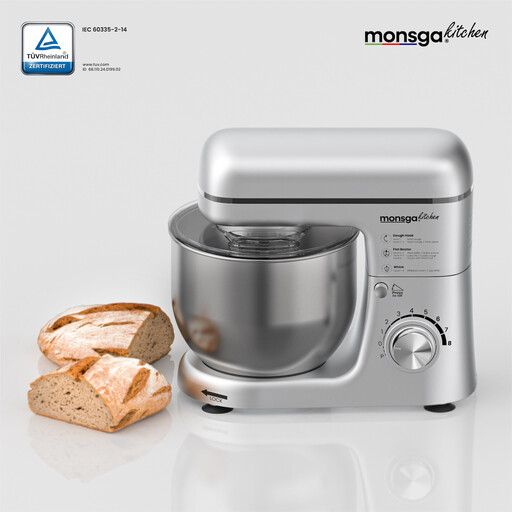
Why This Fits Their Persona: Its 5.0-litre recommended usable capacity and 8 speed settings suit beginners who want one appliance for cakes, biscuits, cream and occasional dough without moving to a larger model.
The listing distinguishes 1000W peak power from 600W rated power and states a recommended 5.0-litre working capacity.
304 stainless steel bowl, planetary mixing system, dough hook, beater, whisk and dishwasher-safe accessories.

Why This Fits Their Persona: Home bakers who value integrated weighing and a broad attachment ecosystem may appreciate its practical features for repeated, varied recipes.
Its specifications state maximum cake and dough capacities separately, rather than relying only on the bowl volume.
1200W motor, 4.6-litre stainless steel bowl, built-in scales, fold and pulse functions, and compatibility with over 25 optional attachments.
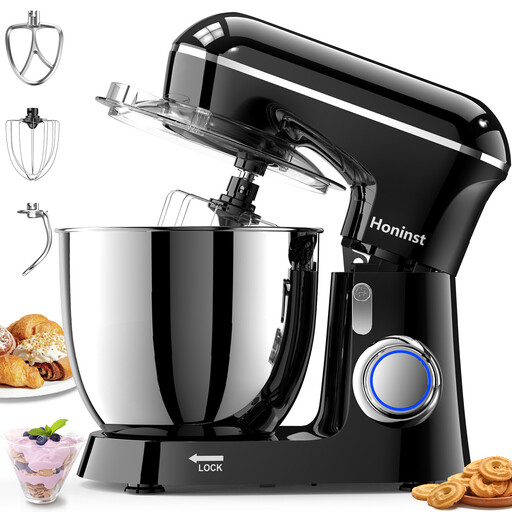
Why This Fits Their Persona: Frequent family bakers making bread, pizza, cakes or pastry may prefer its larger stated bowl and 10-speed control.
The listing includes overheat protection and advises users not to exceed permitted quantities or domestic-use operating limits.
6.5QT stainless steel bowl, planetary mixing action, tilt-head design, dough hook, whisk, beater and splash guard.
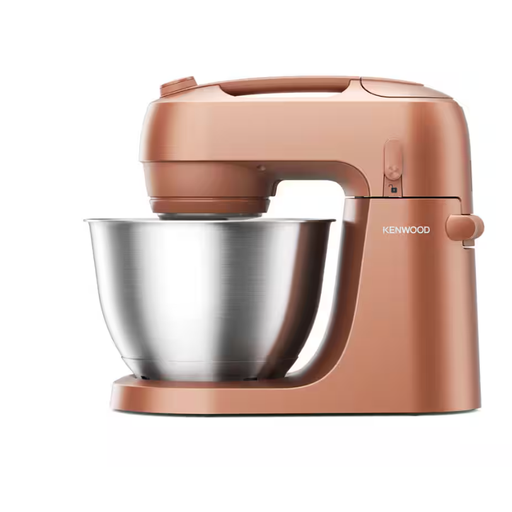
Why This Fits Their Persona: Its 30cm height, carry handle and 4-litre bowl make it easier to store in flats, compact kitchens or cupboards between uses.
The published dimensions and weight help buyers assess storage and lifting requirements before purchase.
800W motor, six speeds plus pulse, all-metal body, stainless steel bowl, height-adjustable tools and splashguard.
We have compiled a complete, real-time list of products that fully satisfy these strict selection criteria and UK safety regulations.
Place the mixer on a stable, level worktop with ventilation space around the motor housing. Keep the cable away from heat and moving parts. Fit the bowl and attachment securely before switching on, and begin at a low speed when combining flour or liquids.
Electricity cost depends on the appliance’s actual rated power and how long it runs. A 600W appliance operating for 30 minutes uses approximately 0.3kWh, while a 1000W appliance running for the same period uses approximately 0.5kWh. Your tariff determines the final cost, and real consumption varies with the load and speed. Shorter mixing times do not automatically mean lower consumption if the motor is working harder.
It can be useful if you make bread or pizza regularly and want hands-free kneading. Choose a model with a stated dough capacity, dough hook and overload protection. Avoid filling the bowl to its maximum volume with stiff dough.
Lifespan depends on construction, frequency of use, load size, cleaning and storage. Following the manual, using the correct attachment and allowing the motor to cool during demanding tasks can reduce avoidable wear. Check the warranty terms and availability of replacement accessories before buying.
For occasional home baking, its energy use is usually linked to short operating periods rather than continuous use. Compare rated wattage, typical recipe time and your electricity tariff instead of judging running cost from the headline wattage alone.