For several trays of cheese crackers, choose a stand mixer by your recipe’s quantity, the supplied mixing tool and the space you can give the machine—not bowl litres or motor wattage alone. A larger bowl is worth considering if you want fewer separate mixes, but check the exact model’s stated dough or pastry limit; a smaller mixer may suit occasional buffets if splitting the dough is practical.
Who is this for?
Buffet batch bakers
If you plan several trays or one larger mix, compare your recipe quantity with a mixer’s stated dough or pastry capacity. Kenwood GB and Bosch GB publish different capacity figures across their models, so bowl size alone is not enough to settle the choice.
Buttery-dough home bakers
If combining butter, cheese and flour is your main task, check for a supplied paddle or flat beater and controllable speeds. Kenwood GB lists a K-beater for the Chef XL KVL4100W, while KitchenAid UK lists a paddle for the Artisan 5KSM125.
Space-conscious occasional hosts
If the mixer will come out mainly for gatherings, measure where it will stand and where it will be stored. A compact format may be easier to accommodate, provided you are willing to split a batch that exceeds its stated capacity.
What matters when choosing?
Start with the amount of dough in your chosen recipe, then check the tool supplied with the exact mixer and the space needed to use and store it.
| Concern | What to check | Who this matters to |
|---|
| Buffet batch capacity |
Compare recipe weight with the exact model’s relevant dough or pastry limit; check bowl size separately. |
I want to prepare several trays without making more separate mixes than necessary. Around 40% of consumers would put batch capacity first. |
| Mixing-tool control |
Confirm the supplied paddle or flat beater, then follow the recipe and mixer instructions for speed and mixing time. |
When combining butter, cheese and flour, I want the appropriate tool rather than assuming a dough hook is required. For roughly 40% of consumers, that mixing need would take priority. |
| Space and occasional use |
Measure storage and working clearance, including room to raise the head or arm; consider whether split batches are acceptable. |
I only bring out a mixer for occasional gatherings, so it must fit my kitchen even if I need to make smaller mixes. Space would be the primary concern for around 20% of consumers. |
Buying pitfalls
-
Choosing by wattage alone
Motor wattage, bowl volume and stated dough capacity describe different things. Kenwood GB lists a 6.7L bowl and a 2.42kg dough capacity for the Chef XL KVL4100W; neither figure establishes a limit for every cheese cracker recipe.
Calculate your recipe’s flour and total dough weights, then consult the exact mixer’s instructions for the relevant mixture and tool.
-
Assuming a dough hook suits every cracker recipe
KitchenAid UK supplies both a paddle and dough hook with the 5KSM125. The tool to use depends on the recipe and the mixer’s instructions, rather than the word ‘dough’ alone.
Check whether a paddle or flat beater comes with the variant you intend to buy, and follow its instructions for mixing.
If a suitable beater is not included, you may need to obtain a compatible one separately.
-
Forgetting the space around a larger mixer
Kenwood GB lists the Chef XL KVL4100W at 7.84kg, while Bosch GB describes its Series 2 range as compact. A bowl that accommodates your mixture still needs a workable place on the counter.
Measure the counter, cupboard and route between them, allowing clearance to raise the mixing head or arm.
-
Treating every buffet as the same kind of food supply
A private gathering and regular food supply to the public need not be assessed in the same way. GOV.UK says a food business must register with its local authority at least 28 days before trading; that guidance alone does not classify a particular private buffet.
If you plan regular public supply, ask the relevant local authority how registration applies to your arrangement before you begin.
Brands to consider for this task
Kenwood
Its Chef and Chef XL ranges offer a route to consider when planning larger batches and checking stated mixture limits.
- Kenwood GB lists a 6.7L bowl, 2.42kg dough capacity, 910g flour-for-pastry capacity, K-beater and variable control for the Chef XL KVL4100W.
- That model weighs 7.84kg. Check your available space, and confirm optional-attachment compatibility by exact model.
KitchenAid
The Artisan 5KSM125 is a mid-size tilt-head option to assess if a supplied paddle and accessible bowl matter to you.
- KitchenAid UK lists a 4.7L bowl, paddle, dough hook, whisk and 10 speeds for the 5KSM125.
- Its bowl is smaller than the Kenwood Chef XL KVL4100W’s 6.7L bowl; decide whether your recipe calls for split mixes rather than treating either bowl figure as a cracker-dough limit.
Bosch
Its Series ranges offer different bowl sizes for buyers balancing batch plans against kitchen space.
- Bosch GB describes Series 2 as compact and lists a 3.9L bowl for Series 4 and a 5.5L bowl for Series 6.
- Bosch’s published yeast-dough capacities are not cheese-cracker-dough limits. Check the exact model’s instructions and whether an appropriate beater is supplied.
Joybuy stand mixers
These stand mixers are options to assess for combining cheese cracker ingredients. Match the precise variant to your recipe quantity, required beater and kitchen space before deciding how many batches to make.
 No image available
Kenwood Prospero+ KHC29.A0SI, silver, 4.3L
Consider this size if you can divide the buffet dough into batches when necessary. Its product name specifies 1000W and three bowl tools; confirm which tools are supplied and check the relevant dough limit against your recipe.
View on Joybuy
 No image available
Kenwood Chef Baker KVC65.001WH, white
For a planned buffet batch, compare your recipe with the instructions for this exact Chef Baker variant, including its applicable dough or pastry limit and supplied mixing tool. Check its dimensions against the space where you will use it.
View on Joybuy
 No image available
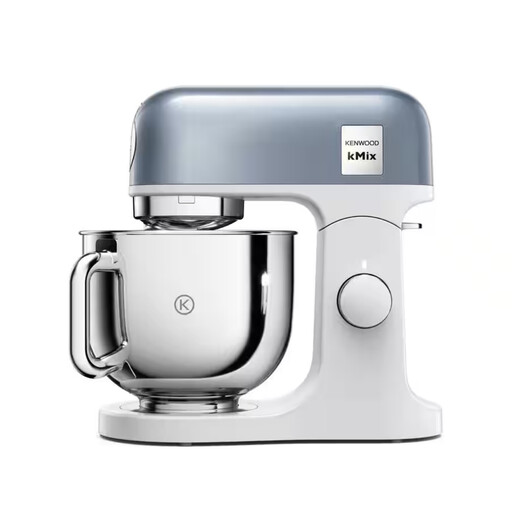
Kenwood kMix Editions, blue
Assess this model for mixing cracker ingredients if its supplied tool suits your recipe. Check the exact variant’s dough guidance and the available counter space before planning a single large mix.
View on Joybuy
 No image available
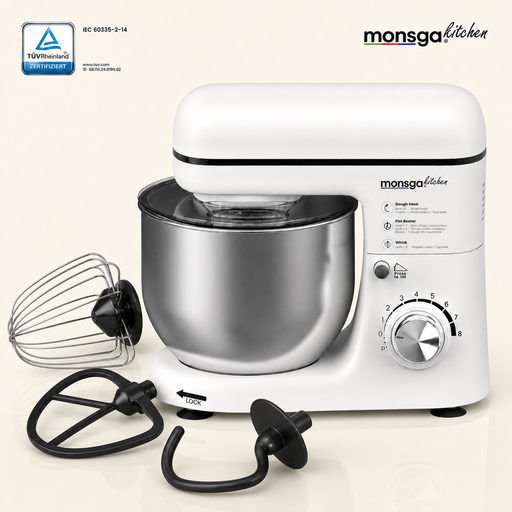
MONSGA SM100, cream white, 5.0L
Its named beater is relevant when choosing a tool for combining cracker ingredients. The product name also specifies a stainless-steel bowl, eight speed settings and 1000W peak power; check usable fill and dough guidance rather than using the peak-power figure to judge batch capacity.
View on Joybuy
 No image available
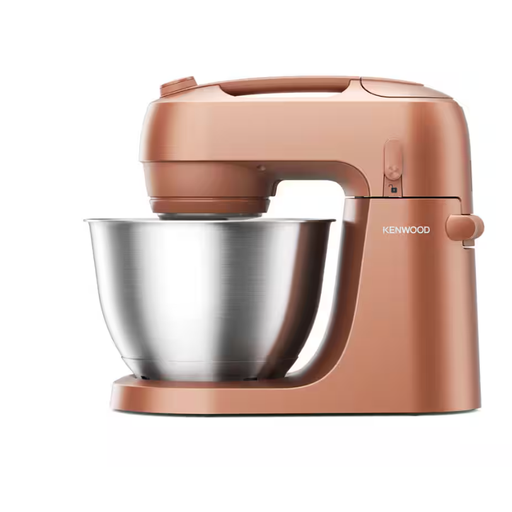
Kenwood Go, red clay
If storage space drives your choice, compare this model’s dimensions with your counter and cupboard. Before making buffet quantities, check its supplied beater and the applicable dough capacity for your recipe.
View on Joybuy
Frequently asked questions
Which attachment should I use for cheese cracker dough?
Check your recipe and mixer instructions, and look for a supplied paddle or flat beater when choosing a machine for combining butter, cheese and flour. Do not assume a dough hook is the default for every cracker recipe.
How large a mixer do I need for a buffet batch?
Choose against your recipe’s actual quantity and the exact model’s relevant capacity, not bowl litres alone. Kenwood GB lists a 2.42kg dough capacity and 910g flour-for-pastry capacity for the Chef XL KVL4100W; Bosch GB publishes yeast-dough capacities for its Series 4 and Series 6 ranges. Those figures describe different mixtures and cannot be treated as interchangeable cheese-cracker limits.
Do I need to register a food business for a buffet?
Whether registration applies depends on how you supply the food; a private buffet cannot be classified from the event name alone. GOV.UK says food businesses must register with their local authority at least 28 days before trading. If you plan regular public supply, ask the relevant local authority about your arrangement.
Will an optional beater fit any mixer from the same brand?
No—check compatibility with the complete mixer model and its bowl or attachment format before buying. Kenwood provides a model-by-model attachment guide, while KitchenAid distinguishes accessories for different mixer formats.


