Who needs which features?

Shared-kitchen cheesecake makers

If the mixer must be cleared away for other users, look for a bowl and tools you can remove, wash and inspect individually. A cleaning routine matters especially when different users prepare foods containing allergens.

Space-limited regular bakers

If you also make cakes or dough, compare the bowl with your usual batch while measuring the space available for both use and storage. Check that you can access the bowl where you intend to operate the mixer.

Batch and workflow-focused bakers

Frequent or larger batches may justify more bowl capacity, a second bowl or in-bowl weighing. Decide whether those features will save enough changeovers to warrant storing the larger machine.

What matters when choosing?

Concern What to check Who this matters to
Cleaning and allergens Check the care instructions for the bowl and every included tool; plan how shared equipment will be cleaned between uses. When other people use the kitchen, I need to remove food residue from each part before the next task. Around 42% of consumers would put cleaning and allergen control first.
Worktop and storage space Measure the storage position and working clearance, then compare the mixer’s dimensions and weight. If I cannot leave a mixer on the counter, I need to be able to put it away without blocking shared space. For around 33% of consumers, space and storage would be the primary concern.
Batch size and workflow Compare the stated bowl capacity with your usual recipe yield; consider a second bowl or integrated scales only if you would use them. Several fillings or larger bakes make bowl changes and preparation pauses more important to me. Batch capacity and workflow would come first for around 25% of consumers.

Buying pitfalls

  • Choosing by wattage alone

    A motor rating does not tell you whether the mixer fits your storage space, suits your batch or reaches the mixture around the bowl. Which? identifies ease of use and attachment reach as differences to assess between mixers.

    Start with your recipe yield, available space, included tools and cleaning instructions; consider wattage alongside those model-specific details.

  • Assuming every accessory is cleaned the same way

    Residue can remain on a whisk, paddle, bowl or splashguard. KitchenAid UK gives different instructions for parts of its Classic 5K45SS: the bowl, paddle and dough hook are dishwasher-safe, while the wire whisk should be washed in warm soapy water.

    Read the instructions for each supplied part and make sure everyone sharing the equipment can follow the same cleaning routine.

  • Buying a large machine for one occasional filling

    A second bowl and built-in weighing may help with repeated preparations, but they also mean more equipment to accommodate. Kenwood GB lists its Titanium Chef Patissier XL with 7L and 5L bowls and a weight of 12.28kg.

    If you usually make one household cheesecake at a time, compare machines that fit that batch before choosing larger-capacity features.

  • Overlooking the difference between private and business use

    Preparing cheesecake as a food business can bring registration and allergen-information duties; sharing a household kitchen does not, by itself, establish that the activity is a food business.

    If you plan to sell food, check how your activity is classified with the relevant local authority and establish appropriate cleaning and allergen-management procedures. The Food Standards Agency and Food Standards Scotland provide guidance for their respective jurisdictions.

Brands to consider

Kenwood

Kenwood offers models at different sizes relevant to this choice: Kenwood GB lists a 4L bowl for the Go KZM35.000GY and 7L and 5L bowls for the Titanium Chef Patissier XL KWL90.004SI.

  • The specified Go model measures 33.5 × 18 × 30cm; the specified Patissier XL has two bowls and in-bowl weighing.
  • The Patissier XL weighs 12.28kg according to Kenwood GB. Compare the exact model’s dimensions and cleaning instructions before choosing it for a shared space.

KitchenAid

KitchenAid UK lists the Classic 5K45SS as a tilt-head mixer with a 4.3L bowl and 10 speeds.

  • The Classic includes a stainless-steel bowl, wire whisk, dough hook and paddle.
  • KitchenAid gives the wire whisk different washing instructions from the dishwasher-safe bowl, paddle and dough hook; check each part’s care requirements for shared use.

Bosch

Bosch GB lists its Series 2 MUMS2VM40G with a 3.8L usable volume and dimensions of 266 × 266 × 277mm.

  • Bosch’s range also includes larger-capacity series, allowing a comparison based on the batches you usually make.
  • Capacity, supplied tools and care instructions vary by model; check the particular machine rather than relying on its series name.

Joybuy product choices

These stand mixers cover compact and larger-bowl options for cheesecake filling and other baking. Compare each one with your normal batch, available storage space and the care instructions for its supplied parts.
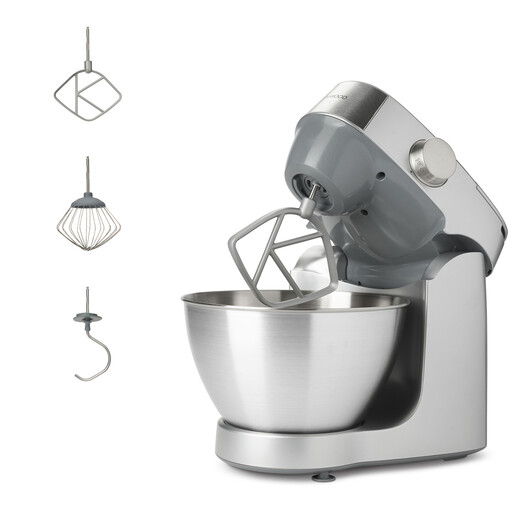
Kenwood Prospero+ KHC29.A0SI stand mixer in silver

Kenwood Prospero+ KHC29.A0SI, 4.3L

Consider this for a single cheesecake filling when a 4.3L bowl suits your recipe and the mixer fits your shared space.

The product name specifies 1000W and three bowl tools. Check the care instructions for the supplied parts before agreeing a shared cleaning routine.

View on Joybuy
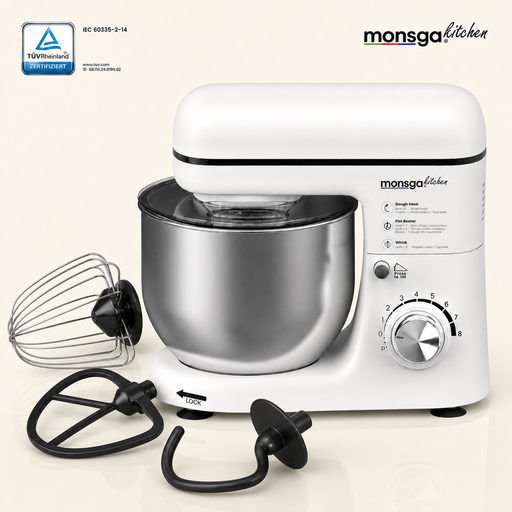
MONSGA SM100 stand mixer in cream white

MONSGA SM100, 5.0L, cream white

Consider the larger stated bowl size if you regularly prepare more filling or bake other recipes, provided the machine fits where it will be used and stored.

The product name specifies a 5.0L stainless-steel bowl, whisk, dough hook, beater, splashguard and eight speed settings. Check the appliance’s own dimensions and the care instructions for each accessory before buying.

View on Joybuy
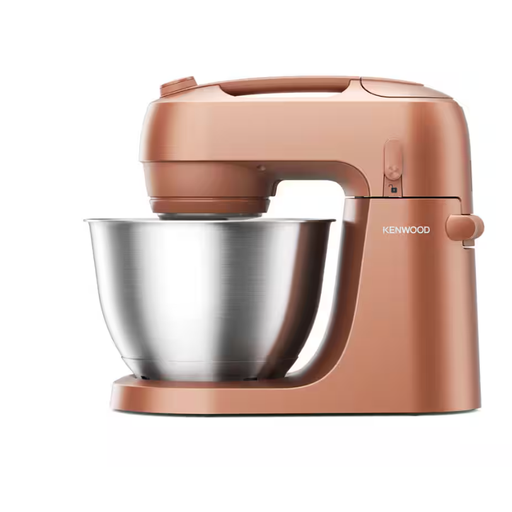
Kenwood Go stand mixer in Red Clay

Kenwood Go, Red Clay

Consider this stand mixer if you plan to clear it away after making cheesecake filling. Check this Red Clay variant’s bowl size against your recipe and confirm where the machine and tools will be stored.

Read the care instructions for the bowl and every supplied tool before using it in a shared kitchen.

View on Joybuy
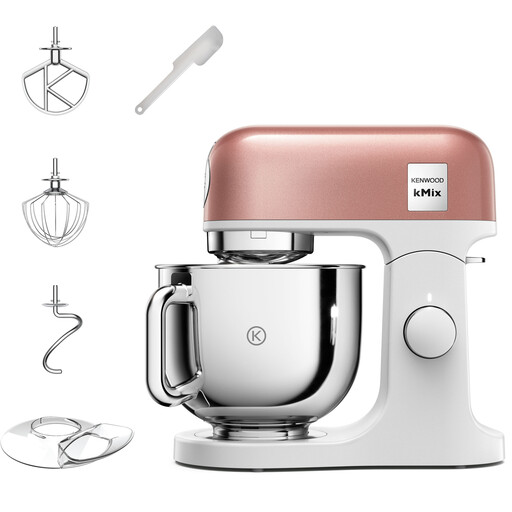
Kenwood kMix Editions KMX760API stand mixer in Apricot Pink

Kenwood kMix Editions KMX760API, Apricot Pink

Consider this model if cheesecake is one of several baking tasks and you have room for the mixer between uses. Compare its bowl with your usual recipes.

If you will move it off the shared worktop, check the weight as well as the dimensions. Confirm which supplied parts can be washed by your preferred method.

View on Joybuy
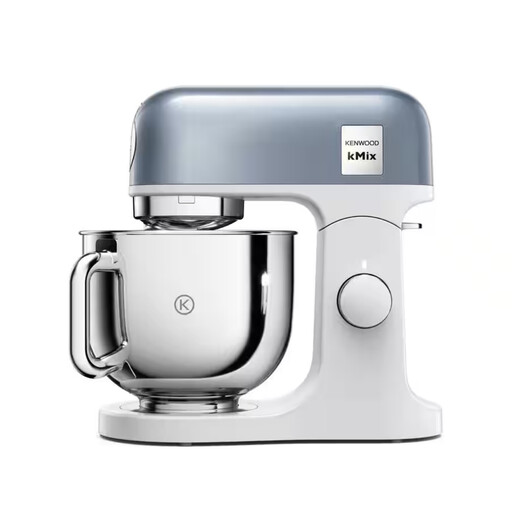
Kenwood kMix Editions stand mixer in blue

Kenwood kMix Editions, Blue

Consider this stand mixer for cheesecake alongside regular baking if its bowl and storage requirements suit your routine.

Confirm the bowl material and its cleaning instructions for this Blue variant before buying; check the supplied tools separately.

View on Joybuy

Common questions

What bowl size should I consider for cheesecake filling?

For an occasional household filling, a compact 3.8–4.3L mixer is a starting point if you must store it after use. Consider more capacity for regular or larger batches, but compare your recipe yield with the exact model’s stated capacity: bowl volume alone does not establish how much of a particular mixture it can handle.

Are dishwasher-safe parts enough to manage allergens?

No. Clean every food-contact part effectively and consider how equipment is separated and stored when allergen cross-contact matters. Check parts individually: KitchenAid UK says the Classic 5K45SS bowl, paddle and dough hook are dishwasher-safe, but its wire whisk should be washed in warm soapy water.

Must I register if I make cheesecakes for sale in a shared kitchen?

If your activity is a food business, registration with the relevant local authority is required before operations begin. Food Standards Agency guidance for England, Wales and Northern Ireland says to register at least 28 days before trading or food operations start; Food Standards Scotland gives the same lead time for food businesses in Scotland. A privately made household cheesecake does not become a food business simply because the kitchen is shared; ask your local authority if the status of your planned activity is unclear.

What allergen information is needed if I sell cheesecake?

Food businesses must provide applicable allergen information, with the method depending on how the food is supplied. Milk and eggs commonly used in cheesecake are among the allergens that must be declared when present as ingredients. Check the Food Standards Agency or Food Standards Scotland guidance relevant to whether your product is prepacked, prepacked for direct sale or non-prepacked.