Small-space shared-kitchen bakers
If you make occasional cakes but cannot leave a mixer on the worktop, measure where it will be stored and consider how often you will need to move and set it up.


Choose by your usual amount of cake batter and the space you can spare: a compact mixer may suit occasional cakes, while a higher stated cake-mixture capacity matters more for frequent multi-tin batches. In a shared kitchen, also check the supplied beater, storage clearance and cleaning instructions for each tool.
If you make occasional cakes but cannot leave a mixer on the worktop, measure where it will be stored and consider how often you will need to move and set it up.
If you often fill several tins or make cupcakes for a group, compare each model’s stated cake-mixture capacity with your normal batch rather than judging by bowl volume alone.
When other people share the utensils and washing-up space, tool-specific cleaning instructions and a clear handover routine may matter more to you than extra attachments.
For chocolate cake in a shared kitchen, establish where the mixer will go and how much batter you normally make before weighing up cleaning and convenience features.
| Concern | What to check | Who this matters to |
|---|---|---|
| Worktop and storage fit | Measure the intended space against the mixer’s full dimensions, including clearance needed to use it. | If I have to clear a shared worktop after baking, I need a mixer I can store and bring out without difficulty. Around 31% of consumers may put storage fit first. |
| Batter capacity and beater | Compare the exact model’s stated cake-mixture capacity with your batch size, and check its supplied beater. | When I bake several tins at once, I need the machine’s stated cake capacity to cover my usual mixture. For around 31% of consumers, batch size may be the primary concern. |
| Shared clean-up | Check cleaning instructions separately for the bowl, beater, whisk and any splashguard. | If someone else uses the equipment after me, I want to know how each food-contact part should be cleaned; this may come first for around 23% of consumers. |
| Controls and disruption | Consider the speed controls, splashguard and how manageable the mixer is to move. | In a busy shared kitchen, I want to add ingredients and mix without making the space harder for others to use. Convenience may be the leading need for around 15% of consumers. |
Motor power does not tell you the exact model’s stated cake-mixture capacity. Bosch GB publishes cake-mixture capacities for the MUM58259GB and MUMS6ZM00G alongside their other specifications.
Compare capacity, bowl volume, dimensions and the supplied beater against your recipe and storage space before using wattage to distinguish models.
Care instructions can differ even among tools supplied with one mixer. KitchenAid UK says the Classic 5K45SS bowl, paddle and dough hook can go in the dishwasher, but its whisk should be washed in warm soapy water.
Check the instructions for each part you expect to use and wash.
If an intended eater has a known food allergy, cleaning shared equipment and surfaces needs particular attention. For food businesses, the Food Standards Agency advises taking steps to avoid allergen cross-contamination during preparation.
Agree how equipment will be cleaned and stored when an allergy is relevant; if cakes are made for customers as part of a food business, follow the applicable food-business guidance.
A mixer that accommodates a larger batch still needs a practical place to be used and put away. Published dimensions also need to be considered alongside clearance for access to the bowl.
Measure the worktop, intended storage space and route between them, then compare those measurements with the exact model.
Kenwood’s Go KZM35.000GR offers a compact-format reference for limited shared-kitchen space.
The Classic 5K45SS is a tilt-head reference for everyday cake mixing, with a 4.3L stainless-steel bowl, paddle and 10 speeds according to KitchenAid UK.
Bosch GB’s MUM58259GB and MUMS6ZM00G provide two documented cake-batch capacities to compare with available kitchen space.
These stand mixers offer choices for cake mixing where batch size, storage and shared clean-up affect the decision. Compare the exact variant and its care instructions before choosing.
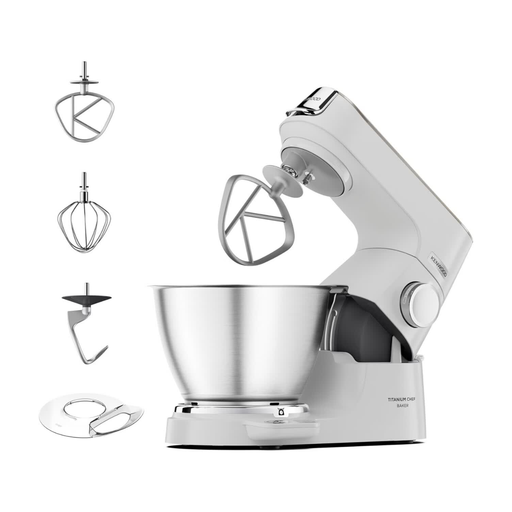 No image available
Consider this model if you want a stand mixer for cake batches and can allocate space to store it. Compare its stated cake-mixture capacity and dimensions with your usual recipe and shared-kitchen storage space.
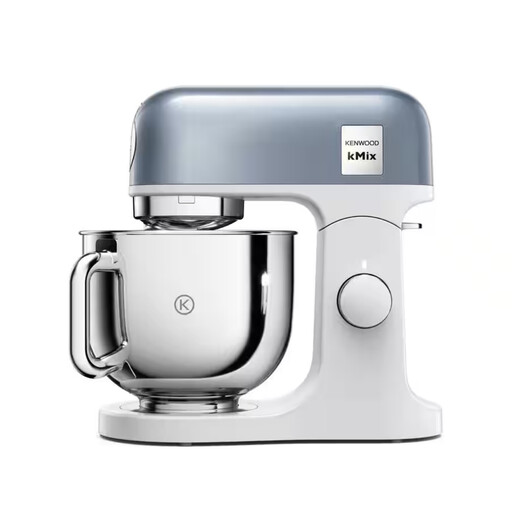 No image available
This is an everyday cake-mixing option if its size works in your shared kitchen. Check the exact model’s cake-mixture capacity, included tools and cleaning instructions against your normal baking routine.
 No image available
Consider this option when a smaller shared-kitchen setup is a priority. Its title specifies a 4.3L bowl, 1000W rated power and three bowl tools; check its cake-mixture limit separately rather than using wattage as a measure of batch capacity.
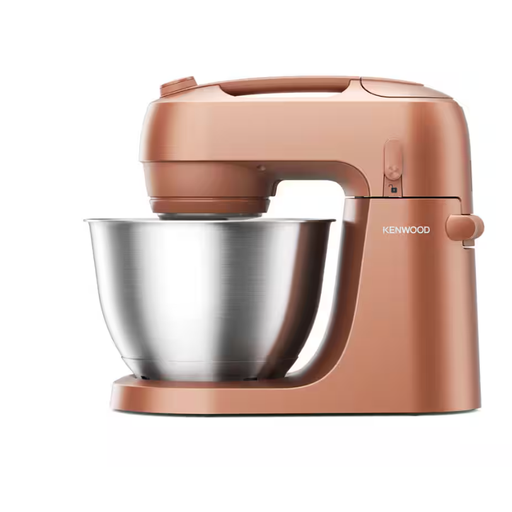 No image available
Consider this Go variant if storage space is a leading concern. Check this exact variant’s cake-mixture capacity and tool-specific cleaning instructions against your batch size and shared washing-up routine.
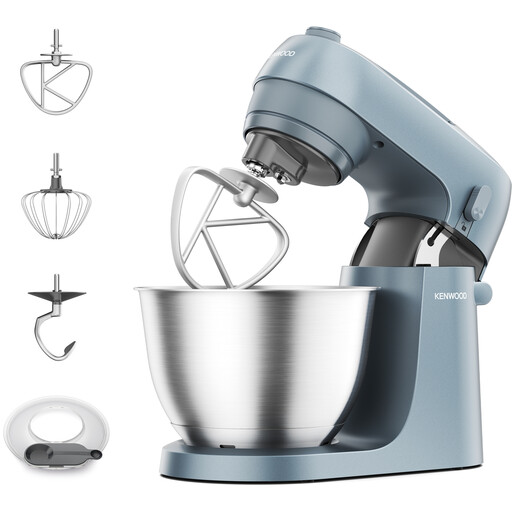 No image available
This Go model is worth comparing when you need to put a mixer away after baking. Check its cake-mixture capacity and attachment-care instructions for your usual batch, and confirm the colour variant before ordering.
Choose by your usual batch and the exact mixer’s stated cake-mixture capacity, not bowl litres alone. Kenwood GB states a 1.8kg cake capacity for the Go KZM35.000GR, while Bosch GB states up to 2.7kg for the MUM58259GB and up to 3.5kg for the MUMS6ZM00G; check storage space as well as capacity.
Use the supplied paddle or flat-beater-style tool when your recipe calls for beating or creaming batter. KitchenAid UK lists a paddle with the Classic 5K45SS, and Kenwood GB lists a K-Beater with the Go KZM35.000GR; follow the recipe and your exact mixer’s instructions for attachments and speeds.
No; care instructions depend on the model and the individual tool. For the Classic 5K45SS, KitchenAid UK says the bowl, paddle and dough hook can go in the dishwasher, while the whisk should be washed in warm soapy water.