Repeated-batch bake-sale bakers
If you plan to make several batches in one session, establish your recipe’s dough weight and look for an applicable model-specific limit. Check the supplied dough tool before giving convenience features priority.


Choose a stand mixer by the amount of cinnamon-bun dough you need to make per batch, using the exact model’s stated dough limit where available rather than bowl size alone. A larger bowl-lift or dough-focused mixer is worth considering for repeated large batches; a smaller model can suit an occasional sale if you have time to divide the dough. Keep food-safety and allergen-information checks separate from the mixer decision.
If you plan to make several batches in one session, establish your recipe’s dough weight and look for an applicable model-specific limit. Check the supplied dough tool before giving convenience features priority.
A smaller mixer may fit your worktop and storage space more readily if you can divide the dough into batches. Bosch’s published yeast-dough limits differ across its mixer series, so check the limit for the model you are considering.
If you repeatedly weigh ingredients and prepare dough, filling and icing in one session, an integrated scale or a second bowl may make those stages easier to organise. Kenwood lists both features for its Titanium Chef Baker XL range; check the package for the exact model.
Start with the dough weight your recipe produces, then decide whether saving time between batches or saving worktop space matters more to you. The percentages below describe consumers by their primary concern; each row addresses a different priority.
| Concern | What to check | Who this matters to |
|---|---|---|
| Dough capacity | Compare your recipe’s dough weight with the exact model’s stated dough or flour limit. Do not use bowl litres as a substitute for a dough limit. | If I am making repeated cinnamon-bun batches, I need to know how much dough the mixer is intended to handle before planning the session. Around 50% of consumers put batch capacity first. |
| Preparation workflow | Check whether weighing is built in and whether a second bowl and the required dough tool are included with the exact package. | When I am moving between dough, filling and icing, I want to spend less time weighing and changing bowls. For around 30% of consumers, that workflow is the main priority. |
| Worktop and storage space | Compare the model’s dimensions with your available space, allowing room to operate it, and consider whether you can split the dough. | I can make smaller batches, but the mixer still needs to fit where I prepare and store it. Space and manageable batch size come first for around 20% of consumers. |
A bowl’s volume does not tell you how much yeast dough a mixer can handle. Bosch publishes different maximum yeast-dough weights across its series, while KitchenAid’s maximum-quantity guidance varies by model.
Calculate your recipe’s dough weight and compare it with the limit for the exact mixer. If that limit is unclear, do not assume a large bowl permits a large batch.
A machine can fit on a worktop yet leave too little room to lift its head, handle its bowl or add ingredients.
Measure both its intended working position and storage space, including the clearance needed to operate the exact model.
Food-business registration and allergen-information requirements depend on the activity and how the buns are supplied. A mixer choice does not settle those questions.
Establish how the buns will be offered and seek advice from the relevant local authority if registration is uncertain. Check the allergen-information requirements for that way of supplying food.
Its stand-mixer series provide published yeast-dough figures that can help you plan a batch.
Its tilt-head and bowl-lift formats give buyers a choice when batch size and available space differ.
The Titanium Chef Baker XL range is relevant if repeated weighing and switching between mixtures shape your preparation session.
The Assistent Original offers a different dough-making arrangement from a conventional planetary stand mixer.
These mixers offer different bowl sizes and preparation setups for cinnamon-bun dough. Before choosing one for a bake sale, compare your intended dough batch with the exact model’s permitted load; a stated bowl size does not establish that limit.
 No image available
Consider this model if you are prepared to plan dough in separate batches; check the exact model’s limit against your enriched cinnamon-bun recipe.
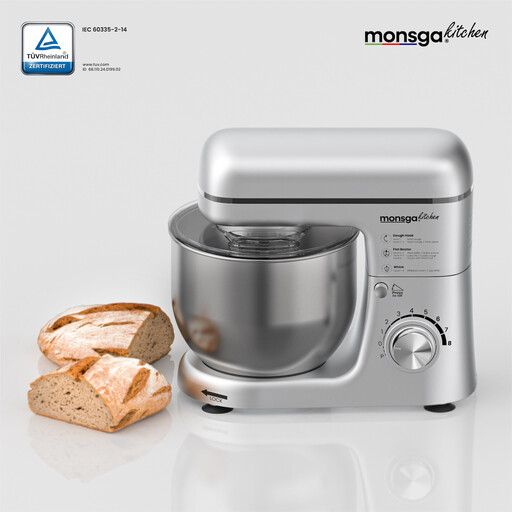 No image available
Consider the SM100 if its bowl size suits your preparation space, but confirm the permitted dough weight before setting a bake-sale batch size.
The product name specifies eight speeds, 1000 W peak power and a dough hook. Confirm the supplied bowl material before buying.
 No image available
Its stated bowl size may suit a setup where you can divide dough as necessary; check the exact permitted dough load before assuming it can handle a large batch.
The product name specifies ten speeds and includes a dough hook, whisk and beater.
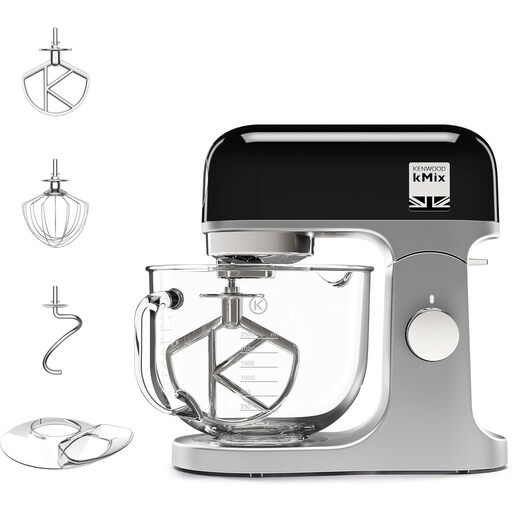 No image available
Consider this mixer if a 5 L bowl fits your preparation plans, while checking its exact dough limit against your cinnamon-bun recipe.
The product name specifies a dough hook, K-beater, whisk and 1000 W power.
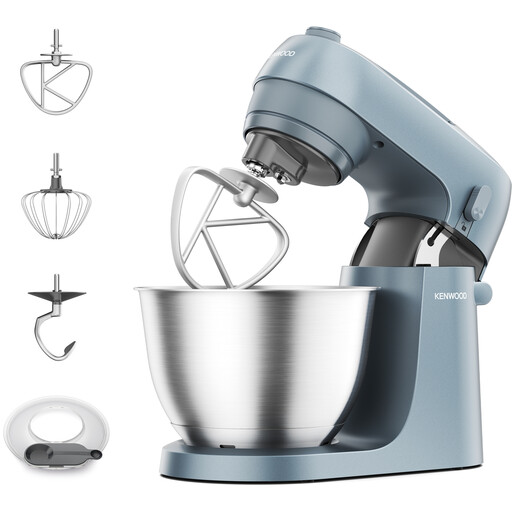 No image available
Consider this model for a space-conscious setup if you can split the dough; confirm its permitted dough load before planning how many batches to make.
Check the colour variant if it matters to your purchase.
Use your recipe’s total dough weight to assess how many batches the exact mixer can handle. Bosch UK lists maximum yeast-dough weights of 1.7 kg for Series 2, 1.9 kg for Series 4 and 3.0 kg for Series 6; check the specification of the model you intend to buy. Bowl volume on its own is not a yeast-dough limit.
Yes, if you regularly make large quantities or bread-style dough and have room for the model. KitchenAid UK identifies select bowl-lift mixers as an option for that workload, but you should still check the exact mixer’s dough limit, supplied hook and working dimensions.
Contact the local authority if you are unsure whether your food activity needs to be registered. GOV.UK gives that advice for England, Wales and Northern Ireland; the answer for an individual sale depends on its circumstances, so do not assume that every occasional event has the same requirements as an ongoing food business.
Check the requirements for how your buns will be supplied, because the applicable information differs between prepacked, prepacked-for-direct-sale and non-prepacked food. Food Standards Agency technical guidance covers England, Wales and Northern Ireland; for a sale in Scotland, check the applicable guidance with the relevant local authority or Food Standards Scotland. Keep an accurate record of the ingredients used in your recipe.