Family-batch cinnamon-bun bakers
If you are making one substantial batch for several people, compare the mass of your recipe with the exact mixer’s stated yeast-dough limit. Bowl volume is a separate measurement.


Choose a stand mixer by checking its stated yeast-dough limit against your cinnamon-bun recipe, then deciding how much worktop and storage space you can give it. A compact or mid-size model may suit one family batch; frequent or doubled batches may warrant a larger machine, provided you have room for it. Bowl volume and wattage alone do not establish a suitable dough limit.
If you are making one substantial batch for several people, compare the mass of your recipe with the exact mixer’s stated yeast-dough limit. Bowl volume is a separate measurement.
If you expect to knead dough regularly or prepare more than one batch, a larger machine may be worth considering if your worktop and storage space can accommodate it.
If you usually make a single household batch, check that the mixer fits where you will use and store it, as well as whether its stated dough limit covers your recipe.
Start with the finished dough mass your recipe makes and the exact model’s stated limit. Then weigh the space a larger mixer needs against how often you would use its extra capacity.
Consider it when: You usually make one family batch and need a machine you can accommodate in a smaller kitchen.
Trade-off: Its stated dough limit may restrict doubled recipes, even when the bowl looks spacious.
Consider it when: Gatherings regularly call for larger or repeated batches and you also expect to knead bread dough often.
Trade-off: A larger machine needs more room to use and store; its dough rating must still be checked model by model.
| Concern | What to check | Who this matters to |
|---|---|---|
| Batch capacity | Compare your recipe’s dough mass with the exact model’s stated yeast-dough maximum; check the supplied dough tool. | I want to make enough buns for the gathering in one batch without exceeding the mixer’s limit. Around 36% of consumers put batch capacity first. |
| Dough handling | Check the included hook, the model’s stated dough use and its instructions for heavy mixing. | When I knead rich dough or make another batch, I need to know how the mixer is intended to be used. Around 29% of consumers prioritise dough handling. |
| Preparation workflow | Check whether the exact package has scales or an additional bowl, if either would help you prepare the dough, filling and icing. | I would rather spend less time weighing ingredients separately or swapping bowls during a baking session. Roughly 21% of consumers make workflow their primary concern. |
| Space and upkeep | Check dimensions, weight, the maker’s cleaning instructions and where the lead can be placed away from water. | My mixer needs a workable place on the counter and somewhere practical to put it afterwards. Around 14% of consumers put space and upkeep first. |
A bowl’s litre figure and a motor’s wattage do not tell you the maximum mass of yeast dough the exact mixer is rated to knead. Bosch publishes dough limits separately from bowl sizes for its models.
Check the model’s stated yeast-dough limit against your recipe, then confirm which dough tool comes with the package.
A higher-capacity choice can take more room and be harder to move. Bosch lists its Series 6 at 8.1 kg, compared with 3.0 kg for Series 2; those figures describe the named series, not every mixer of either size.
Measure worktop clearance and the storage space, including the route you would take to move the mixer between them.
Built-in scales and a second bowl can help with preparation, but neither feature establishes a higher dough limit.
Choose those features for a weighing or bowl-swapping task you will use them for, after checking capacity and included tools.
A mixer needs a suitable place to run, with its electrical connection away from water. Electrical Safety First advises keeping kitchen socket outlets and switches a safe distance from the sink.
Check the lead’s condition and where it will run before use, and unplug the mixer before cleaning it.
Its UK stand-mixer range offers different sizes, making the named model’s dough capacity and footprint the useful points of comparison.
Its named bowl-lift model is relevant if you are considering a larger machine for repeated or substantial dough batches.
Its range includes compact and larger mixers for different kitchen spaces and preparation routines.
These stand mixers offer different bowl sizes and preparation features for cinnamon-bun baking. Match your recipe to each model’s dough guidance before deciding whether its size and tools suit your kitchen.
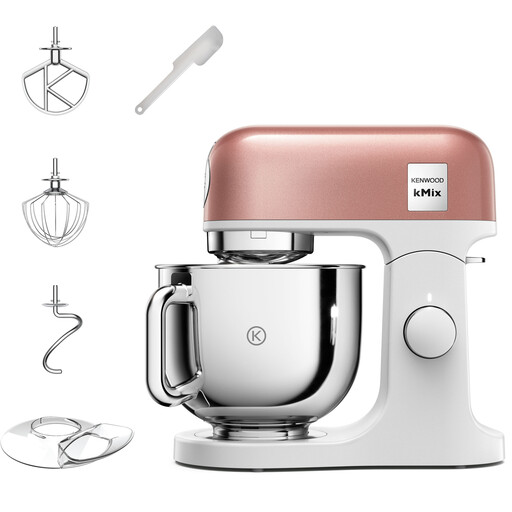 No image available
Consider this model for a single family batch if your recipe fits its stated stiff yeast-dough limit. Check the heavy-dough mixing and rest instructions if you plan to make batches consecutively.
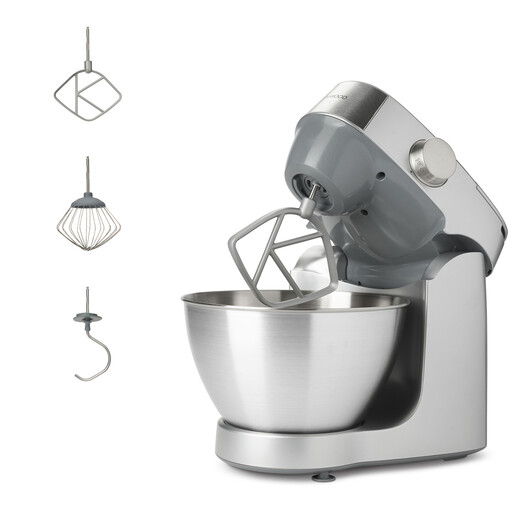 No image available
A compact-mixer option to consider when worktop space matters. The product name specifies a 4.3 L bowl and 1000 W; check the limit applicable to your finished cinnamon-bun dough rather than treating a flour-based dough figure as the same measurement.
 No image available
Consider this mixer if weighing ingredients during preparation matters to you. Before choosing it for cinnamon-bun dough, check how its stated dough limit applies to your recipe; bowl volume alone cannot answer that question.
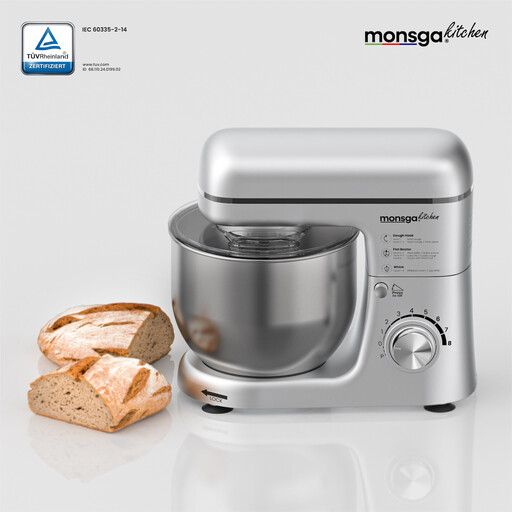 No image available
Its named bowl and dough hook make it an option to examine for bun preparation. The product name specifies eight speed settings; confirm the maximum suitable dough mass for your recipe rather than inferring it from the bowl’s litre figure.
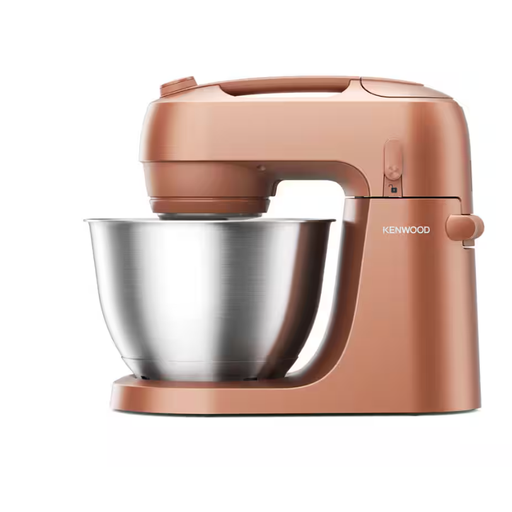 No image available
Consider this compact option if finding space for the mixer is a priority. Check its dough-mass limit against your family batch and consult its care instructions before deciding whether it fits your routine.
Choose an exact model whose stated yeast-dough limit accommodates the mass of dough in your recipe. Bosch lists up to 1.7 kg for Series 2, 1.9 kg for Series 4 and 3.0 kg for Series 6; KitchenAid gives an up-to-3.7 kg bread-dough figure for its 5KSM60SPX. Those manufacturer figures refer to different models and dough descriptions, so check the conditions for the mixer you intend to use.
No: wattage does not replace the exact model’s stated dough limit. Check that limit, the supplied dough tool and the manufacturer’s instructions for kneading; Bosch, for example, specifies a separate yeast-dough maximum for its MUM5XW40G.
Give it a stable working position where its lead can be kept away from water and will not obstruct movement. Electrical Safety First advises placing kitchen socket outlets and switches at a safe distance from the sink; also follow the mixer’s own instructions and inspect the lead before use.
Unplug the mixer and follow its model-specific care instructions for the bowl, dough tool and other food-contact parts. Check which pieces can be removed and how the manufacturer says to wash them rather than assuming every attachment has the same cleaning requirements.