Single-cake home bakers
If you usually make one coconut cake for a family picnic, an accessible bowl, a cake-mixing beater and controllable speeds may matter more to you than capacity for several batches.


For one coconut cake at a time, choose a stand mixer with a suitable bowl, a cake-mixing beater and speeds you can control; maximum capacity need not drive the decision. A larger bowl or integrated scales become more relevant when you make several cakes or regularly weigh ingredients at the mixer. If the finished cake contains ingredients normally kept chilled, plan how to keep it cool on the way to the picnic.
If you usually make one coconut cake for a family picnic, an accessible bowl, a cake-mixing beater and controllable speeds may matter more to you than capacity for several batches.
If you prepare several cakes for a group, compare stated cake-mixture capacity and bowl arrangements. Weighing ingredients at the mixer may also reduce transfers between bowls.
If you put the mixer away between occasional bakes, check its dimensions and lifting weight alongside bowl capacity.
Decide how much batter you will make in one batch, then weigh up measuring convenience against the space and effort needed to store the machine.
| Concern | What to check | Who this matters to |
|---|---|---|
| Cake-batter capacity | Compare stated cake-mixture capacity with your largest recipe; bowl volume alone does not establish how much batter the machine can mix. | If I am making several cakes for a group, I want fewer separate mixing batches. Around 50% of consumers would put batch capacity first. |
| Measuring convenience | Check whether the model can weigh ingredients in its bowl and whether its controls suit your recipe. | When I bake repeatedly, weighing ingredients where I mix them would save me transfers between bowls; around 30% of consumers would make measuring convenience their primary concern. |
| Storage and access | Measure the storage space and compare machine weight, bowl access and the included cake-mixing tool. | For an occasional cake, I need a mixer I can take out and put away comfortably. Storage and straightforward use would come first for around 20% of consumers. |
A watt rating does not tell you whether the bowl fits your recipe or whether the machine will fit your kitchen.
Start with your largest realistic cake batch, then compare stated cake capacity, bowl arrangement, dimensions and the included beater.
The stand mixer prepares batter at home; transporting the finished cake is a separate decision, particularly if its filling or topping is normally refrigerated.
Choose the mixer for your preparation needs. The Food Standards Agency advises keeping foods normally stored in the fridge cool at a picnic.
A large-capacity mixer can be awkward to use regularly if you must lift it out of a cupboard for every bake.
Measure both the worktop and storage space, allowing room to access the bowl and raise a tilt head where applicable; check the machine’s weight before ordering.
Kenwood offers formats for different batch sizes. Its Titanium Chef Baker XL is a reference point for bakers considering two bowls and direct-to-bowl weighing.
Bosch’s range includes smaller Series 2 machines and larger Series 6 models with integrated scales.
The tilt-head Artisan 5KSM125 is an option to examine when you want bowl access and manual speed control for one cake at a time.
These stand mixers cover everyday cake preparation and options to consider for larger batches or weighing at the mixer. Compare the capacity stated for your intended recipe with the space you have to store the machine.
 No image available
Consider this model if weighing ingredients at the mixer is a priority. Check its stated cake-batch limit against your recipe and whether its weight suits your storage arrangement.
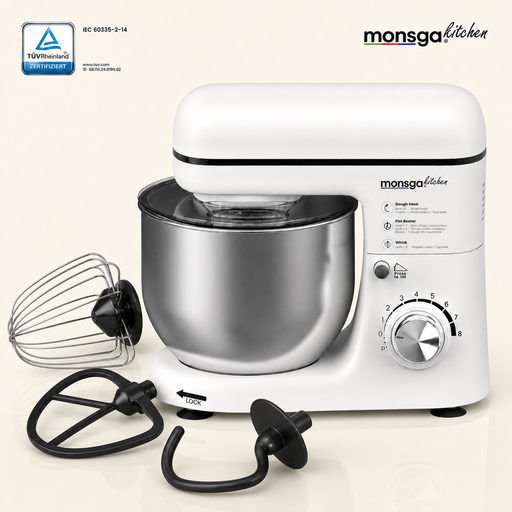 No image available
For cake mixing where bowl room matters, judge your recipe against the recommended usable capacity. The product name specifies a 5.0 L stainless-steel bowl, eight speed settings and an included beater; check the permitted cake-mixture quantity for your batch.
 No image available
Consider this 4.3 L model for occasional cakes where storage space matters. Its product name specifies three bowl tools; check the cake-mixture limit for your recipe rather than using a dough-capacity figure as a substitute.
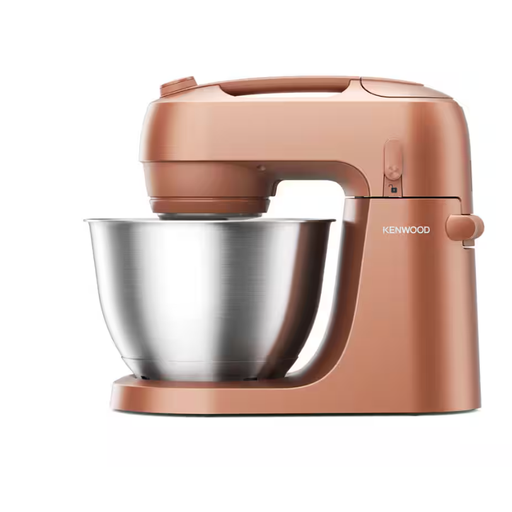 No image available
Consider this stand mixer for everyday cake preparation if cupboard height is a key constraint. Check its dimensions against your storage space and its cake-mixture limit against the batch you intend to make.
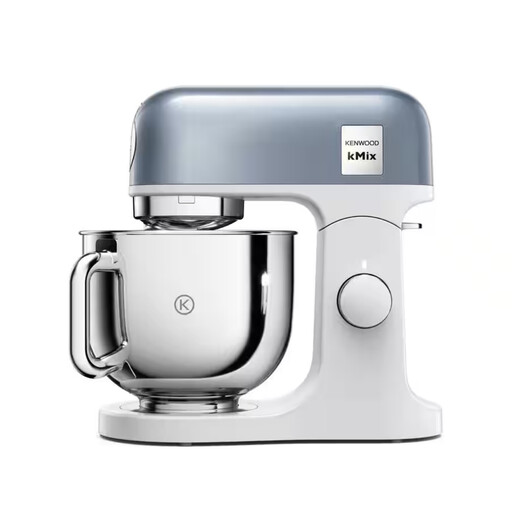 No image available
For a larger coconut cake mix, compare the model’s stated cake capacity with your recipe. Confirm the supplied bowl material before buying, particularly if you have a preference between glass and stainless steel.
A bowl around the size of KitchenAid’s 4.7 L 5KSM125 may suit one ordinary home cake, provided your recipe fits the exact model’s stated limits. If you regularly make several cakes, compare cake-mixture capacity as well as litres: Bosch Home UK states up to 3.5 kg for Series 6, while Kenwood GB states 4 kg for the Titanium Chef Baker XL KVL85.004SI.
No; integrated scales are a convenience for weighing ingredients at the mixer, not a requirement for mixing cake batter. They are most relevant if you bake repeatedly or want fewer transfers between containers. Check how weighing works on the exact model you choose.
Keep a cake containing ingredients you would normally refrigerate cool during transport and at the picnic; the mixer does not change its storage needs. The Food Standards Agency advises keeping normally refrigerated picnic foods cool, and Food Standards Scotland advises eating ready-to-eat foods within four hours of taking them out of the fridge.
Check the terms for the exact model and seller, including what is covered and how a claim is made. KitchenAid UK states a five-year guarantee for its 5KSM125; do not assume the same terms apply to another KitchenAid model or a different brand.