Choose a stand mixer around the cookie-dough batches you actually make, the space available and how users will clean it between recipes, rather than motor wattage alone. A stated dough limit helps when planning larger batches, while a smaller bowl may suit ordinary batches; either way, check the manual for your recipe and establish a shared-kitchen clean-down routine.
Who is this choice for?
Shared-kitchen bakers managing allergens
If other people use the mixer or ingredients change between sessions, you need a workable way to clean the bowl, tools and surrounding surfaces. The Food Standards Agency advises protecting foods from allergen cross-contact.
Bakers making larger batches
If several people regularly make firm dough, compare the intended batch with each model’s stated dough limit as well as its bowl size, weight and storage footprint. Bosch Home UK and Kenwood GB publish model-specific capacity figures for their respective mixers.
Everyday bakers short on space
If you usually make household-sized batches and put the mixer away afterwards, check where it will sit and whether you have room to access its controls and attachments. Bosch Home UK advises allowing worktop space, an electrical socket and clearance above a mixer where needed.
What matters when choosing?
Set the cleaning routine first, then match the intended dough batch to the exact model’s limits and measure the space it will occupy.
| Concern |
What to check |
Who this matters to |
| Cleaning and allergen separation |
Check which food-contact parts can be removed and how each part must be cleaned; plan for the surrounding worktop too. |
If ingredients change between users, I need a repeatable clean-down before the next batch. Around 40% of consumers would put that handover need first. |
| Firm-dough capacity |
Compare the exact model’s stated dough limit and supplied tools with your recipe; do not treat bowl volume as a cookie-dough yield. |
When I make a larger batch, I want to know whether it needs splitting before I start mixing. Capacity would be the primary concern for around 30% of consumers. |
| Space and shared access |
Measure the allocated worktop or storage spot, including overhead clearance, and check the appliance’s weight and socket access. |
If the mixer must be moved after every session, I need it to fit the space and be manageable for those using it. Around 30% of consumers would prioritise that everyday practicality. |
Mistakes to avoid
-
Using wattage as a cookie-dough performance score
Wattage does not tell you how much of your particular dough a mixer can handle. Bowl volumes and manufacturer-stated dough limits also describe different things.
Check the exact model’s manual for batch and tool instructions, especially if the dough is stiff or contains additions that change the load.
-
Relying on a dishwasher-safe bowl for allergen control
Residue can remain on tools, other mixer parts and nearby preparation surfaces. The Food Standards Agency advises measures that protect foods from cross-contamination.
Agree how all relevant parts and surfaces will be cleaned between ingredient sets, and use separate equipment or preparation areas where the kitchen’s controls require them.
-
Choosing a large mixer before measuring its place
A mixer that fits the worktop may still need room above it to raise the head or fit an attachment. Its weight also matters if users must put it away after each session.
Compare the exact model’s dimensions and weight with its allocated position. Bosch Home UK also advises checking for a nearby socket and overhead clearance.
Brands to consider for these mixer needs
Kenwood
The Chef XL KVL4100W is a large-bowl option for repeated batches where a supplied dough tool and bowl-cleaning arrangements matter.
- Kenwood GB specifies a 6.7 L dishwasher-safe bowl, a 2.42 kg dough capacity and a supplied dough tool for this model.
- Kenwood GB lists the KVL4100W at 7.84 kg and 38.5 × 28 × 34.5 cm. Check its storage location and the manual’s limits for your cookie recipe.
Bosch
The Series 6 MUMS6ZM00G is worth considering if weighing ingredients at the mixer and timed mixing would help organise shared use.
- Bosch Home UK specifies a 5.5 L bowl, 3.5 kg maximum dough content, integrated scales and a timer for this model.
- Bosch Home UK lists the unit at 8.1 kg. Allow for its weight when deciding whether it can stay in one place.
KitchenAid
The Artisan 5KSM125 is a tilt-head option for ordinary household cookie batches when access to a supplied paddle matters more than a larger bowl.
- KitchenAid UK lists a 4.7 L stainless-steel bowl, paddle, dough hook and 10 speeds, and names cookies among the model’s uses.
- Its stated bowl volume is lower than that of the Kenwood Chef XL KVL4100W and Bosch MUMS6ZM00G. Check the manual before planning a large batch.
Joybuy stand mixer choices
These stand mixers offer options to consider for cookie-dough mixing in a shared kitchen. Match each exact model’s tools and batch instructions to your recipe, then plan for cleaning and storage between users.
 Image unavailable
Kenwood Prospero+ KHC29.A0SI, 4.3 L, silver
Consider this 4.3 L model for ordinary batches when worktop space matters; check the manual’s limit for your cookie dough. The product title identifies three bowl tools, so confirm which one the instructions specify for your mixture.
View on Joybuy
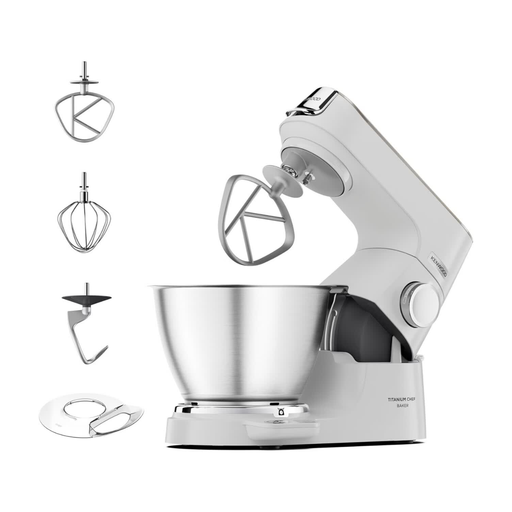 Image unavailable
Kenwood Chef Baker KVC65.001WH, white
If you want to measure ingredients at the mixing station, check this exact model’s weighing functions and supplied tools against your workflow. Confirm the manual’s batch instructions and where the mixer will stand during shared use.
View on Joybuy
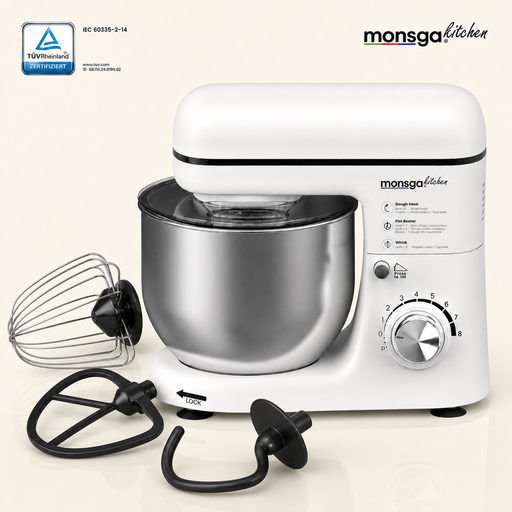 Image unavailable
MONSGA SM100, 5.0 L, cream white
For cookie dough made with a beater, compare this model’s instructions with your planned batch. Its product title identifies a 5.0 L stainless-steel bowl, beater, dough hook, splash guard and eight speed settings; check the appliance dimensions against your available space.
View on Joybuy
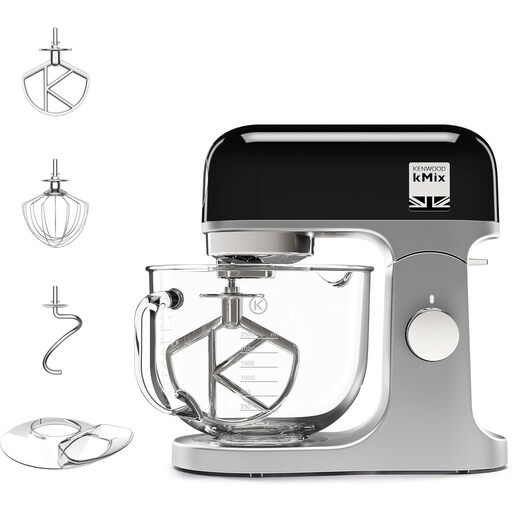 Image unavailable
Kenwood kMix KMX754BK, 5 L, black
If you want a beater for cookie dough alongside other mixing tools, the product title names a K-beater, whisk and dough hook. Check the KMX754BK manual for your intended batch and confirm that the mixer fits its allocated space.
View on Joybuy
Common questions
Which attachment should I use for spiced cookie dough?
For the KitchenAid Artisan 5KSM125, the supplied paddle is the relevant tool for cookie mixing. KitchenAid UK lists cookies among the model’s uses; follow the exact model’s manual for speeds, mixing time and batch limits rather than assuming a bread-dough setting applies.
Can people share a mixer when allergens need to be controlled?
They can share one only with an appropriate cleaning and management process. The Food Standards Agency advises protecting foods from allergen cross-contact, so account for tools, other food-contact parts and the preparation area; use separate equipment or areas where the kitchen’s controls require them.
Is a larger bowl always better for cookie dough?
No: bowl volume alone does not establish how much of your cookie recipe a mixer can handle. Bosch Home UK states a 5.5 L bowl and 3.5 kg maximum dough content for the MUMS6ZM00G, while Kenwood GB states a 6.7 L bowl and 2.42 kg dough capacity for the KVL4100W. These model-specific figures are not interchangeable tests of cookie-dough yield; check the manual against your recipe.


