Shared-kitchen bakers with little storage
You need to clear the worktop after baking and leave the bowl and tools ready for the next user to clean or put away.


For occasional crumble topping in a shared kitchen, start with a stand mixer you can store between uses, with a supplied paddle or K-beater and controllable speed. Check the exact model’s cleaning instructions before buying; a larger bowl is more useful when the kitchen also makes bigger baking batches regularly, but it brings a greater storage burden.
You need to clear the worktop after baking and leave the bowl and tools ready for the next user to clean or put away.
You make crumble alongside cakes or doughs, so the supplied beater, speed options and bowl capacity matter beyond a single dessert.
You often make larger quantities and have somewhere to keep a heavier mixer, its bowls and its accessories without taking over a shared worktop.
Start with the beater and speed control needed for your usual crumble recipe, then check whether the mixer fits your storage and cleaning arrangements. Choose bowl capacity for the batches you normally make, not just the largest batch you might make.
| Concern | What to check | Who this matters to |
|---|---|---|
| Control when mixing crumble | Check for a supplied paddle or K-beater and speed settings that let you start gently. The recipe and mixing time still affect the texture. | If I mainly make crumble, I want to combine butter and flour without scattering ingredients or overworking them. Around 33% of consumers would put mixing control first. |
| Cleaning and handover | Check the exact bowl and tool care instructions, including which removable parts the manufacturer says are dishwasher-safe. | When other people need the kitchen after me, I want a clear routine for washing and putting away the parts I used. Cleaning would be the primary concern for roughly 27% of consumers. |
| Batch capacity | Compare the bowl and stated working capacity for the exact model with your usual batch, allowing for any larger recipes you make regularly. | If our kitchen often makes several desserts or larger baking batches, I need enough room for that regular workload. About 20% of consumers would prioritise capacity. |
| Storage and access | Measure the cupboard and worktop space, including clearance to raise a tilt-head, and consider whether the mixer must be lifted after every use. | With no permanent appliance spot, I need a mixer I can put away without obstructing anyone else. Storage would come first for around 20% of consumers. |
A large bowl may help with batch baking, but it does not automatically make a mixer practical for one crumble dish or a small shared kitchen.
Compare the exact model’s dimensions, weight, supplied tools and stated working capacities with the batches you normally make.
Care instructions differ by model and accessory. A claim about removable baking tools does not extend to the motor unit or every attachment.
Check the manual for the bowl and each supplied tool, and agree how users will clean the appliance after baking.
A machine that is awkward to lift or has no allocated storage space can occupy a shared worktop between uses.
Measure the intended shelf and worktop, then agree who may use, clean and store the mixer and its accessories.
Kenwood’s KMX754PP and KMX754BK have different model identifiers. A shared brand and product family do not establish identical contents or specifications.
Match the full model number, included tools, bowl material and electrical version when comparing a product page with another model.
Bosch presents its Series 2 as a compact stand-mixer range, with larger Series 4 and Series 6 options for buyers comparing sizes.
Kenwood’s kMix and Chef lines offer different bowl and appliance sizes for routine baking or larger batches.
The 5KSM125 is a tilt-head option for households that make crumble as part of regular baking.
These stand mixers offer compact-storage and routine-baking options to consider for crumble topping. Compare each exact model’s supplied beater, care instructions and space requirements before deciding how it would work in your shared kitchen.
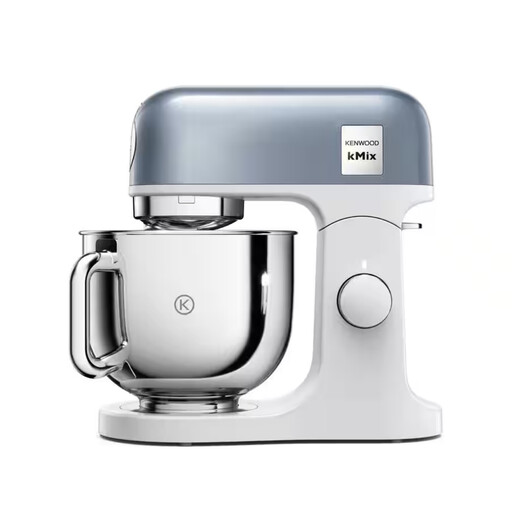 No image available
Consider this for crumble alongside routine baking if the household can allocate space for a mixer between uses. Check the included beater, accessory care instructions and the space needed to store it.
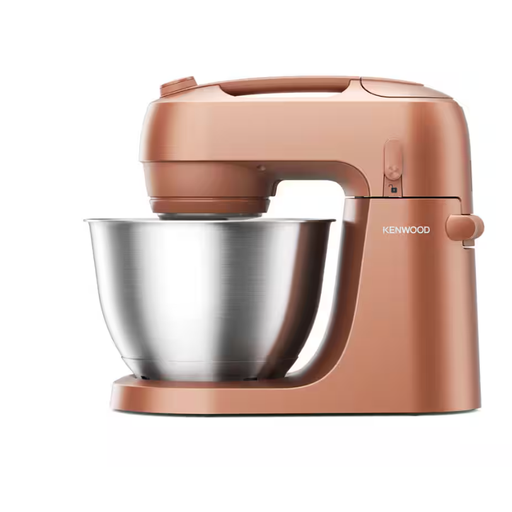 No image available
Consider this when the mixer needs to be put away after baking. Before choosing it for crumble, confirm the supplied beater and the cleaning instructions for the bowl and tools.
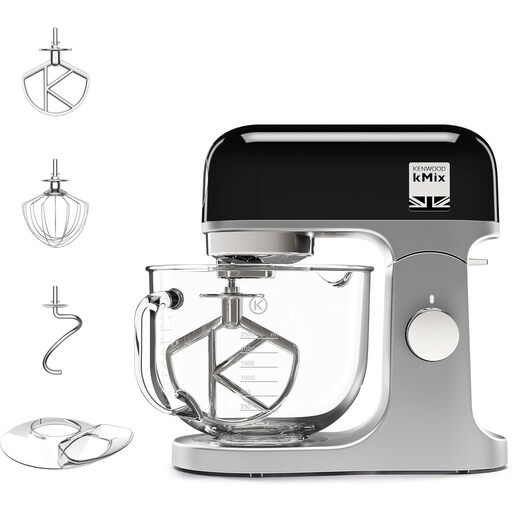 No image available
For crumble alongside other baking, the listed K-Beater is a relevant supplied tool. This 1000 W model is listed with a 5 L bowl, whisk and dough hook; confirm the bowl material and measure your storage space before buying.
 No image available
Consider the 4.3 L bowl against the size of your usual baking batch. The product name lists 1000 W and three bowl tools; check precisely which beater is included before choosing it for crumble topping.
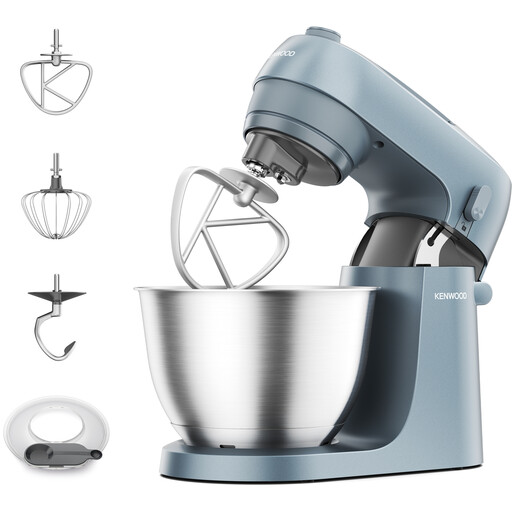 No image available
Consider this for a shared kitchen where storage is a priority. Confirm that its supplied beater suits your crumble recipe, and check the bowl and tool care instructions before agreeing on a clean-up routine.
Usually not if you make a single dish occasionally: choose around your normal batch and the space you can give the appliance. Bosch GB describes smaller Series 2 machines alongside larger options, while Kenwood GB lists 5 L and 7 L bowls for its Titanium Chef Baker XL; extra capacity is more relevant when you regularly bake in bigger batches.
Clean the used bowl and attachment, any fitted splashguard, touched controls and the surrounding worktop so the next person can use the space. Follow the appliance’s care instructions; food-business cleaning duties described by GOV.UK should not be assumed to apply to every domestic shared kitchen.
No: check the instructions for the exact model and each part. Bosch GB describes the cited MUMS2EW00G accessories as generally dishwasher-safe, and Kenwood GB lists dishwasher-safe baking tools for the KMX754PP; neither statement covers every variant or the motor housing.
Annual portable appliance testing is not, by itself, a specific legal requirement under the UK Electricity at Work Regulations 1989. The Health and Safety Executive says equipment that could cause injury must be maintained safely, with inspection arrangements depending on the equipment and environment; this workplace guidance does not establish a testing rule for an ordinary domestic shared kitchen.