Small-batch cupcake decorators
If you usually frost one tray of cupcakes, pay particular attention to how the bowl and tool handle your usual quantity. A smaller secondary bowl may be useful when it is supplied with the exact model.


For occasional cupcake batches, start with a whisk or beater suited to your recipe, adjustable speeds and a bowl that works with the amount you normally make. A 4–5 L mixer is a practical choice if you also bake cakes or biscuits; consider a model supplied with a smaller bowl for modest batches, or greater capacity if you regularly prepare large quantities.
If you usually frost one tray of cupcakes, pay particular attention to how the bowl and tool handle your usual quantity. A smaller secondary bowl may be useful when it is supplied with the exact model.
If frosting is one of several baking tasks, look at the supplied tools and speed control alongside bowl size. A mid-capacity mixer may suit cakes and biscuits as well as cupcakes without making maximum capacity the deciding feature.
If you prepare repeated frosting batches or large cakes, compare model-specific capacity guidance and allow enough counter and storage space. A larger bowl alone does not establish how well a mixer handles a small batch.
Match the tool and bowl to your usual frosting recipe and quantity before weighing up extras such as integrated scales or attachments for other baking tasks.
| Concern | What to check | Who this matters to |
|---|---|---|
| Mixing control and tools | Check the speeds and whether the exact bundle includes a whisk and a beater suited to your recipe. | If I switch between gently incorporating icing sugar and whipping frosting, control and the right tool come first. Roughly 31% of consumers put this need first. |
| Small-batch handling | Check the bowl arrangement and any manufacturer guidance for your usual quantity; confirm whether a smaller bowl is included. | When I frost only one tray of cupcakes, I need the tool to work with that modest amount. For roughly 31% of consumers, small-batch handling is the main concern. |
| Use beyond frosting | Compare the supplied tools, cleaning instructions and space needed for storage or use. | If the mixer will also make cakes and biscuits, I want its tools to cover those recipes without taking more space than I can spare. That wider use comes first for roughly 23% of consumers. |
| Large-batch capacity | Compare the exact model's bowl size and ingredient limits, then measure your available space. | For repeated celebration bakes, I need room for larger mixtures without treating bowl size as a test of small-batch results. Around 15% of consumers prioritise that capacity. |
Maximum capacity does not show whether a whisk or beater works well with the smallest quantity you make. A larger machine also needs more room.
Start with your usual frosting quantity, then check the exact model's bowl options and manufacturer guidance.
Tools and bowls can differ between models and bundles, even within the same range.
Check the exact model number and included accessories before ordering.
You may need to source a compatible whisk, flex-edge beater or smaller bowl separately if your chosen bundle omits it.
A motor rating does not, by itself, establish how a mixer handles a small bowl of frosting.
Consider the supplied tools, speeds and bowl setup in relation to your normal batch before comparing power ratings.
A damaged lead or use around water creates avoidable risks in a kitchen.
Electrical Safety First advises checking that leads and appliances are in good condition, keeping hands dry around switches and not leaving appliances running unattended.
KitchenAid offers tilt-head and bowl-lift mixers. Its 5KSM175PS is relevant if you want a choice of bowls for different baking quantities.
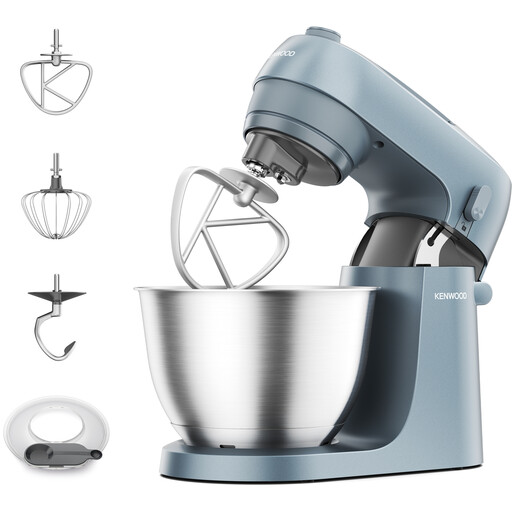
Kenwood's kMix range is relevant to home bakers considering a 5 L bowl; its Chef machines offer another format to assess for broader baking needs.
Bosch is worth considering if integrated weighing matters alongside bowl capacity.
Smeg's stand-mixer range is an option if its bowl size and supplied baking tools fit your frosting routine.
These stand mixers offer different bowl sizes and setups to consider for cupcake frosting. Check each model against the amount you normally make, particularly if your batches are small.
 No image available
Consider its 4.3 L bowl if frosting is one of several home-baking tasks; check how the supplied tools handle your usual batch. The product title specifies a 1,000 W rating and three bowl tools.
 No image available
If you want one mixer for frosting and other baking, check that this model's supplied tools suit both tasks and that its bowl works with your usual frosting quantity.
 No image available
If counter space is limited, compare this model's dimensions with the space available. Also check whether its supplied tool can work with the smallest frosting batch you make.
 No image available
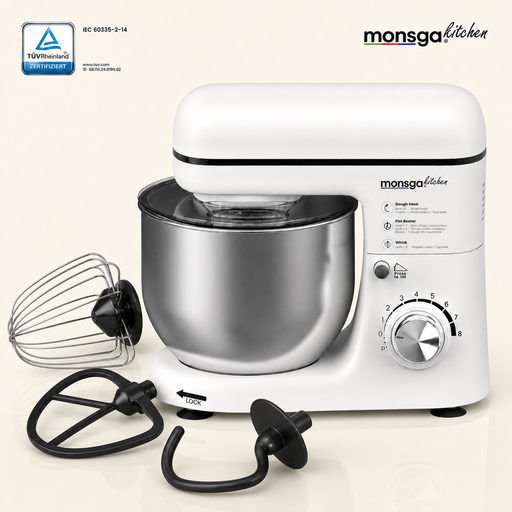
For frosting alongside other mixing tasks, compare its stated 5.0 L bowl with your normal quantity, especially if you make small batches. The product title specifies a whisk, beater and eight speed settings; its 1,000 W figure is described as peak power.
Choose a bowl that suits the quantity you normally make, rather than selecting by maximum capacity alone. Bosch advises matching bowl size to quantity; KitchenAid UK lists both 4.7 L and 3 L bowls with its 5KSM175PS if you want two supplied sizes.
Match the tool to the recipe: a whisk is relevant to whipped or aerated mixtures, while a paddle or flex-edge beater may suit creaming ingredients for buttercream. Check what the exact mixer bundle includes; KitchenAid UK lists all three tools with the 5KSM175PS.
Check the instructions for each part of the exact model before putting it in a dishwasher. Do not assume that a dishwasher-safe bowl means the whisk, beater and other attachments are dishwasher-safe too.
Check that the product is suitable for use in Great Britain and that the seller and manufacturer can be identified. GOV.UK explains that electrical equipment placed on the Great Britain market must meet applicable safety requirements; an individual listing does not, by itself, establish compliance.
Keep the appliance and lead in good condition, use switches with dry hands and do not leave it running unattended. These are kitchen electrical-safety precautions advised by Electrical Safety First.