For occasional doughnut batter, start with a mixer that has a suitable beater, a gentle starting speed and a bowl you can store comfortably. If you regularly make larger batches, compare bowl capacity against your recipe and available space; integrated weighing or timed functions are worth considering when they would simplify your preparation, but they do not replace checking the batter.
Who needs which mixer?
Occasional home doughnut bakers
If you make modest batches, focus on a suitable beater, control when starting slowly and convenient access to the bowl rather than choosing the largest capacity. KitchenAid UK lists multiple speeds and a pouring shield on its 5KSM175 range, illustrating features to check on the exact model you choose.
Frequent batch bakers
If you prepare several batches or also make heavier mixtures, check bowl capacity, included tools and where the mixer will live. Bosch UK advises considering a large bowl when you frequently make large quantities; the space a machine takes up matters too.
Bakers who want fewer preparation steps
If separate weighing and watching the mixing time interrupt your routine, look at model-specific scales and timing functions. Bosch GB lists both for the MUMS6ZM00G, but you will still need to follow your recipe and inspect the mixture.
What matters when choosing?
Choose around the batter and batch size you usually make, then decide whether preparation features justify the space the mixer will occupy.
| Concern |
What to check |
Who this matters to |
| Controlled mixing and splashes |
Check for an included paddle or flat beater and a gentle starting speed. If you add ingredients while mixing, check whether a compatible pouring shield is included. |
When I add flour gradually to a modest batch, I want control without scattering ingredients. Around 38% of consumers put controlled incorporation first. |
| Batch size and kitchen space |
Compare the bowl with your usual recipe and the manufacturer’s mixture limits; measure the intended worktop or storage space. |
If I make several batches, I need enough mixing room without choosing a machine that is awkward to keep in my kitchen. For around 37% of consumers, batch practicality and fit come first. |
| Weighing and monitoring |
Look for model-specific integrated scales, a timer or sensing functions, and decide whether you would use them regularly. |
I would rather weigh ingredients at the mixer and keep a closer handle on mixing time, while still judging the batter against my recipe. That convenience is the primary need for around 25% of consumers. |
Mistakes to avoid
-
Choosing by motor wattage alone
A wattage figure does not tell you on its own how well a mixer suits your batter. Bowl size, the beater, speed control and your recipe also affect the choice.
Check the exact model’s included tools, starting speeds and bowl limits before using wattage to distinguish two options.
-
Assuming a larger bowl is always more useful
Extra capacity may help with repeated batches, but a larger mixer also needs a suitable place to use and store it. Kenwood GB lists its Chef XL KVL4100W at 7.84 kg and 38.5 × 28 × 34.5 cm.
Measure your space and choose around your usual batch. Follow the manual’s mixture limits rather than treating the bowl volume as a fill level for every batter.
-
Letting automatic functions judge the batter for you
Bosch GB lists timing and sensing features for the MUMS6ZM00G, but recipes can call for different mixing methods and finished textures.
Use those functions as preparation aids, with the attachment, speed and stopping point called for by your recipe.
-
Overlooking allergens when baking for sale
For food businesses in England, Northern Ireland and Wales, GOV.UK and Food Standards Agency guidance requires allergen information and effective allergen management. Shared bowls, beaters and splashguards need attention in cleaning and ingredient controls.
Before trading, establish cleaning and allergen-management procedures and confirm the requirements that apply to your business with the relevant local authority.
Relevant brands to consider
Kenwood
A reference point if you want to compare a larger traditional mixer with your available kitchen space.
- Kenwood GB lists a 6.7 L bowl, variable speed, a K-beater, whisk, dough tool and splashguard for the Chef XL KVL4100W.
- That model’s listed weight and dimensions make storage and worktop measurements important; its specifications do not apply to every Kenwood mixer.
KitchenAid
A reference point for household bakers considering a tilt-head mixer with several speeds.
- KitchenAid UK lists planetary action, 10 speeds, a 4.7 L main bowl, a second bowl and a pouring shield for its 5KSM175 model.
- For frequent large batches, compare that model’s main bowl with your recipe quantity rather than assuming it offers the capacity you need.
Bosch
A reference point if weighing and timed preparation matter alongside bowl capacity.
- Bosch GB lists a 5.5 L bowl, integrated scales and pre-selectable processing time for the MUMS6ZM00G.
- Check current retailer availability and the functions of the exact model; automated assistance does not replace following your recipe.
Joybuy mixers for home batches
These mixers offer different bowl sizes and controls to consider for household doughnut batter. Compare the included tools and your recipe’s batch limits before choosing.
 No image available
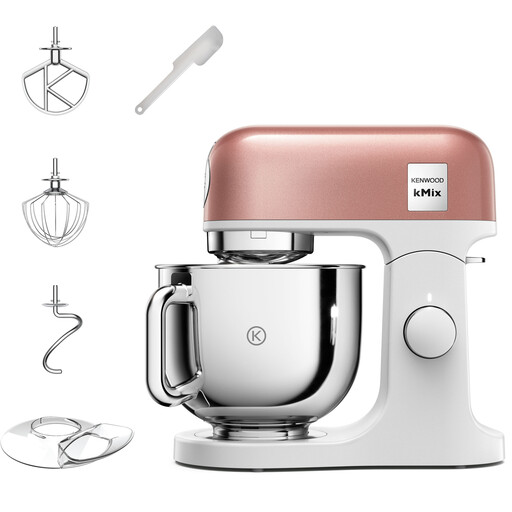
Kenwood kMix Editions KMX760API, Apricot Pink
Consider this stand mixer for routine home batches if convenient ingredient addition matters to you; confirm the included beater and shield before buying.
Check the manual against your usual batter quantity and measure your intended storage space.
View on Joybuy
 No image available
Kenwood Prospero+ KHC29.A0SI, 4.3 L, Silver
Consider the 4.3 L bowl for modest home batches, provided your recipe fits the manual’s limits.
The product name specifies 1000 W and three bowl tools. Check which tools are included and whether a pouring shield is available if you add ingredients while mixing.
View on Joybuy
 No image available
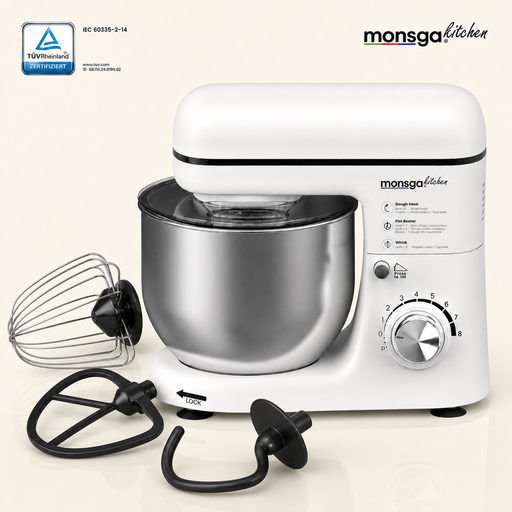
MONSGA SM100, 5.0 L, Cream White
Consider this mixer if you want a beater and splash guard for household batter preparation, subject to your recipe’s batch limits.
Its product name lists a 5.0 L stainless-steel bowl, eight speed settings, a whisk, dough hook, beater and splash guard. Follow the manual for usable mixture capacity rather than filling to the bowl’s rim.
View on Joybuy
 No image available
Honinst 6.5 QT 10-Speed Tilt-Head Stand Mixer
Consider this larger-bowl household option if you regularly prepare bigger batches, while checking usable capacity against the recipe and manual.
The product name lists a dough hook, whisk and beater. The supplied instructions describe domestic use only, so do not assume it is suitable for commercial production.
View on Joybuy
Questions about doughnut batter mixers
Do I need a dough hook for doughnut batter?
For a pourable or spoonable batter, use the beater or paddle called for by your recipe rather than assuming you need a dough hook. A hook is more relevant to a kneaded, yeast-raised dough; check which tools come with the exact mixer.
What bowl size should I choose for doughnut batter?
Choose around the batches you usually make and the manufacturer’s limits for your mixture, not the occasional largest batch. KitchenAid UK lists a 4.7 L main bowl for its 5KSM175 model, while Kenwood GB lists 6.7 L for the Chef XL KVL4100W; neither headline volume is a recipe-specific maximum fill level.
What changes if I plan to sell the doughnuts?
If you operate as a food business in England, Northern Ireland or Wales, allergen information and management need to be part of your preparation process. GOV.UK and Food Standards Agency guidance covers those obligations; confirm the requirements for your business, including local arrangements, with the relevant authority before trading.


