What matters when choosing?
For a doughnut-batter bake sale, work out your batch volume first, then decide how much mixing convenience and kitchen space matter alongside it.
| Concern |
What to check |
Who this matters to |
| Batch capacity |
Compare the volume of your prepared recipe with usable bowl capacity, allowing room for mixing. |
If I need to prepare a large batch in one session, repeated mixes would slow me down; around 30% of consumers would put batch capacity first. |
| Batter control |
Check for a suitable supplied beater, controllable low speeds and a practical way to add ingredients. |
When adding ingredients to wet batter, I want access to the bowl without making the process awkward; roughly 40% of consumers would prioritise mixing control and ingredient addition. |
| Space and occasional use |
Measure storage and operating clearance, then compare the included tools with what you will use. |
If I only organise occasional sales, I would rather make another batch than store an oversized machine; around 30% of consumers would make kitchen fit their primary concern. |
Joybuy stand mixers
These stand mixers offer different stated sizes and formats to consider for bake-sale batter. Match the usable bowl fill and supplied mixing tool to your recipe before deciding how many mixes to plan.
 No image available
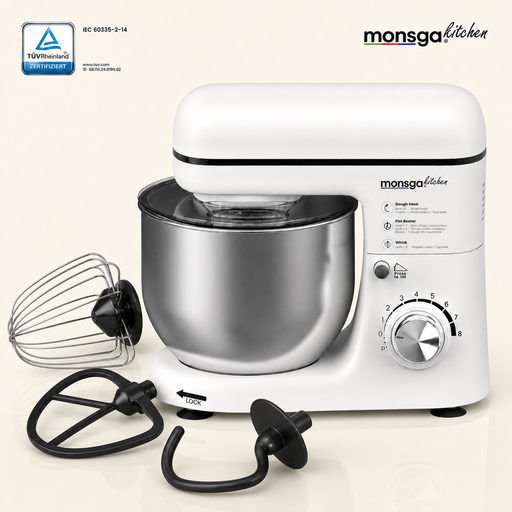
MONSGA SM100 stand mixer, cream white, 5.0L
Consider this model if you want a beater and splash guard for adding ingredients to bake-sale batter. Its name lists a 5.0L stainless-steel bowl, eight speed settings, a whisk and a 1000W peak-power rating; check the recommended usable fill against your recipe.
View on Joybuy
 No image available
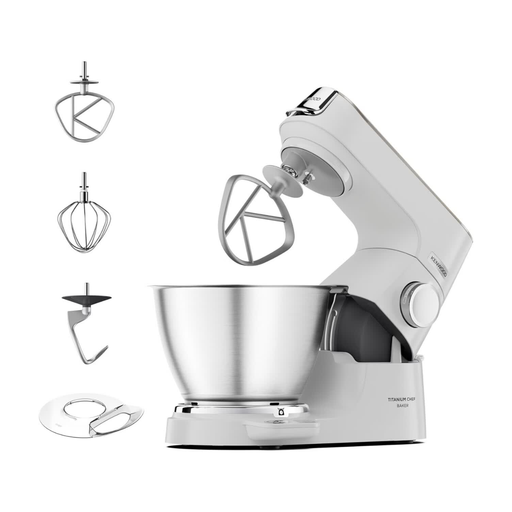
Kenwood Chef Baker KVC65.001WH stand mixer, white
If weighing ingredients directly into the bowl would help your preparation, check this model’s weighing arrangement alongside its included mixing tools. Confirm the bowl’s usable fill for your batter; a dough-capacity figure would not establish doughnut-batter yield.
View on Joybuy
 No image available
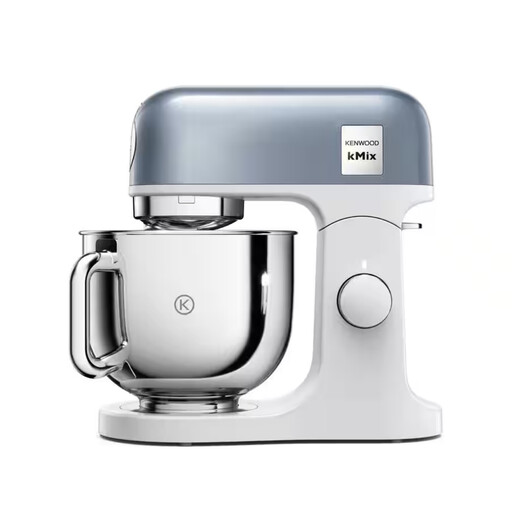
Kenwood kMix Editions stand mixer, blue
For a bake-sale session involving more than one mix, decide whether bowl access and the supplied beater suit the way you add ingredients. Check usable bowl fill against the volume of each batch before planning your output.
View on Joybuy
 No image available
Honinst 6.5QT 10-speed tilt-head stand mixer
Consider its stated size if fewer batter mixes are important, but establish how much of the bowl you can use for your recipe. The name lists ten speeds and a beater, whisk and dough hook; confirm the motor rating for the exact version you choose.
View on Joybuy
 No image available
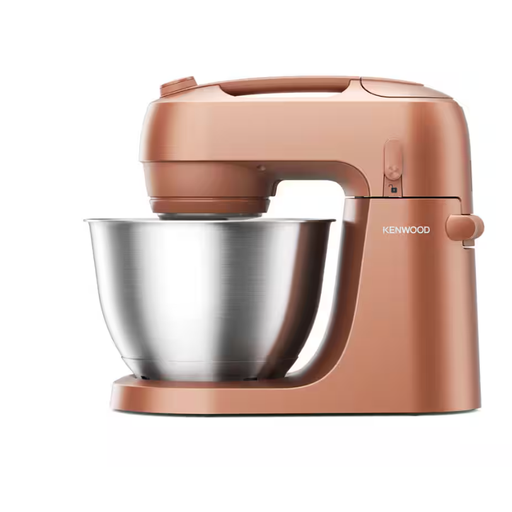
Kenwood Go stand mixer, Red Clay
If kitchen space is your main constraint, check where this model would be stored and operated before choosing it for modest batches. Confirm its usable bowl fill and supplied beater against your doughnut-batter recipe.
View on Joybuy
Common questions
Do I need a dough hook for doughnut batter?
Choose the mixing tool specified by your recipe rather than assuming a dough hook suits every doughnut mixture. For batter, check that the stand mixer includes an appropriate beater or stirrer; KitchenAid UK lists paddle beaters with the 5KSM175PS, while Bosch GB lists a stirrer with the MUMS2VM40G.
What bowl size should I choose for a bake sale?
Start with your recipe’s batter volume and decide how many repeat mixes you can manage. Among the manufacturer examples, Bosch GB lists a 3.8L usable bowl, KitchenAid UK a 4.7L main bowl and Kenwood GB a 6.7L bowl; those figures do not by themselves tell you how many doughnuts you can make.
Do I need to provide allergen information when selling doughnuts?
If your bake sale is run as a food business, check the allergen-information requirements for the way the doughnuts are presented. Food Standards Scotland says food businesses must tell consumers about any of the 14 allergens that must be declared by law; ask the relevant local authority which format applies if your sale arrangements are unclear.
Does a bake sale need food-business registration?
A bake sale is not automatically classified by its name: ask the relevant local authority whether your activity is a food business. For a new food business, the Food Standards Agency says to register with the local authority at least 28 days before trading; Food Standards Scotland states the same lead time for food businesses opening in Scotland.


