Family-batch doughnut makers
If you are mixing for several people, compare your recipe quantity with the maker’s stated mixture capacity. Room for additions and the convenience of making another batch may matter as much as the bowl’s volume.


Choose a stand mixer by the amount of doughnut batter your recipe makes at once and the space you can give the machine. A compact 4L model can suit an occasional gathering, while a larger bowl gives more room to plan bigger or repeated batches; bowl size alone does not establish how well a mixer reaches the batter, so check the supplied beater, speed control and cleaning requirements too.
If you are mixing for several people, compare your recipe quantity with the maker’s stated mixture capacity. Room for additions and the convenience of making another batch may matter as much as the bowl’s volume.
If the mixer will come out only for gatherings, its height, weight and storage position matter alongside its mixing tools. Check whether you can lift it out and use it comfortably on your worktop.
If you prepare several dishes for a gathering, you may value controlled speeds or weighing ingredients directly on the machine. Check those features on the particular model rather than assuming they come with every mixer in a range.
Start with your recipe quantity and the space available for the mixer, then compare its supplied batter tool and cleaning instructions.
| Concern | What to check | Who this matters to |
|---|---|---|
| Batch capacity | Compare your recipe amount with the maker’s relevant mixture capacity, not just the bowl volume. Check whether a second bowl is supplied if you plan repeated batches. | When I am making doughnuts for several people, I want room to mix the quantity my recipe calls for without assuming a full bowl is usable. Around 40% of consumers put batch capacity first. |
| Mixing and clean-up | Check for a supplied batter beater, suitable speed control and accessible bowl; consult the manual for cleaning instructions. | If I am also preparing other food, I want to judge whether the beater reaches the bowl and how much cleaning follows each batch. For around 30% of consumers, mixing and clean-up are the primary concern. |
| Storage | Measure cupboard clearance and worktop space, then check the mixer’s dimensions and weight. | A mixer I use only for occasional gatherings still needs somewhere practical to live between them. Storage is the leading concern for around 30% of consumers. |
A motor rating does not tell you whether a mixer reaches the sides of its bowl, mixes quickly or is easy to clean. Which? identifies mixing time, bowl reach and ease of use as differences between the stand mixers it tested.
Check the supplied beater, bowl access and model-specific test results alongside the motor specification.
Manufacturers can state bowl volume and mixture capacity separately. Kenwood, for example, lists cake-mixture capacities for its Go and Titanium Chef Baker XL models; those figures describe cake mixture, not a universal doughnut-batter limit.
Compare the amount in your recipe with the maker’s relevant guidance, leaving room for ingredients to move during mixing.
A larger machine may be awkward to keep accessible if cupboard clearance or lifting space is tight. Bosch lists its MUMS6ZM00G at 33 × 32 × 38cm and 8.7kg, while Kenwood states a 30cm height and 6.3kg weight for the Go KZM35.000RD.
Measure where the machine will sit and how you will move it from storage before deciding how much bowl capacity you want.
Kenwood offers the compact Go line and the larger Titanium Chef Baker XL, giving buyers different ways to balance storage space against stated mixture capacity.
The KitchenAid Artisan 5KSM125 is a 4.7L tilt-head option for buyers who want an everyday mixing format rather than choosing chiefly by bowl size.
Bosch’s MUMS6ZM00G is relevant if you want a larger bowl and integrated scales for home baking.
These stand mixers offer choices for preparing doughnut batter when you want to compare bowl size, mixing tools and storage needs. Before choosing a batch size, check your recipe against the maker’s guidance for the particular machine.
 No image available
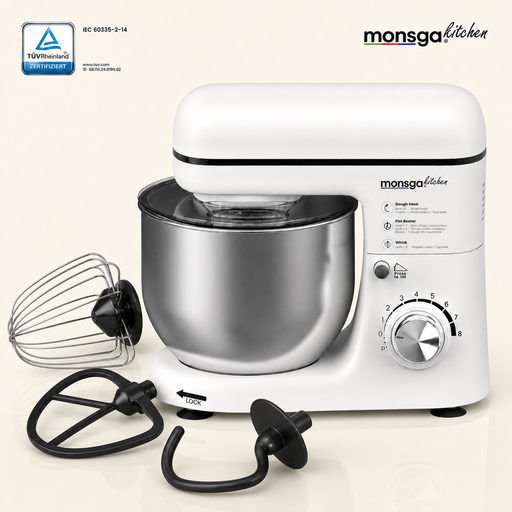
Consider this for a family batch if the maker’s guidance confirms it can handle the amount of batter in your recipe.
The product name lists eight speeds and includes a whisk, beater, dough hook and splashguard. Check bowl reach, plug type and applicable warranty terms before ordering.
 No image available
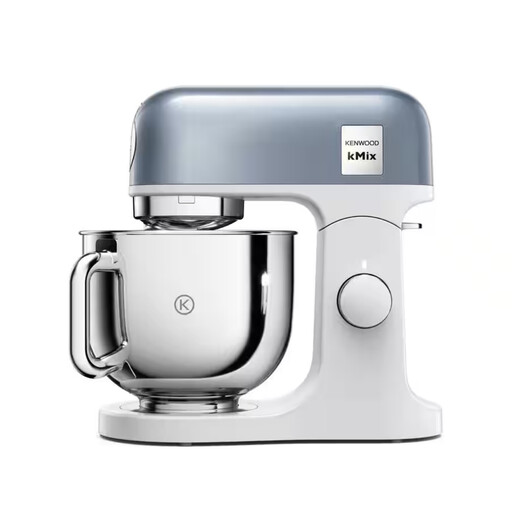
Consider this for family baking if its mixing tools and stated capacity suit your doughnut recipe.
Check the maker’s batter guidance and the tools included with this blue edition, particularly if you plan to make more than one batch. Confirm the plug type and applicable warranty terms before ordering.
 No image available
Its stated bowl size makes this a model to consider when storage matters as well as the quantity you need to mix.
The product name specifies 1000W and three bowl tools. Check which tool suits your batter and compare your recipe amount with the maker’s mixture guidance; a dough capacity is not automatically a batter capacity. Confirm the plug type and applicable warranty terms before ordering.
 No image available
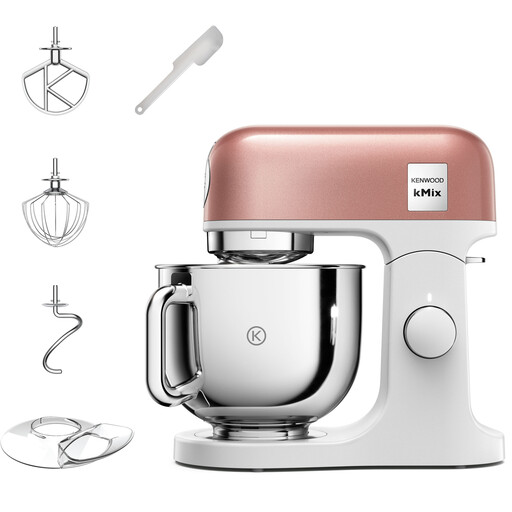
Consider this kMix variant if you want a stand mixer for family baking and can confirm it accommodates your recipe quantity.
Check the included batter tool, maker’s capacity guidance and cleaning instructions for this variant. Confirm the plug type and applicable warranty terms before ordering.
 No image available
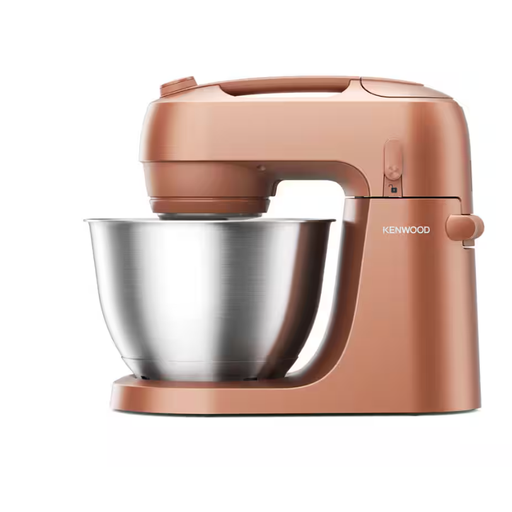
Consider this Go variant if you expect to store the mixer between occasional gatherings rather than keep it on the worktop.
Compare its stated mixture guidance with your doughnut recipe, and check the included tools and cleaning instructions. Measure your storage space and confirm the plug type and applicable warranty terms before ordering.
Choose by your recipe quantity and the maker’s relevant mixture guidance, rather than using bowl litres as a batter limit. Kenwood lists a 4L bowl and 1.8kg cake-mixture capacity for the Go KZM35.000RD, while its Titanium Chef Baker XL has 7L and 5L bowls and a stated 4kg cake-mixture capacity; those cake figures do not specify a doughnut-batter limit.
Wattage alone cannot establish how well a stand mixer handles batter. Which? found differences in mixing time, ease of use and how well attachments reached the bowl in its stand-mixer tests, so compare the relevant model’s beater and independent test results where available.
Clean the bowl, beater and food-contact surfaces before preparing food for an allergic guest, and follow the mixer’s instructions for removable parts. Food Standards Agency guidance on allergen control for food businesses identifies cross-contamination as a concern; check ingredients and preparation surfaces as well as the mixer.
Check that the particular electrical product is intended for the market where you will use it, with a suitable plug and instructions. GOV.UK describes the Electrical Equipment (Safety) Regulations 2016 as requirements for businesses placing electrical equipment on the Great Britain market; that guidance does not, by itself, establish a requirement for a buyer to choose one particular mark.