Choose a stand mixer by its stated dough capacity and by how people will use, clean and store it in the shared kitchen, rather than by wattage or bowl size alone. A larger machine may suit frequent group batches, while a smaller format may be easier to put away between modest batches; whichever you choose, check the maker's guidance for your enriched-dough recipe. If the kitchen is a workplace or food business, agree the relevant cleaning and equipment-maintenance arrangements before use.
Who needs which mixer?
Frequent group-batch dough makers
If several people regularly make dough or you prepare multiple recipes at once, start with the weight of your largest normal batch. Compare it with the exact mixer's stated dough limit, then consider whether its bowl arrangement and operating routine work for repeated use.
Shared-kitchen coordinators
If different people will use the machine, establish who cleans and stores its parts and how defects are reported. Where the kitchen is a food operation or workplace, its contamination controls and electrical-maintenance arrangements also affect the choice.
Occasional bakers with limited storage
For modest batches, a machine you can access and put away may be more practical than one that needs a permanent worktop position. Check the dough limit as well as the space needed to move, store and operate it.
What matters when choosing?
Start with the largest enriched-dough batch you normally make, then assess the cleaning handover and space available to everyone who shares the mixer.
| Concern | What to check | Who this matters to |
|---|
| Dough capacity |
Weigh your largest normal recipe and compare it with the exact model's stated dough limit. Bread-dough and yeast-dough figures may describe different mixtures. |
When I make enriched dough for several people, I need the batch to fit the machine's stated limit; around 33% of consumers put batch capacity first. |
| Cleaning and handover |
Check the care instructions for the bowl and tools, and agree who cleans and stores them. In a food operation, consider allergen and preparation-area controls. |
If others use the bowl after me, I want a clear handover so food residues are dealt with; roughly 27% of consumers make clean, accountable sharing their primary concern. |
| Storage and clearance |
Measure the allocated worktop and storage space, including room to operate the machine and reach an outlet. |
When the mixer cannot stay on the counter, I need to move and store it without obstructing shared space; about 20% of consumers prioritise that fit. |
| Controls and tools |
Confirm which dough tool is supplied and whether the controls and any desired weighing function suit all users. |
When several people follow different recipes, I want a kneading setup they can operate consistently; around 20% of consumers put controls and flexibility first. |
Buying pitfalls to avoid
-
Using bowl litres as a dough-weight limit
Bowl volume and permitted dough weight are different measures. Kenwood lists a 7 L bowl but a 2.56 kg dough capacity for its KVL85.004SI.
Record the weight of your largest normal recipe and follow the exact model's dough guidance, including any instructions relevant to that mixture.
-
Choosing by wattage alone
A rated wattage does not, by itself, establish how much enriched dough a mixer can knead. The machines also differ in their stated dough limits, bowl arrangements and tools.
Compare the model-specific dough limit, supplied kneading tool, operating instructions and available kitchen space alongside wattage.
-
Leaving cleaning to the next user
Residue on tools, bowls or preparation surfaces matters particularly when different users handle allergens. Food Standards Agency MyHACCP guidance addresses contamination risks in shared food-operation facilities.
Agree who cleans each part after use and, where the kitchen is a food operation, set appropriate preparation-area and allergen controls.
-
Overlooking electrical responsibilities at work
For workplace equipment, the Health and Safety Executive says electrical equipment must be maintained to prevent danger; the appropriate checks depend on the equipment and its setting.
Assign responsibility for reporting damage and arranging the maintenance approach appropriate to the workplace before the mixer enters communal use.
Relevant brands to consider
Ankarsrum
The Assistent Original is a rotating-bowl option to consider for frequent, larger dough batches when users can accommodate its workflow.
- Ankarsrum states that the Assistent Original handles up to 5 kg of dough and has a 7 L bowl; its UK support information describes a 7-year warranty.
- Users need to learn the supplied dough-roller or hook arrangement rather than assume it operates like a conventional planetary mixer.
KitchenAid
The 5KSM60SPX offers a conventional bowl-lift format for users who want a secured bowl for substantial dough batches.
- KitchenAid states that its 5.6 L 5KSM60SPX can knead up to 3.7 kg of bread dough and includes a spiral dough hook.
- KitchenAid notes that bowl-lift models are taller and larger than tilt-head mixers; check clearance and do not treat the bread-dough figure as a limit established for every enriched recipe.
Kenwood
The KVL85.004SI is worth considering when different users value direct-to-bowl weighing and two bowl sizes.
- Kenwood lists 7 L and 5 L bowls, integrated weighing and a 2.56 kg dough capacity for the KVL85.004SI.
- Its 7 L bowl volume must not be mistaken for a 7 kg dough allowance; follow the stated dough limit.
Bosch
The MUM5XW40G is a smaller-bowl option to assess for modest batches when storage access matters.
- Bosch lists a 3.9 L bowl, integrated scales and capacity for up to 1.9 kg of yeast dough for the MUM5XW40G.
- Compare that yeast-dough limit with your intended recipe and check the storage position, outlet and operating clearance.
Stand mixers on Joybuy
These stand mixers offer different bowl sizes and tool arrangements for a shared kitchen. Check each exact model's guidance against your enriched-dough batch before deciding whether it fits your routine.
 No image available
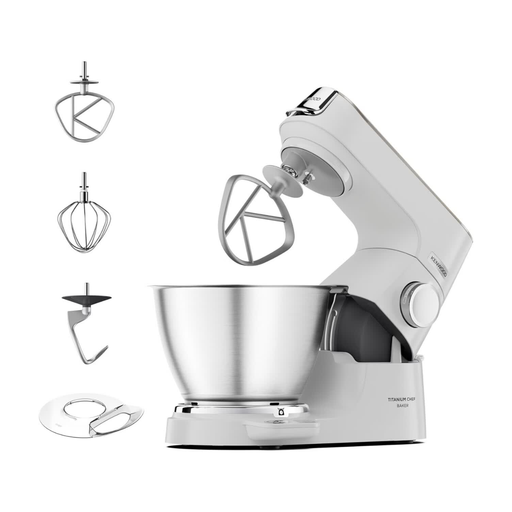
Kenwood Chef Baker KVC65.001WH, White
For shared enriched-dough preparation, compare your normal batch with the exact model's dough guidance and confirm that it fits the allocated worktop and storage space.
View on Joybuy
 No image available
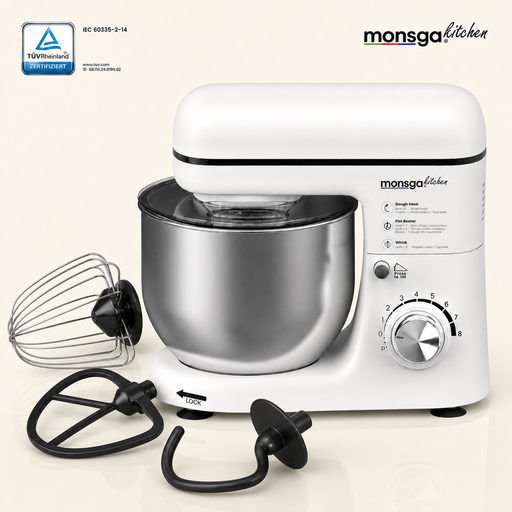
MONSGA SM100 5.0 L Stand Mixer, Cream White
If several users need the same supplied mixing tools, this model includes a dough hook, whisk, beater and splash guard. Its name specifies a 5.0 L stainless-steel bowl and eight speed settings; confirm the permitted dough weight for your recipe rather than treating bowl volume as a batch limit.
View on Joybuy
 No image available
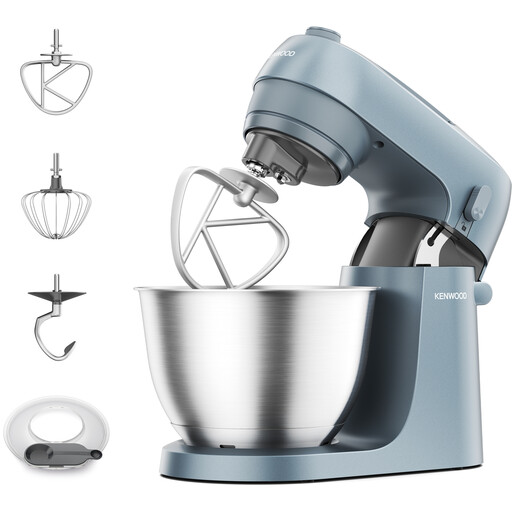
Kenwood Go KZM35.000GY, Blue
If the mixer must be put away between uses, check this model's dimensions against the storage route and its operating clearance. Confirm the dough guidance for your enriched recipe before choosing a batch size.
View on Joybuy
 No image available
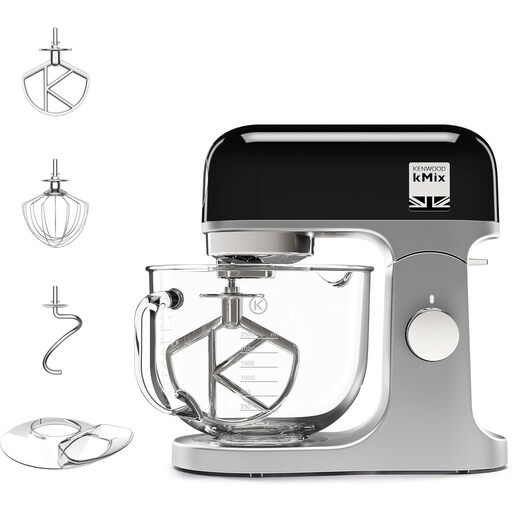
Kenwood kMix KMX754BK 5 L, Black
For users sharing a set of mixing tools, the named set includes a K-beater, whisk and dough hook. Confirm the bowl material and care instructions, as well as the model's permitted dough weight, before settling a shared cleaning and batch routine.
View on Joybuy
 No image available
Honinst 6.5QT 10-Speed Tilt-Head Stand Mixer
For a shared domestic kitchen, assess whether the tilt-head layout and supplied dough hook, whisk and beater suit the available space and handover routine. Confirm the dough-weight limit for your recipe; the listing describes this appliance as intended for domestic use only, so check suitability before considering it for a workplace or food business.
View on Joybuy
Frequently asked questions
Should I choose a mixer by bowl size or dough capacity?
Use the exact model's stated dough capacity to assess batch size; bowl litres describe volume, not a permitted dough weight. Kenwood lists a 7 L bowl and 2.56 kg dough capacity for the KVL85.004SI, while Bosch lists a 3.9 L bowl and up to 1.9 kg of yeast dough for the MUM5XW40G. Check the maker's instructions for your particular enriched recipe.
Does a shared food-business kitchen need mixer-cleaning and allergen controls?
Yes, cleaning and contamination controls need to be addressed when the shared kitchen is a food operation. Food Standards Agency MyHACCP guidance calls for assessing contamination risks in shared facilities and identifying defined areas where separation is otherwise not possible; set the relevant cleaning and allergen measures in the operation's food-safety procedures.
Does a stand mixer used at work need electrical checks?
A mixer used as workplace equipment must be maintained to prevent electrical danger, according to the Health and Safety Executive. The appropriate user checks, inspection and testing depend on the equipment and its environment; do not assume one testing interval applies to every workplace mixer.
Is a larger bowl-lift mixer automatically the right choice for enriched dough?
No: its format may suit users who want a secured bowl, but capacity and kitchen fit still have to match the intended work. KitchenAid notes that bowl-lift models are taller and larger than tilt-head mixers, so check the exact model's dough guidance, operating clearance, storage route and cleaning routine.


