Frequent family-batch pasta makers
If you mix large or repeated batches, look for the exact machine’s published dough workload and a setup suited to heavy mixtures. Bowl volume alone will not tell you how much pasta dough to make at once.


Choose a stand mixer by the exact model’s stated dough workload and the size of your planned batch, not bowl volume or motor wattage alone. A larger bowl-lift design makes more sense for frequent heavy batches if it fits your kitchen; for occasional family pasta, a smaller mixer may suffice if its dough guidance suits your recipe. If you also want powered rolling or cutting, check attachment compatibility and what is included before choosing the mixer.
If you mix large or repeated batches, look for the exact machine’s published dough workload and a setup suited to heavy mixtures. Bowl volume alone will not tell you how much pasta dough to make at once.
If pasta is an occasional family project, check that the mixer fits your counter and storage space, then compare its stated dough guidance with the batch you intend to make.
If you may move from mixing dough to powered rolling or cutting, check which tools fit the precise mixer model and whether they are included.
Start with your recipe and how often you will mix it; then decide whether counter fit or future pasta attachments change the choice.
| Concern | What to check | Who this matters to |
|---|---|---|
| Batch capacity and stability | Compare your recipe with the exact model’s stated dough type and limit; check the supplied hook and mixer dimensions. Bread-, yeast- and other dough figures are not interchangeable pasta-dough limits. | If I want to mix a full family batch at once, I need to know whether it fits the machine’s dough guidance. Around 42% of consumers put batch capacity and stability first. |
| Pasta attachments | Check exact-model compatibility for the roller, cutter or shaper you want, and whether each tool is included. | When I want the mixer to take dough through to sheets or shapes, compatible tools matter beyond the mixing bowl. Around 33% of consumers make pasta-workflow expansion their primary concern. |
| Counter fit and access | Measure counter and cupboard clearance, including room to raise or remove the bowl; compare the exact model’s dimensions. | For occasional pasta gatherings, I do not want an appliance that is awkward to set up or store between uses. Around 25% of consumers prioritise kitchen fit and access. |
A bowl size does not establish a pasta-dough limit. Bosch GB states a yeast-dough capacity for the MUM5XW40G, KitchenAid UK states a bread-dough capacity for its 5KSM60SPX, and Kenwood GB lists a dough capacity for the Chef XL KVL4100W; these are different workload descriptions.
Check the exact model’s dough guidance and included hook against your recipe. If a batch is too large for that guidance, plan to divide it rather than treating a larger bowl as permission to mix more.
A dough hook mixes and kneads; rolling sheets or cutting shapes calls for other equipment. Kenwood GB lists pasta rollers, cutters and shapers as attachments.
Decide which pasta shapes you intend to make, then check the precise mixer and attachment combination and what comes with it.
Separate pasta tools also need storage space.
KitchenAid UK describes bowl-lift machines as larger than its tilt-head alternatives. Cupboards and limited counter space can affect whether you can position the mixer and handle its bowl comfortably.
Measure the intended counter and storage location, including overhead clearance, before settling on a design.
GOV.UK guidance on placing UKCA- or CE-marked products on the Great Britain market has a Great Britain scope; Northern Ireland follows different processes.
Check the product’s intended market and documentation. For delivery to Northern Ireland, confirm the applicable requirements with the seller or relevant official guidance.
KitchenAid’s bowl-lift range is worth considering for frequent large or heavy batches, provided the appliance fits your kitchen.
Kenwood’s Chef range is relevant if you want to investigate pasta-making attachments alongside dough mixing.
The Bosch MUM5XW40G offers a reference point for cooks considering a 3.9 L bowl and an integrated scale.
These stand mixers provide different bowl sizes and setups to consider for family pasta-dough mixing. Match your recipe to the exact model’s dough guidance, and check pasta-tool compatibility separately if you want powered rolling or cutting.
 No image available
For a family dough batch, compare your recipe with this exact mixer’s dough guidance. Its name specifies a 4.3 L bowl and 1000 W; if you plan to add powered pasta-making tools, confirm which attachment fits and whether it is included.
 No image available
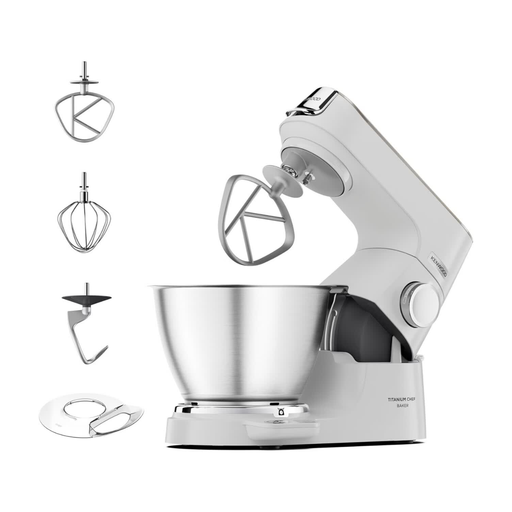
If weighing ingredients in the mixer appeals to you, check this exact Chef Baker model’s features alongside its dough guidance for your recipe. Confirm compatibility before choosing it for powered pasta rolling or cutting.
 No image available
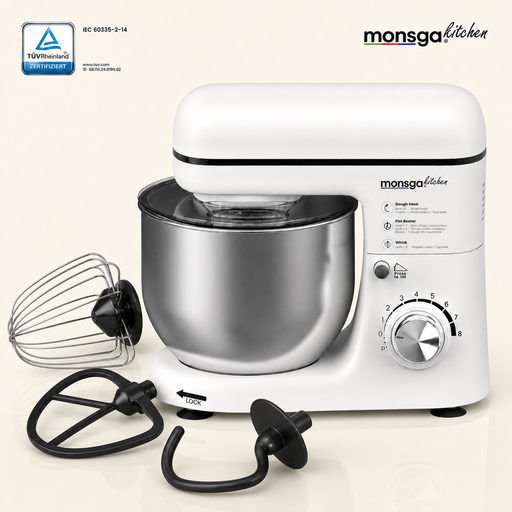
For dough mixing with a supplied hook, compare your planned batch with the manufacturer’s guidance before filling the bowl. The product name specifies a 5.0 L stainless-steel bowl, eight speed settings and 1000 W peak power; bowl volume is not a dough-mass limit.
 No image available
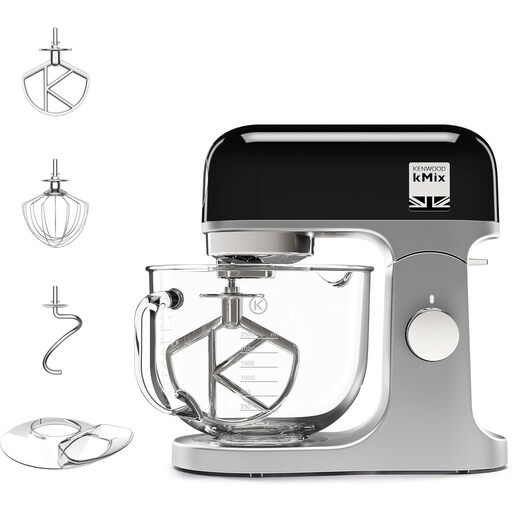
If you want to mix dough now and consider powered rolling later, check roller compatibility for this exact model. Its name specifies a 5 L bowl, 1000 W and a dough hook; confirm the supplied bowl material and suitable dough batch size before purchase.
 No image available
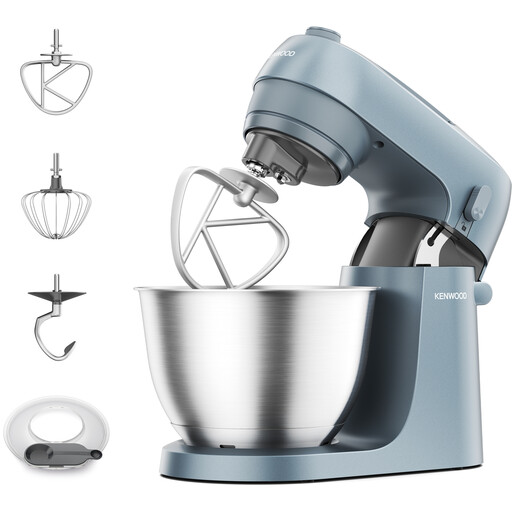
If counter fit matters for occasional pasta making, compare this model’s dimensions and dough guidance with your space and recipe. Check exact-model compatibility if you also intend to use pasta attachments.
Start with the exact model’s stated dough limit and your recipe size, rather than choosing by bowl litres alone. Bosch GB gives a yeast-dough figure for the MUM5XW40G, while KitchenAid UK gives a bread-dough figure for the 5KSM60SPX; neither figure is a directly comparable fresh-pasta limit.
Consider bowl-lift for frequent heavy batches if you have room for the machine; consider tilt-head when bowl access and cupboard clearance matter more. KitchenAid UK describes its bowl-lift designs as suited to larger quantities and its tilt-head designs as slightly shorter.
No: dough can be mixed in a stand mixer and rolled or cut manually afterwards. If you want powered rolling, cutting or shaping, check that the particular tool fits your exact mixer model and whether it comes with the machine.
Check the product’s intended market and documentation rather than assuming one marking applies throughout the UK. GOV.UK guidance updated in August 2026 says Great Britain continues to recognise CE marking alongside UKCA marking under applicable rules; Northern Ireland has different processes, so check its requirements separately if delivery is there.
Follow the exact model’s manual for removing and cleaning its bowl, dough hook and any pasta attachments. Check the instructions for each part before putting it in a dishwasher; do not assume that all mixer tools have the same cleaning requirements.