Small-kitchen lunchbox baker
You usually make one focaccia batch for a few lunches. A mixer needs to fit where you will store and use it, rather than simply offer the largest bowl.


Choose a stand mixer with a supplied dough tool and a manufacturer-stated dough or flour limit that covers your usual focaccia recipe. A compact model may make more sense for an occasional lunchbox batch in a small kitchen; consider a larger machine when you regularly mix several trays or heavier batches. Check the exact model’s kneading instructions rather than judging capacity by bowl litres or wattage alone.
You usually make one focaccia batch for a few lunches. A mixer needs to fit where you will store and use it, rather than simply offer the largest bowl.
You often make focaccia, pizza or bread, or prepare several trays at once. A stated dough limit and the supplied kneading tool matter more to you than the smallest storage footprint.
You want fewer separate steps when measuring and mixing dough. An integrated scale or a yeast-dough programme may be useful if it is available on the exact model you choose.
For lunchbox focaccia, start with the weight of your usual recipe and the included dough tool, then consider where the mixer will live and which preparation features you would use.
| Concern | What to check | Who this matters to |
|---|---|---|
| Dough capacity | Compare your recipe weight with the exact model’s dough or flour limit, keeping the maker’s stated mixture type and units in mind. | If I mix several portions at once, I need the batch to fit within the maker’s kneading limit. Around 36% of consumers put batch capacity first. |
| Storage and handling | Check dimensions, weight and clearance where you will use or store the mixer. | When cupboard space is tight, I need a machine I can bring out for a lunch-prep batch. Storage is the main concern for around 29% of consumers. |
| Preparation workflow | Check whether the exact model has an integrated scale, timer or yeast-dough programme if you would use one. | I would rather weigh and manage a repeat recipe with fewer separate steps. Around 21% of consumers prioritise that workflow. |
| Long-term use | Distinguish included tools from optional attachments, and check model-specific support and accessory compatibility. | If the mixer will also serve other baking tasks, I care about the tools and support available for the model I buy. That is the primary need for around 14% of consumers. |
A motor figure alone does not tell you how much focaccia dough the mixer is designed to knead.
Check the exact model’s flour or dough limit, included tool and operating instructions alongside its motor specification.
A bowl’s nominal volume is not its usable kneading capacity; makers may state different limits for different mixtures.
Compare your recipe’s ingredient weights with the published limit that applies to the mixture you plan to make.
Extra capacity is less useful for an occasional lunchbox batch if the machine is awkward to access or store.
Measure the worktop or cupboard space, including the clearance needed to use the bowl and attachments.
Kneading limits vary by model. KitchenAid’s UK dough-hook guidance, for example, warns against exceeding speed 2 when kneading; that instruction should not be applied to other mixers.
Follow the manual for your exact model’s tool, speed and operating limits.
Kenwood offers both compact GO mixers and larger Chef XL machines, making the stated capacity of the particular model an important point of comparison.
The 5KSM70SHX is a 6.6L bowl-lift option to compare if regular larger batches, a supplied dough hook and product support matter to you.
Bosch’s Series 6 range is relevant if measuring ingredients in the mixer or using a dough programme would simplify your routine.
The Assistent Original is a large-bowl option for people whose baking extends well beyond occasional lunchbox focaccia.
Ooni’s spiral mixers are worth comparing when dough making is a frequent, central use rather than an occasional secondary task.
These mixers are options to assess for lunchbox focaccia, with different bowl sizes and approaches to storage and preparation. Compare your recipe with each exact model’s dough guidance before choosing.
 No image available
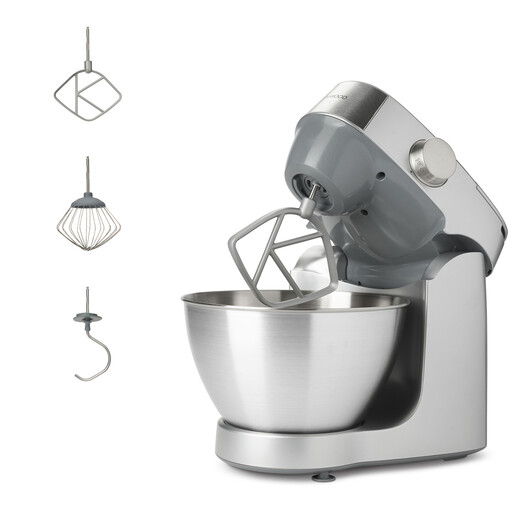
If weighing ingredients as part of your dough preparation matters, check this exact model’s scale function and supplied dough tool. Compare its stated dough limit with your usual focaccia batch.
 No image available
For a smaller kitchen, check the machine’s dimensions as well as its dough limit before settling on it. The product name specifies a 4.3L bowl, 1000W and three bowl tools; bowl volume and wattage do not establish kneading capacity.
 No image available
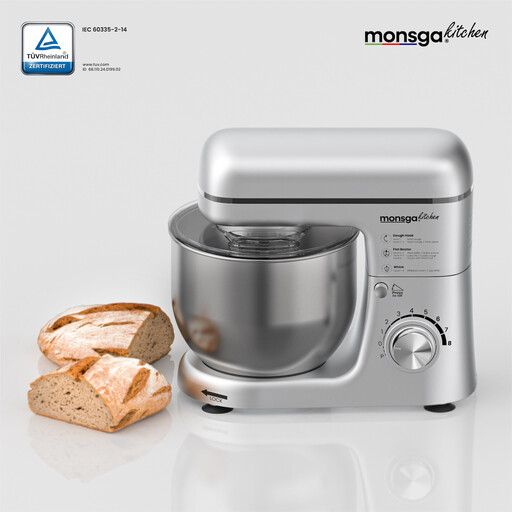
For focaccia dough, confirm the SM100’s flour or dough limit against your recipe before relying on its bowl size. Its product name specifies a dough hook, whisk and splash guard, with 1000W described as peak power.
 No image available
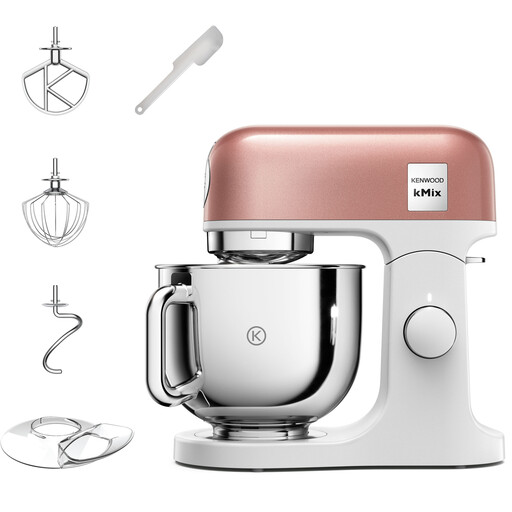
If you will bring a mixer out for each lunchbox batch, consider where you can keep and handle it. Check the KMX760API manual for the applicable dough limit and kneading instructions.
 No image available
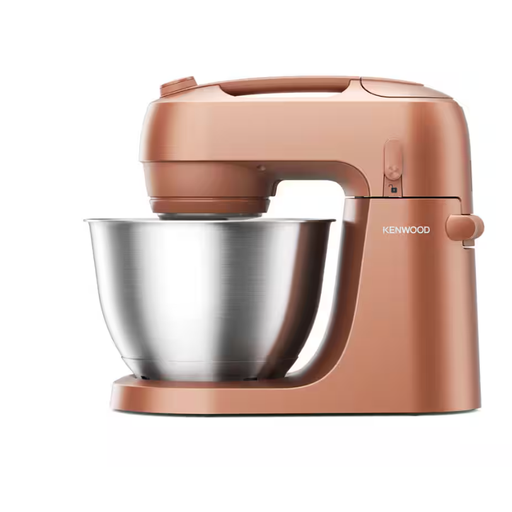
For a storage-conscious lunchbox routine, compare this model’s dimensions with your available space. Check its exact dough-tool and flour-limit instructions against the batch you normally make.
Check that a suitable dough tool is supplied with the mixer you choose. KitchenAid describes its dough hook as a tool for mixing and kneading yeast dough; follow the instructions for your exact model when using its tool.
No: bowl litres do not by themselves show how much focaccia dough a mixer is designed to knead. Compare your recipe with the exact model’s stated flour or dough limit, noting which mixture that limit describes.
Use the kneading speed specified in your mixer’s manual. KitchenAid’s general UK dough-hook guidance warns against exceeding speed 2 when kneading, but that limit should not be assumed for other brands or models.