Occasional bakers with little storage
If you make a modest gingerbread batch before an outing, a compact mixer is worth considering. Check its stated recipe capacity as well as the space it needs in your kitchen.


Choose a stand mixer with a suitable supplied beater, then check the maker’s stated recipe capacity against the amount of gingerbread batter you plan to make. A compact model can suit an occasional small batch and limited storage; a larger mixer or built-in scales make more sense if you regularly prepare bigger or multi-stage bakes and have room for the appliance. Bowl volume alone does not establish a batter limit.
If you make a modest gingerbread batch before an outing, a compact mixer is worth considering. Check its stated recipe capacity as well as the space it needs in your kitchen.
If gingerbread is one of several cakes or biscuits you make, look for the supplied beater needed by your recipes and a stated cake capacity that covers your usual quantities.
If you often bake for gatherings, direct-to-bowl weighing or a second bowl may be useful between recipe stages. Allow for the storage space a larger mixer needs.
Consider it: For modest batches when cupboard or worktop space is tight.
Trade-off: A stated recipe limit may rule out a doubled batch, even if the bowl looks large enough.
Consider it: For regular cakes, biscuits and gingerbread when the exact model’s tools and capacity suit your recipes.
Trade-off: Similar bowl sizes do not guarantee the same maximum mixture quantity.
Consider it: If you frequently make larger batches or want to weigh ingredients into the bowl.
Trade-off: Check that you can store and move the larger appliance comfortably.
| Concern | What to check | Who this matters to |
|---|---|---|
| Batch capacity | Compare your recipe, including any doubled batch, with the exact model’s stated cake or pastry capacity. | If I am making enough gingerbread for a group, I need the mixer to handle the full recipe without relying on the bowl’s litre figure. Around 31% of consumers put batch capacity first. |
| Mixing tools and control | Check for a supplied paddle or general-purpose beater and speed settings appropriate to the recipe method. | When I cream ingredients and then add dry ingredients, I want a suitable tool and control over the mixing stages. Mixing tools and control are the primary concern for around 31% of consumers. |
| Storage and handling | Measure the intended storage space and check the mixer’s dimensions and weight. | If I put the appliance away between occasional bakes, I need to be able to fit and lift it. Around 23% of consumers place storage and handling first. |
| Weighing and workflow | Check whether the exact model offers built-in scales or a second bowl if your baking routine calls for them. | For repeated or multi-stage bakes, I would rather weigh into the bowl or avoid stopping to wash one bowl. Weighing and workflow come first for around 15% of consumers. |
A motor rating does not tell you the model’s recipe limit, supplied tools or storage dimensions.
Check the maximum quantity for the mixture you plan to make, then compare the included beater and appliance size.
A bowl’s nominal volume and its stated maximum cake or dough quantity describe different things.
Look up the exact model’s capacity for the relevant mixture before increasing your gingerbread recipe.
A mixer that fits on the counter may still be awkward to store or lift out for each bake.
Check height, storage clearance and weight where you intend to keep it.
The documentation relevant to an electrical appliance depends on where it is supplied and used; Great Britain guidance should not automatically be applied to Northern Ireland.
Check the maker’s and seller’s documentation for your destination and confirm the applicable requirements separately if it is Northern Ireland.
Kenwood’s Go and Titanium Chef Baker XL lines illustrate compact and larger, weighing-equipped options.
The Classic 5K45SS is an example of a 4.3L tilt-head mixer for regular baking.
Bosch Series 6 is relevant if batch capacity and integrated weighing matter more than a compact format.
Smeg’s stand-mixer range offers a 4.8L format with core baking tools.
These stand mixers offer options to assess for making gingerbread batter at home before a picnic. Match each exact variant’s tools and stated recipe capacity to your method; a bowl size or product name alone cannot settle batch fit.
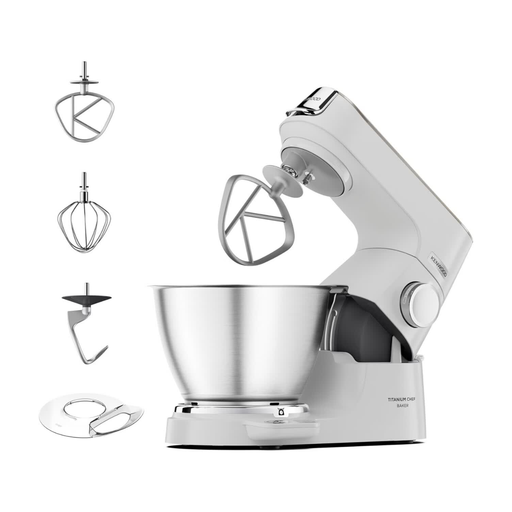 No image available
For gingerbread batter, check whether this variant’s supplied beater suits your recipe and whether its stated cake capacity covers your batch.
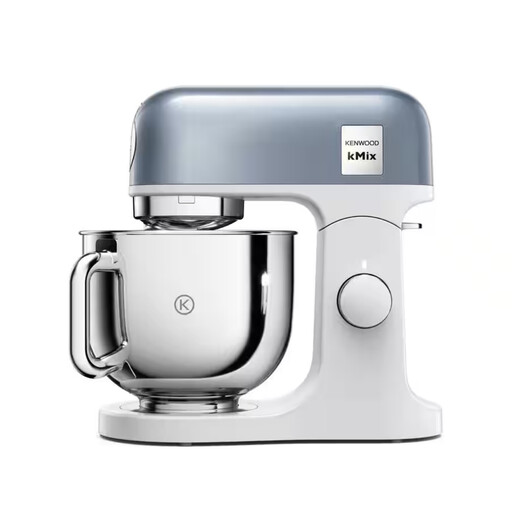 No image available
For regular batter-making, confirm that the included mixing tool and stated recipe limit suit the quantities you normally prepare.
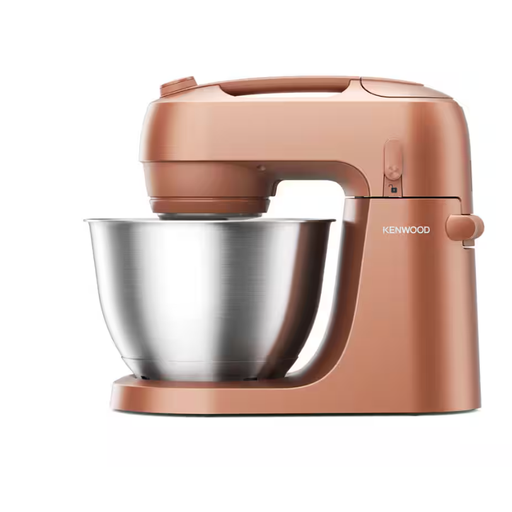 No image available
Consider this model when storage height matters for an occasional gingerbread bake. Joybuy describes the KZM35.000RD as 30cm high with an 800W motor; check its stated cake capacity against your recipe rather than using its height or motor rating to judge batch size.
 No image available
The product name specifies a 4.3L bowl, 1000W rating and three bowl tools. For gingerbread batter, check which tool is supplied for general mixing and confirm the exact model’s cake-mixture limit; the bowl volume is not that limit.
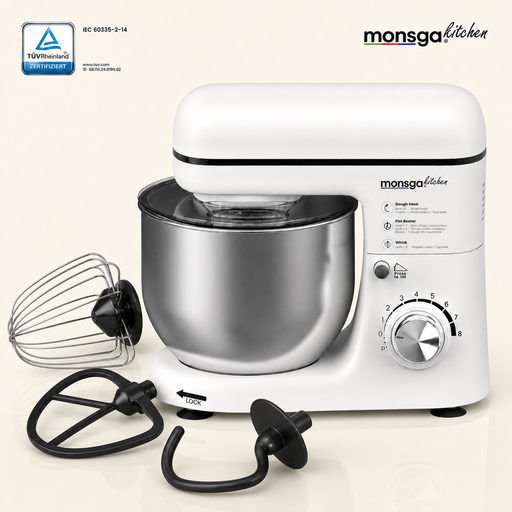 No image available
If your gingerbread method calls for a general-purpose beater, the product name lists a beater alongside a whisk and dough hook. It also specifies a 5.0L bowl, eight speed settings and 1000W peak power; check the model’s stated cake capacity before increasing your batch.
Choose by the amount in your recipe and the exact mixer’s stated mixture limit, not bowl litres alone. Kenwood GB lists a 1.8kg cake capacity for the Go KZM35.000GR, KitchenAid UK lists 2.5kg for its 4.3L tilt-head models, and Bosch GB lists up to 3.5kg of cake mixture for Series 6; apply each figure only to the relevant model or range.
Look for a supplied paddle, flat beater or equivalent general-purpose beater if your recipe calls for creaming and batter mixing. Check the recipe and the exact mixer’s instructions rather than assuming its whisk or dough hook serves the same purpose.
No; they are a convenience if you often weigh ingredients directly into the bowl or prepare several mixtures. Kenwood’s Titanium Chef Baker XL KVL85.004SI and Bosch Series 6 offer integrated weighing, while separate scales remain an option with a mixer that otherwise suits your recipe.
Check that the appliance is intended for the destination market and review its maker and seller documentation. GOV.UK guidance states that Great Britain continues to recognise CE marking alongside or instead of UKCA marking where applicable; its Great Britain guidance should not be assumed to settle the requirements for Northern Ireland.