Frequent batch bakers
If you make gingerbread in larger quantities for events, gifts or repeated baking sessions, compare your recipe with the exact model’s stated bowl and dough capacities rather than choosing by wattage alone.


Choose a stand mixer by your usual gingerbread batch size, then consider how its bowl and tools will be cleaned and where the machine will live between users. A larger bowl gives you more room to plan sizeable mixes but takes up more shared space; a smaller machine may be easier to accommodate if its capacity suits your recipe. If the kitchen is used for a food business, the mixer must also fit into cleaning and allergen-control procedures.
If you make gingerbread in larger quantities for events, gifts or repeated baking sessions, compare your recipe with the exact model’s stated bowl and dough capacities rather than choosing by wattage alone.
Plan how users will clean, store and hand over the bowl and tools. For food-business premises, the Food Standards Agency highlights contamination risks in shared facilities, including allergen cross-contact.
For smaller batches, measure the counter and cupboard space available to everyone. Bowl size matters, but so does room to operate the mixer and remove its tools.
Start with the amount you normally mix, then decide whether cleaning between users and the available storage space change which machine is practical.
| Concern | What to check | Who this matters to |
|---|---|---|
| Batch capacity | Compare your recipe quantity with the exact model’s bowl volume and applicable dough or recipe limit. Check which mixing tool is supplied. | If I regularly prepare a large gingerbread batch, I need to know whether it fits without exceeding the maker’s guidance. Around 40% of consumers put batch fit first. |
| Cleaning and shared use | Check the cleaning instructions for each supplied part and plan how tools and work surfaces will be cleaned between users. | When others use the same equipment, I need a workable cleaning and separation routine, particularly where allergens are involved. For around 30% of consumers, that is the primary concern. |
| Space and access | Measure storage and operating clearance, including room to raise the head or arm and remove the bowl. | If the mixer cannot stay on the counter, I need to be able to store and retrieve it without obstructing shared work areas. Space and access come first for around 30% of consumers. |
A wattage figure does not tell you whether your gingerbread quantity fits the bowl or whether the appliance fits the kitchen. Kenwood GB and Bosch GB publish different bowl, dough-capacity and dimension figures for individual models.
Compare the exact model’s stated capacities, supplied beater and dimensions with your usual recipe and allocated space.
A dishwasher-safe bowl does not establish how every tool, the mixer body or nearby surfaces should be cleaned. For food-business premises, Food Standards Agency guidance calls for controls addressing contamination, including allergens, and draws attention to shared facilities.
Set a routine for cleaning and storing the bowl, tools and any splashguard according to their instructions. Where separation is needed, include preparation areas and handovers in the kitchen’s controls.
Kenwood GB lists the Chef XL KVL4100W at 38.5 × 28 × 34.5 cm and 7.84 kg. A mixer can have suitable capacity yet be awkward to keep or retrieve in a shared kitchen.
Measure the allocated counter and cupboard space, allowing clearance to operate the head or arm and lift out the bowl.
Kenwood GB lists the Chef XL KVL4100W for mixing, kneading and whisking, with a 6.7 L bowl and a stated 2.42 kg dough capacity.
KitchenAid UK lists the Artisan 5KSM125 as a 4.7 L tilt-head mixer supplied with a paddle, dough hook and wire whisk, with 10 speeds.
Bosch GB lists a 3.9 L usable bowl and 2.0 kg maximum dough content for the MUM59340GB. Its MUMS2VM40G has a listed 3.8 L bowl and dimensions of 266 × 266 × 277 mm.
These stand mixers offer different bowl sizes, supplied tools and storage considerations for gingerbread preparation in a shared kitchen. Compare each exact model with your recipe and cleaning routine rather than treating a stated dough limit as a gingerbread-batter test.
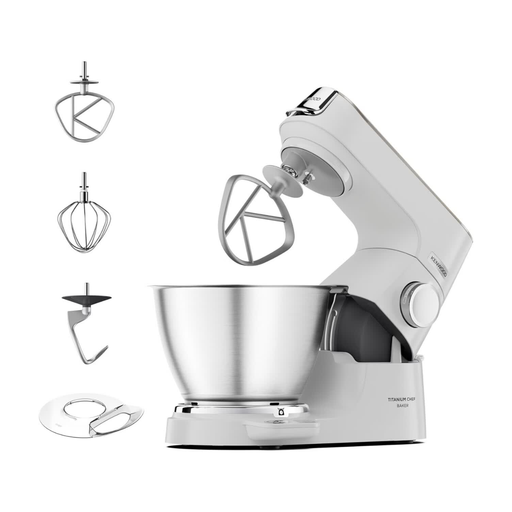 Image unavailable
Consider this mixer if you can give it a stable place in the shared kitchen and your usual batch fits the exact model’s instructions.
Check the manual for gingerbread quantities and the cleaning directions for each part before planning handovers between users.
 Image unavailable
This is a choice to assess if shared-kitchen space is limited and your gingerbread recipe fits the model’s capacity guidance.
The product title lists a 4.3 L bowl, 1000 W rating and three bowl tools. Check the manual for the applicable batch limit and part-specific cleaning instructions.
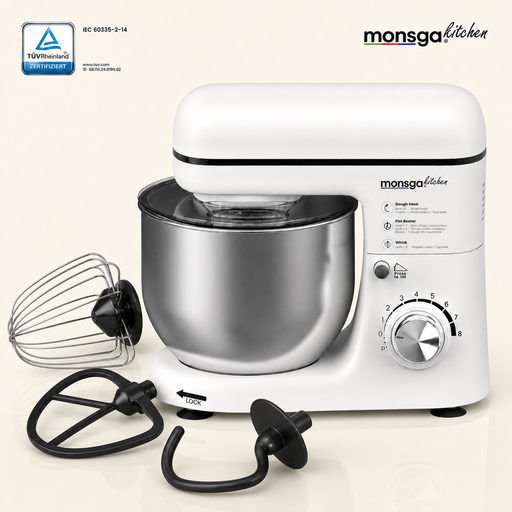 Image unavailable
Consider the SM100 if you want a mixer supplied with several tools, provided its manual permits your intended gingerbread quantity.
Its product title lists a 5.0 L stainless-steel mixing bowl, beater, dough hook, whisk, splashguard and eight speed settings. Check appliance dimensions and each part’s cleaning instructions for the shared space.
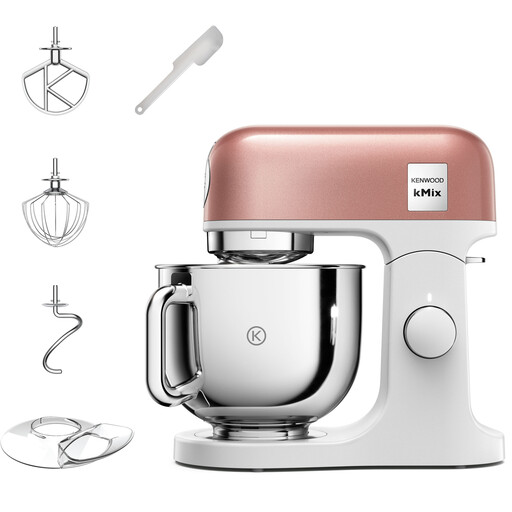 Image unavailable
Assess this mixer for everyday shared-kitchen mixing if its operating clearance and recipe guidance suit the space and batch.
Before relying on a quick cleaning turnaround, check the instructions for the exact bowl and tools.
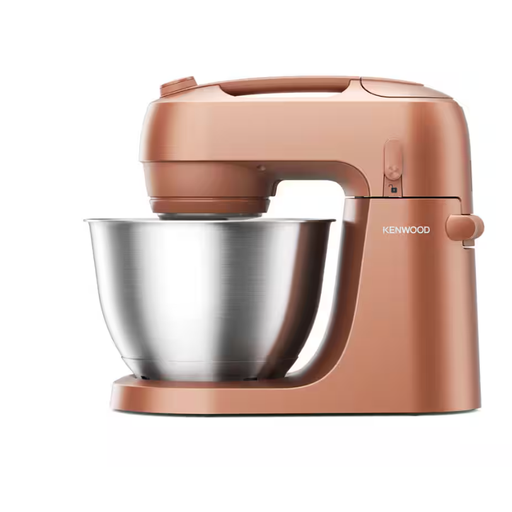 Image unavailable
Consider the Go where storing the mixer between gingerbread sessions is an important part of sharing the kitchen.
Measure the available space and check the exact model’s batch guidance and tool-cleaning instructions before choosing it.
Not necessarily: choose a larger bowl if your usual quantity approaches a smaller model’s stated limit or you regularly prepare multiple batches. Kenwood GB lists a 6.7 L bowl and 2.42 kg dough capacity for the Chef XL KVL4100W; Bosch GB lists 3.8–3.9 L bowls and 2.0 kg maximum dough content for the cited MUM models. Those are model-specific dough figures, not gingerbread-batter performance results, so check your recipe against the instructions.
Clean the bowl, the tool used, any fitted splashguard and affected work surfaces according to the product instructions and the kitchen’s routine. For food-business premises, Food Standards Agency guidance calls for contamination controls, including allergen controls, and highlights the importance of managing shared facilities.
No: it addresses cleaning that bowl, not every attachment, the mixer body or surrounding surfaces. Kenwood GB describes the Chef XL KVL4100W bowl as dishwasher-safe, while Bosch GB says the MUMS2VM40G accessories are generally dishwasher-safe; follow the instructions for each specific part.
If you start or take over a food business, the Food Standards Agency’s registration service says to register with the local authority at least 28 days before trading or food operations start. Sharing a domestic kitchen alone does not establish that you operate a food business; check your activity and premises with the relevant local authority before supplying food commercially.