Large-batch bake-sale organiser
If you plan to make several trays of gingerbread, compare stated mixture capacities and consider whether a second bowl would help between batches. A larger machine also needs space on the worktop or in storage.


Choose a stand mixer around the largest gingerbread batch you expect to make, rather than bowl volume alone. A larger bowl may make repeated batches easier, while a mid-size mixer can suit a modest recipe or one you are willing to split. Check the exact model’s stated mixture capacity and supplied beater before treating either option as suitable for your recipe.
If you plan to make several trays of gingerbread, compare stated mixture capacities and consider whether a second bowl would help between batches. A larger machine also needs space on the worktop or in storage.
For a modest recipe, a mid-size bowl may be enough. If the recipe is larger, you can plan separate mixing runs rather than choosing a machine solely for one event.
If repeated weighing interrupts preparation, look at models with integrated scales. Check the exact variant: weighing features and second bowls are not standard across a whole mixer range.
Start with the quantity you intend to mix, then decide whether weighing convenience and everyday storage justify a different model.
| Concern | What to check | Who this matters to |
|---|---|---|
| Batch headroom | Compare your recipe with the exact model’s stated cake-mixture or dough capacity; check that a suitable beater is supplied. | If I am making several trays, I want room to add flour and spices without planning more mixing runs than necessary. Roughly 50% of consumers put batch headroom first. |
| Weighing and workflow | Confirm whether the exact variant has integrated scales and whether a second bowl is included. | When I repeat a recipe, weighing into the bowl or switching bowls could make preparation less interrupted. Around 30% of consumers prioritise that workflow. |
| Storage and occasional use | Measure the storage space, then compare the exact mixer’s dimensions and weight. | If this is a one-off fundraiser, I would rather split a large recipe than store a machine I find awkward to lift. Roughly 20% of consumers make everyday practicality their primary concern. |
Bowl volume does not tell you how much of your particular mixture a machine can handle. Bosch publishes different usable mixture figures for different MUM variants, while Kenwood distinguishes cake and dough capacities on its Titanium Chef Baker XL KVL85.004SI.
Check the stated capacity for the exact model and relevant mixture type. Leave room to add ingredients, and split the recipe if its intended quantity exceeds the applicable limit.
Bosch lists integrated scales for the MUM5XW40G, but not for the MUM59340GB. A range name alone cannot establish what comes with a particular variant.
Match the full model number to its feature and included-accessory list before ordering.
For charity and community events in England, Wales and Northern Ireland, GOV.UK and the Food Standards Agency say food supplied must comply with food law and be safe to eat. How you prepare and supply gingerbread can affect what else you need to do.
Keep an accurate ingredient record and check applicable registration, packaging and allergen-information requirements with the relevant local authority before the event. In Scotland, seek advice from your local authority.
Kenwood lists the Titanium Chef Baker XL KVL85.004SI at 11.5 kg. That matters if you expect to lift the mixer out of a cupboard for each batch.
Measure its intended space and decide whether it can remain on the worktop or needs to be moved regularly.
Its Chef Baker models are relevant when bowl choice and weighing into the bowl matter to a repeated-batch workflow.
The Artisan 5KSM125 is a mid-size tilt-head option to consider for home-sized mixing runs.
Series 4 MUM models provide a 3.9 L bowl route, with features that depend on the exact variant.
These stand mixers offer different bowl sizes and mixing-tool arrangements for preparing bake-sale gingerbread. Check the intended recipe against each exact model’s applicable mixture limit; a bowl size alone does not establish how much gingerbread it can mix.
 No image available
Consider this model if weighing ingredients during repeated batches matters to you; confirm the scale and supplied beater for the exact bundle. Compare your gingerbread quantity with the model’s applicable mixture capacity, and check whether its listed 9.5 kg weight suits your storage plan.
 No image available
A 4.3 L bowl makes this a model to consider for a modest recipe or one you can split. Its name specifies a 1,000 W rating and three bowl tools. Check which tools the bundle includes and confirm a suitable gingerbread-batter quantity rather than using a dough limit as a batter limit.
 No image available
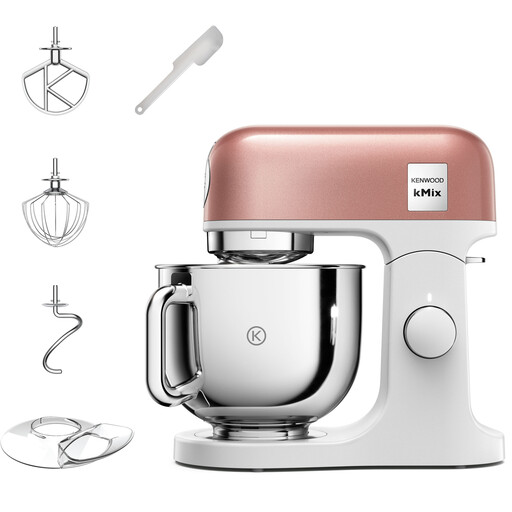
Consider this model for a recipe you can make in separate runs if necessary; confirm the supplied mixing tools and suitable batter quantity. For heavy mixtures, check the listed 10-minute operating limit and 45-minute interval between batches against your baking schedule.
 No image available
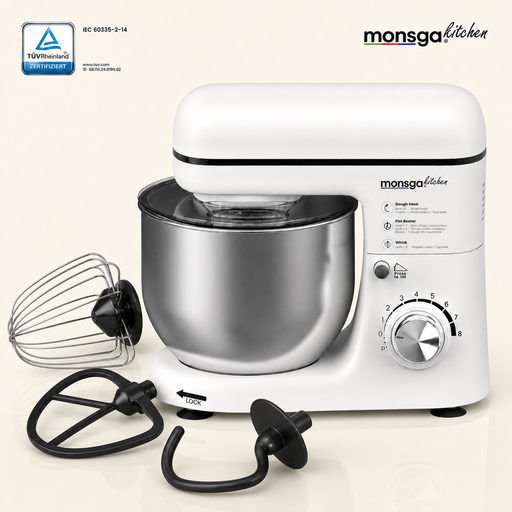
Its named beater and splash guard make this a model to examine for adding flour and spices to gingerbread mixture. The product name also specifies eight speed settings. Confirm the appropriate batch quantity and the exact bowl and power details before deciding whether it fits your recipe.
 No image available
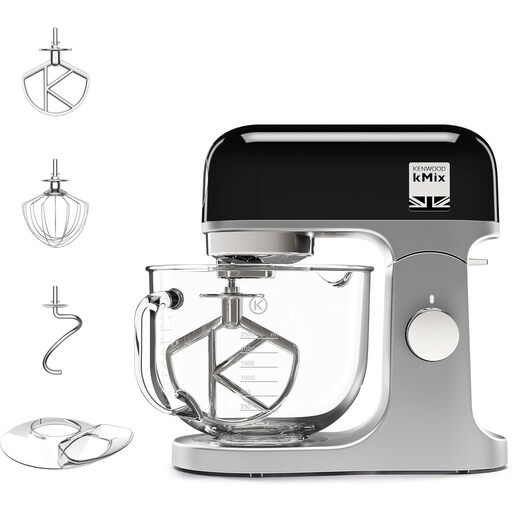
Consider this 5 L model if a K-beater for creaming is part of your intended mixing workflow. Its name specifies a 1,000 W rating, whisk and dough hook alongside the K-beater. Confirm the suitable gingerbread-batter quantity and the exact bowl details before planning a large batch.
Not necessarily: a larger mixer makes more sense if you intend to mix repeated large batches that fall within its stated capacity. For a modest gingerbread recipe, a mid-size machine may suit you if you can split the mixture. Check the exact model’s relevant cake-mixture or dough limit rather than judging by bowl litres alone.
A one-off event does not settle the registration question by itself; ask the relevant local authority about how you will prepare and supply the food. For England, Wales and Northern Ireland, GOV.UK and the Food Standards Agency say food supplied at charity or community events must comply with food law and be safe to eat. In Scotland, seek guidance from your local authority.
Check the ingredient and allergen-information requirements that apply to how you package and supply it, and keep an accurate record of the ingredients used. For charity and community events in England, Wales and Northern Ireland, GOV.UK and the Food Standards Agency say supplied food must comply with food law; confirm the requirements for your event with the relevant local authority. In Scotland, ask your local authority for applicable guidance.