Space-limited cottage baker
You usually make one cake at a time and need to put the mixer away between stays. Its storage dimensions and lifting weight matter as much as its place on the worktop.


For an occasional lemon cake, a compact stand mixer makes sense if its stated cake capacity covers your recipe and you can comfortably store and lift it. A standard tilt-head model gives more bowl room for regular baking; consider a larger high-capacity machine only if repeated large batches or heavier tasks justify its extra size and weight.
You usually make one cake at a time and need to put the mixer away between stays. Its storage dimensions and lifting weight matter as much as its place on the worktop.
You bake cakes often enough to want more room for your usual batches, but do not necessarily need the size of a high-capacity machine.
You expect to make larger batches or dough as well as cakes, and have space to keep and use a heavier appliance.
Choose it when: One cake at a time and limited storage space describe most of your baking.
Accept: The exact model’s cake limit may leave little room for doubled recipes.
Choose it when: You bake cakes regularly and want a larger bowl without moving to the largest format.
Accept: It takes more storage space than a compact option, and cake limits still vary by model.
Choose it when: Repeated large batches or heavier dough are part of your plans.
Accept: A larger, heavier appliance is less convenient to store or move for an occasional cake.
| Concern | What to check | Who this matters to |
|---|---|---|
| Storage and lifting | Measure the intended storage space and compare it with the exact mixer’s dimensions and weight. | If I have to clear the worktop between stays, I need a mixer I can put away comfortably. Around 36% of consumers put storage and lifting first. |
| Cake batch and controls | Match the largest planned recipe to the model’s stated cake capacity; check for a beater or paddle, a whisk and suitable speed controls. | When I make a larger lemon cake, I want the bowl and tools to suit that batch without guessing from wattage. Roughly 29% of consumers prioritise cake-batter needs. |
| Future baking tasks | Check stated cake and dough limits before choosing a larger machine for planned multi-purpose use. | If I expect to make dough or repeated large batches, extra capacity matters more to me than compact storage. About 14% of consumers put those future tasks first. |
| Guest-use safety | For an English holiday cottage, GOV.UK directs operators to Health and Safety Executive electrical-safety guidance. Plan checks and maintenance appropriate to use, and remove damaged equipment from service. | If paying guests will use the mixer, I need to be able to check and maintain it between stays. Approximately 21% of consumers place guest-use safety first. |
A power rating does not tell you whether the bowl, supplied tools or stated cake limit suits your recipe.
Start with your largest realistic batch, then check the exact model’s cake capacity, bowl volume, beater or paddle, whisk and speed controls.
Extra capacity brings a storage and lifting trade-off. Bosch UK lists its Series 6 at 8.1 kg and Series 2 at 3.0 kg in its stand-mixer comparison.
Choose a high-capacity format when large batches or heavier tasks are a genuine part of your plans; otherwise, check whether a smaller mixer covers your recipe.
KitchenAid UK lists a 2.7 kg maximum cake quantity for specified 4.8 L Artisan models, not automatically for its 4.7 L or other variants.
Match the model number on the product listing to the manufacturer’s capacity guidance before deciding that it fits a doubled recipe.
For low-risk portable equipment, the Health and Safety Executive says a universal annual portable appliance test is not required; equipment must instead be maintained to prevent danger.
If you supply a mixer in an English holiday cottage, use checks, inspection and any testing appropriate to its use. Check the applicable requirements if the property is elsewhere in the UK.
Kenwood’s Go KZM35.000RD is a compact reference point: Kenwood GB specifies a 4 L bowl, 30 cm height, 6.3 kg weight and 1.8 kg cake capacity for this model.
Bosch UK’s stand-mixer range includes a compact Series 2 and a larger Series 6, offering different bowl and storage choices.
KitchenAid UK lists its 5KSM125 as a 4.7 L tilt-head mixer with ten speeds, a whisk, paddle and dough hook.
These Joybuy mixers are options for making cake batter where cottage storage also matters. Compare each listing’s exact variant and your largest planned batch rather than treating bowl size alone as a cake-capacity rating.
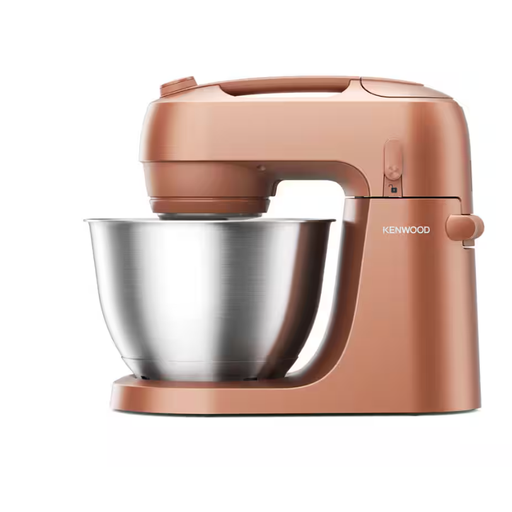 Image unavailable
Consider this compact option for one cake at a time if its stated limit covers your recipe and you can lift it into storage.
For the matching Kenwood Go model, Kenwood GB states a 4 L bowl, 1.8 kg cake capacity, 30 cm height and 6.3 kg weight.
 Image unavailable
Consider this mixer if you want a 4.3 L bowl for cottage cake baking while still checking how it fits your storage space.
The product name specifies 1000 W and three bowl tools. Confirm the model’s stated cake-batter limit against your largest recipe.
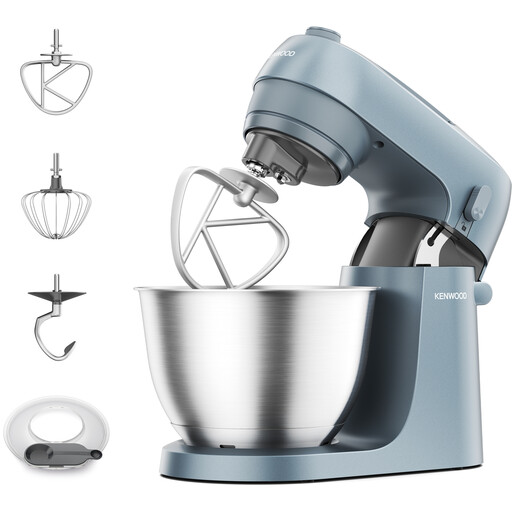 Image unavailable
Consider this Go variant if putting the mixer away between baking sessions is a priority.
Check the exact variant’s cake-batter limit before choosing it for your recipe. If colour matters, confirm the supplied finish, as the listing’s title and description differ.
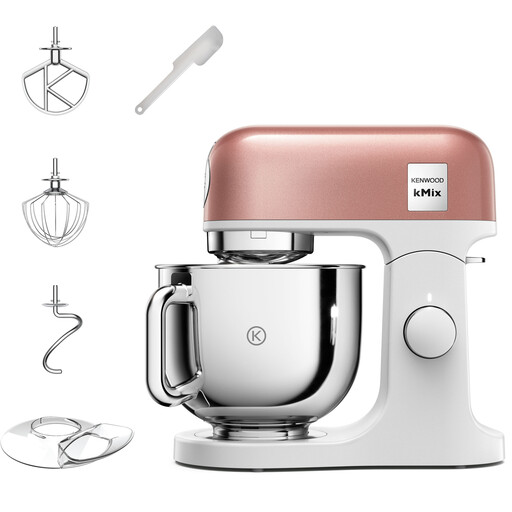 Image unavailable
Consider this mixer if you bake cakes regularly and have space for a tilt-head format.
Check the exact variant’s cake-batter limit and weight against your recipes and storage plans before purchase.
Yes, if the exact model’s stated cake capacity covers your recipe. Kenwood GB specifies a 1.8 kg cake capacity for its Go KZM35.000RD; Bosch UK lists up to 2.4 kg of cake batter for Series 2 in its range comparison. Check the particular model rather than relying on bowl volume alone.
A larger mixer makes sense when you regularly prepare large cake batches or heavier dough and have room to store and use it. For scale, Bosch UK lists its Series 6 at 8.1 kg against 3.0 kg for Series 2; that difference matters if the mixer must be put away after each bake.
In England, operators of self-catering holiday homes must follow Health and Safety Executive electrical-safety guidance, according to GOV.UK. The Health and Safety Executive calls for maintenance that prevents danger, not a universal annual PAT-testing interval. Check the appliance, lead and plug, remove damaged equipment from use, and set checks and maintenance appropriate to its use. Check the applicable requirements separately for a property elsewhere in the UK.
Not necessarily: check whether the exact package includes a beater or paddle and a whisk. Kenwood lists a K-Beater and whisk for the Go model discussed here, KitchenAid lists a paddle and wire whisk for 5KSM125, and Bosch lists a whisk and stirrer for MUMS2VM40G.
Follow the exact model’s instructions for its bowl and attachments, and make sure parts are dry before storage. Bosch describes accessories for MUMS2VM40G as generally dishwasher-safe, but that instruction should not be applied to other models or finishes. Wipe the motor housing rather than immersing it.