What matters when choosing?
For mousse filling in a shared kitchen, start with the task that causes the most disruption: controlling the whisk, keeping components separate or making room to work and store the mixer.
| Concern |
What to check |
Who this matters to |
| Whisking control |
Confirm that the exact model includes a wire or balloon whisk and offers speed settings you can use through the recipe. Check for a fold control if you intend to use one. |
When cream or egg whites need whisking before other ingredients are incorporated, I want control over each stage; around 37% of consumers put whisking control first. |
| Cleaning and bowl separation |
Check the included bowl count and the cleaning instructions for the bowl, whisk, beater and splashguard. For food-business use, plan cleaning and allergen segregation separately from the appliance choice. |
Making separate components in a shared kitchen makes bowl turnover and cleaning my main concern; roughly 36% of consumers prioritise that workflow. |
| Worktop and storage space |
Measure the space available for use and storage, including clearance to raise the head, and check the machine’s weight before planning to move it regularly. |
If the worktop must be cleared after each batch, I need a machine I can store and lift comfortably; about 27% of consumers put space and storage first. |
Brands to consider for this task
The models below illustrate different bowl, storage and cleaning decisions; their features should not be assumed to apply across each brand’s range.
Kenwood
A reference point for a two-bowl workflow if you regularly prepare separate mousse components.
- Kenwood lists 7 L and 5 L bowls, a whisk and direct-to-bowl weighing for the Titanium Chef Baker XL KVL85.004SI. Kenwood describes its delicate-fold function as suitable for mousses.
- That model weighs 11.5 kg and is 40 cm deep, so check lifting and storage space before choosing it for a shared worktop.
KitchenAid
A medium-capacity, two-bowl option for preparing separate components without choosing a 7 L main bowl.
- The cited 5KSM175PS has 4.7 L and 3 L stainless-steel bowls, a wire whisk, a pouring shield and 10 speeds.
- Check storage clearance for the tilt head and the included tools on the exact variant; the cited features do not establish how it will perform in your recipe.
Bosch
A reference point when a mixer needs to share limited worktop and storage space.
- Bosch lists a 3.8 L bowl, whisk and 3.0 kg weight for the MUMS2VM40G, and says its accessories are generally dishwasher-safe.
- Check whether the 3.8 L bowl suits your usual batch and consult the exact cleaning instructions for any accessory exceptions.
Stand mixers on Joybuy for mousse filling
These stand mixers offer choices for mousse preparation with differing bowl sizes and tool sets. Compare the exact included tools, cleaning instructions and space requirements against your shared-kitchen routine before choosing.
 No image available
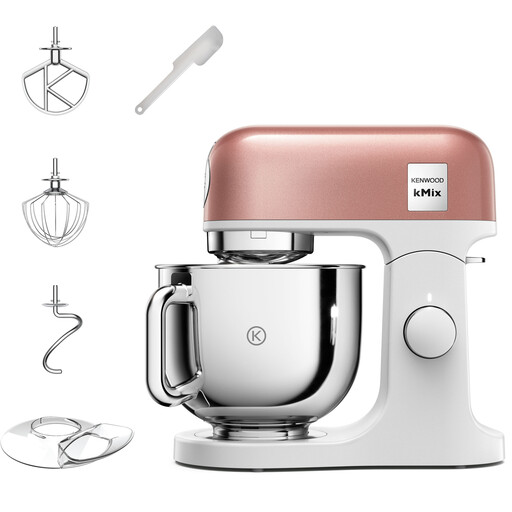
Kenwood kMix Editions KMX760API, Apricot Pink
Consider this model if whisking and folding are part of your mousse routine. Check the included bowl and tools, their cleaning instructions and the machine’s lifting weight if it must be put away after use.
View on Joybuy
 No image available
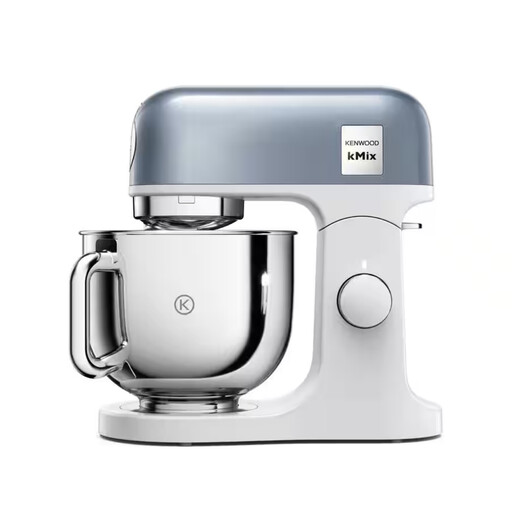
Kenwood kMix Editions stand mixer, Blue
Consider this model for a mousse workflow involving whisking and folding. If you prepare components separately, confirm the included bowl count; also check whether its weight suits a worktop you need to clear regularly.
View on Joybuy
 No image available
Kenwood Chef Baker KVC65.001WH, White
Consider this mixer if controlling the transition from whisking to folding matters in your recipe. Check the included bowl count and make room to store the machine before choosing it for a shared kitchen.
View on Joybuy
 No image available
Kenwood Prospero+ KHC29.A0SI, 4.3 L, Silver
Consider this model when the mixer needs to be moved off a shared worktop. Its product name lists a 4.3 L bowl, 1000 W rating and three bowl tools; confirm the exact whisk supplied and how the parts must be cleaned.
View on Joybuy
 No image available
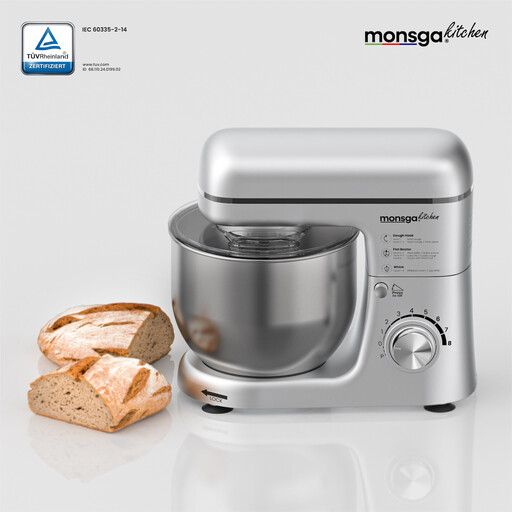
Monsga SM100, 5.0 L, 8 speeds
Consider this model if a whisk and splashguard suit your mousse preparation. Its product name lists a 5.0 L stainless-steel bowl and eight speed settings; confirm the machine’s own dimensions before allocating space on a shared worktop.
View on Joybuy
Frequently asked questions
Should I choose a mousse mixer by wattage or bowl size?
Start with the supplied whisk, usable speed controls and a bowl size that fits your usual recipe, rather than choosing by wattage alone. Which? identifies mixing time, ease of use and how well attachments reach the bowl as differences between stand mixers; check those aspects for the model you are considering.
Can different people use the same mixer in a shared kitchen?
Yes, provided the mixer and its food-contact parts are cleaned appropriately between uses. For a food business, Food Standards Agency guidance also calls for controls against allergen cross-contamination, so check that your cleaning and segregation routine covers the bowl, tools and surrounding equipment.
What should I check before using raw egg in mousse?
Check the egg source, intended diners and the handling requirements of your recipe before serving a no-cook mousse. Food Standards Agency advice on raw or runny eggs for vulnerable groups concerns UK-produced eggs from recognised assurance schemes; it should not be applied indiscriminately to other eggs.
Does using a shared kitchen mean I must register a food business?
Sharing a kitchen does not, by itself, establish that you are operating a food business. If you make mousse filling as a food business, check the registration process with the relevant local authority; where Food Standards Agency registration guidance applies, it says to register at least 28 days before trading or food operations begin.


