Shared-kitchen batch makers
If other people use the same worktop and equipment, you need a mixer you can accommodate, clean and put away between batches. Direct-to-bowl weighing may also mean fewer loose measuring items to manage.


Choose a stand mixer for oat-bar mixture by checking your batch size and how readily you can clean the bowl and tools between shared-kitchen users, rather than relying on wattage alone. Direct-to-bowl weighing can reduce separate measuring equipment; a larger bowl-lift machine offers more room for substantial batches but needs more space, while a smaller mixer may suit occasional batches. If you prepare bars through a food business, the mixer also needs to fit your allergen and cleaning procedures.
If other people use the same worktop and equipment, you need a mixer you can accommodate, clean and put away between batches. Direct-to-bowl weighing may also mean fewer loose measuring items to manage.
If you regularly make substantial batches, compare your recipe quantity with the exact mixer’s bowl and mixture-capacity guidance. A larger format may reduce the need to split a batch, provided it fits your shared space.
If you make oat bars for sale or supply through a food business, plan how ingredients, removable tools and shared surfaces will be managed. The Food Standards Agency’s guidance for England, Northern Ireland and Wales addresses allergen information and controls during food preparation.
Start with the largest batch you intend to make and the cleaning routine your kitchen needs. Then decide whether direct-bowl weighing or a smaller storage footprint would make preparation easier.
| Concern | What to check | Who this matters to |
|---|---|---|
| Cleaning and allergen control | Check which bowl and tools can be removed and how the exact model’s instructions say to clean them. For food-business use, establish procedures for shared equipment and ingredients. | If different people use the mixer, I need to remove residues before the next batch; around 31% of consumers put cleaning and allergen control first. |
| Dense or repeated batches | Compare your largest recipe with the model’s bowl volume and stated mixture-capacity guidance. A wattage figure alone cannot establish an oat-bar batch limit. | When I make a substantial batch, I want to know whether it fits without dividing the mixture; roughly 31% of consumers make batch capacity their primary concern. |
| Weighing and worktop clutter | Confirm whether the exact model weighs ingredients in its bowl and which tools come with it. | If I add ingredients in stages, weighing them in the bowl would leave fewer items on the shared worktop; around 23% of consumers prioritise weighing convenience. |
| Storage and access | Measure the storage and operating space, including clearance to open a tilt-head or remove a bowl. | If cupboard and worktop space are tight, I need a mixer I can set up and put away without obstructing others; about 15% of consumers put space and access first. |
Motor ratings do not tell you whether an oat-bar batch fits the bowl or falls within the model’s mixture guidance. The cited Kenwood, Bosch and KitchenAid models state their capacities in different ways.
Work out your largest recipe quantity, then check the exact model’s bowl, relevant capacity guidance, speed controls and supplied beater.
Kenwood GB states a 5 L bowl for the KVC65.001WH, while a Joybuy listing bearing that model number states 4.6 L. That difference matters when deciding whether your batch will fit.
Confirm the model number, bowl specification and included tools for the item you intend to order before relying on either capacity figure.
A large bowl-lift format may appeal for substantial batches, but it still needs room on the worktop and space to access and remove the bowl.
Measure both the operating position and storage space before choosing a larger format for a shared kitchen.
Food residues on bowls, beaters and contact surfaces can compromise allergen controls. The Food Standards Agency’s guidance for England, Northern Ireland and Wales requires food businesses to provide allergen information and manage allergens during preparation.
Keep ingredient information current and set procedures for cleaning equipment and shared surfaces between relevant uses. Check the requirements that apply where your food business operates.
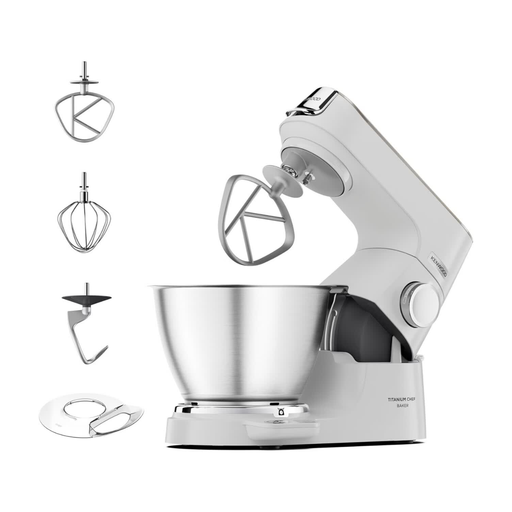
The Chef Baker KVC65.001WH is a direct-to-bowl weighing option. Kenwood GB states a 1,200 W rating, a 5 L bowl and a 2 kg cake-mixture capacity; the cake figure is not an oat-bar mixture limit.
KitchenAid UK lists a 4.3 L tilt-head Classic 5K45SS and a 6.6 L bowl-lift Artisan 5KSM70SHX, offering different bowl formats to assess against batch size and available space.
Bosch GB lists integrated scales, seven speed settings and a 3.9 L usable bowl volume for the MUM5XW49GB.
These stand mixers offer options to consider for direct-bowl weighing, smaller-space preparation and different bowl sizes. Check each exact listing against your recipe quantity, cleaning routine and available space; the product choices do not replace those checks.
 No image available
Consider this model if weighing ingredients directly into the mixer would simplify preparation on a shared worktop. Kenwood GB states a 5 L bowl for the KVC65.001WH, while the Joybuy listing states 4.6 L; confirm the bowl supplied before choosing a batch size. The manufacturer’s 2 kg cake-mixture capacity is not an oat-bar mixture limit.
 No image available
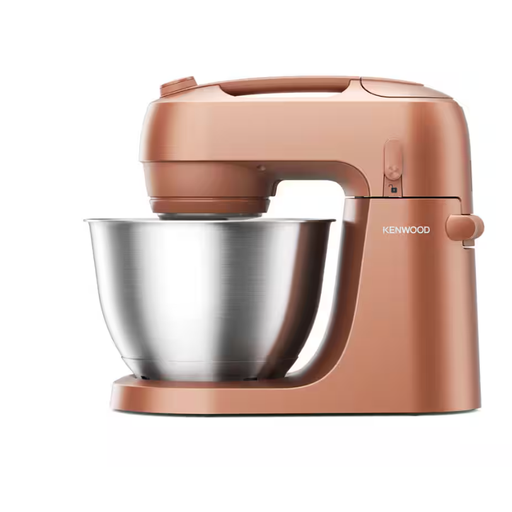
Consider this model if moving and storing the mixer between shared-kitchen sessions are priorities. Check its clearance in your storage position, the tools supplied and the cleaning instructions, then compare your oat-bar batch with guidance for the exact model.
 No image available
This 4.3 L model is worth considering when the bowl size suits your intended batch and storage space matters. Its product name specifies a 1,000 W rating and three bowl tools; do not treat that wattage as an oat-bar capacity. Check the exact model guidance for your recipe.
 No image available
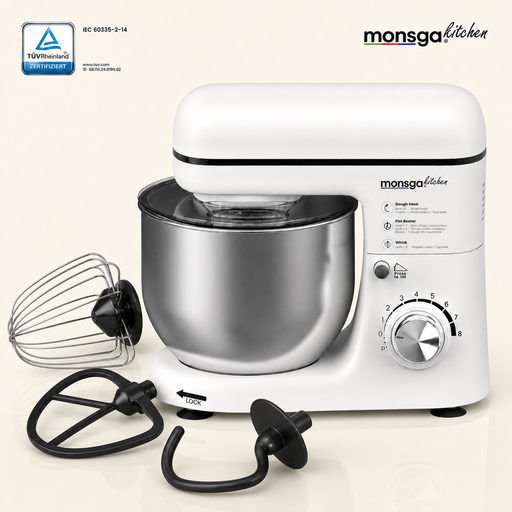
Consider the listed 5.0 L bowl size if your recipe calls for more bowl room, but check the model’s mixture guidance before deciding how much to make at once. The product name lists eight speed settings, a whisk, dough hook, beater and splash guard. Confirm the appliance dimensions for your shared worktop rather than using package dimensions.
 No image available
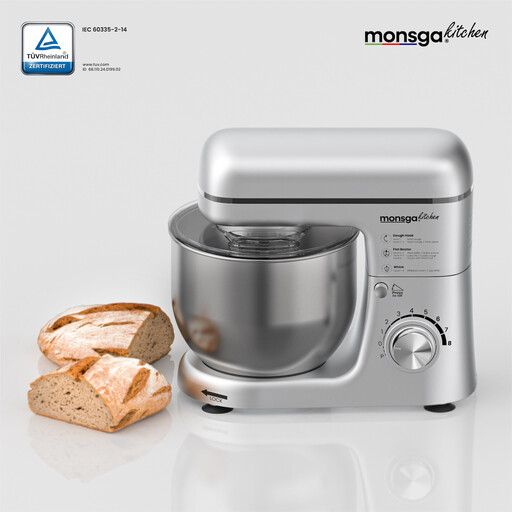
Consider this variant if the listed bowl size and accessories match your preparation plan. Its product name specifies a 5.0 L bowl, eight speed settings, a dough hook, whisk and splash guard. Check the exact model guidance for oat-bar batch quantity and measure the appliance itself before allocating shared-kitchen space.
Not automatically for ordinary private sharing. Agree how the bowl, tools and contact surfaces will be cleaned and stored between users. If the kitchen is used by a food business, follow the allergen and cross-contamination requirements applicable to that operation rather than relying on the mixer alone.
Treat allergen information and controls during preparation as part of your food-business process. The Food Standards Agency’s cited allergen guidance applies to England, Northern Ireland and Wales; check the requirements applicable to your operation if you are in Scotland. Keep ingredient information accurate and establish procedures for shared equipment.
No: wattage alone does not establish a usable batch size. Compare your recipe with the exact model’s bowl volume and relevant mixture-capacity guidance, and check the supplied beater and speed controls. A stated cake or dough capacity should not be treated as an oat-bar limit.
Follow the instructions for the exact mixer and each removable component. KitchenAid UK states that the 5K45SS bowl, paddle and dough hook are dishwasher-safe, while its whisk should be washed in warm soapy water. In a food-business shared kitchen, cleaning and disinfection must fit the applicable cross-contamination and allergen-control procedures.