Frequent large-batch pasta makers
If you regularly make pasta for a household or guests, look for a stated dough limit that covers your usual batch. Bowl size alone does not tell you how much dough a mixer is rated to handle.


Choose a stand mixer for pasta dough by your usual batch size and the exact model’s stated dough limit, rather than bowl volume or motor wattage alone. A larger machine may suit frequent batches, while a smaller one may fit a tighter kitchen; if you also want powered rolling or cutting, check the specific mixer and accessory together. Manufacturers describe dough limits in different ways, so their figures are not directly interchangeable.
If you regularly make pasta for a household or guests, look for a stated dough limit that covers your usual batch. Bowl size alone does not tell you how much dough a mixer is rated to handle.
If counter or cupboard space is tight, you may prefer a smaller mixer. Check its model-specific dough guidance against the batches you intend to make.
If you want the mixer to drive a roller or cutter after mixing, check accessory compatibility and what is included before choosing the machine.
Start with the task you want the mixer to perform: handling your usual dough batch, driving pasta accessories, or fitting your available space. Then check the exact model and any accessory against that priority.
| Concern | What to check | Who this matters to |
|---|---|---|
| Batch capacity | Find the exact model’s dough or flour limit and check which type of mixture it describes. Do not use bowl litres as a dough rating. | If I regularly make larger pasta batches, I need a stated limit that covers my recipe rather than simply a roomy bowl; around 37% of consumers would put batch capacity first. |
| Powered rolling and cutting | Check whether the roller, cutters and any adapter are included, sold separately and compatible with your mixer model. | I want to mix dough and then roll or cut it using the same appliance, so accessory fit shapes my choice; around 36% of consumers would prioritise that powered pasta workflow. |
| Kitchen space | Measure the storage and working space, including room to raise the mixer head, and check the dough guidance for your intended batch. | For occasional pasta in a smaller kitchen, I need a machine I can accommodate without overlooking its batch limit; around 27% of consumers would make space their primary concern. |
Kenwood states total dough capacity for the Chef XL KVL4100W, Bosch gives a yeast-dough quantity for the MUM58259GB, and KitchenAid’s cited Artisan chart states a flour maximum. Those figures describe different things, even before the bowl sizes are considered.
Check the exact model’s instructions for the dough category and batch size you plan to use. Wattage alone does not establish a pasta-dough limit.
A supplied dough hook does not mean a pasta roller or cutter is included. A roller and its cutters may also be separate items.
Identify every part you want for mixing, rolling and cutting, then confirm what is supplied and what fits your exact mixer before ordering.
Electrical Safety First advises checking that a plug-in mixer has a UK three-pin plug and fuse. Requirements for Great Britain and Northern Ireland can differ.
Check the seller, plug and fuse, supplied instructions and destination-specific product information for the exact appliance.
The Chef and Chef XL range is worth examining if stated dough capacity and optional pasta accessories both matter to you.
Consider this route if a powered pasta roller is central to how you want to use a stand mixer.
The MUM range offers another way to combine dough mixing with a compatible pasta accessory while considering kitchen space.
These stand mixers offer different bowl sizes and dough-mixing setups. Choose by the batch guidance for the exact model; if you plan to roll or cut pasta with an attachment, confirm its fit separately.
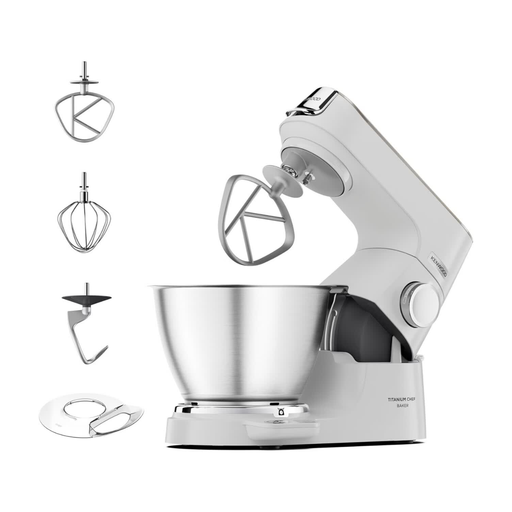 No image available
Consider this model if you want a stand mixer for preparing dough and value its ingredient-weighing setup. Check the KVC65.001WH instructions for your pasta-dough batch size, and confirm attachment compatibility if powered rolling is part of your plan.
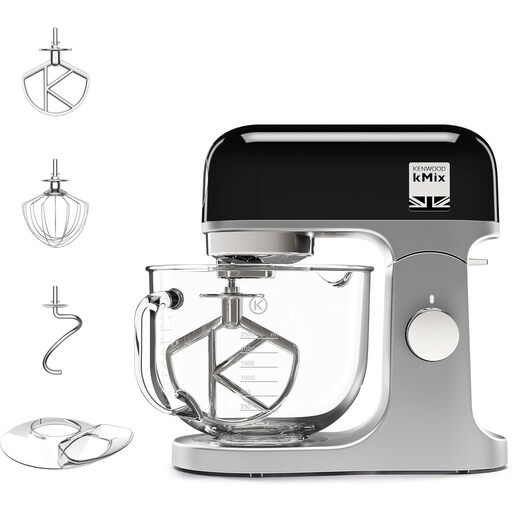 No image available
Consider this model for mixing dough before a separately chosen pasta-rolling step. Its title specifies a 5L bowl, 1000W rating and supplied dough hook; check the KMX754BK dough guidance for your batch and identify a compatible roller before buying one.
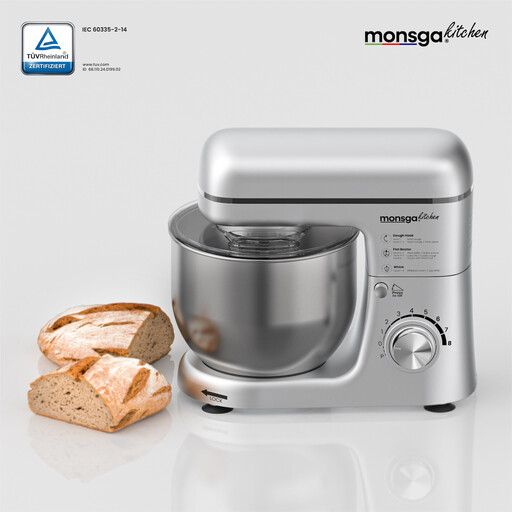 No image available
Consider this model if your immediate task is mixing dough with a supplied hook rather than choosing a powered pasta system. Its title specifies a 5.0L bowl and eight speed settings; consult the SM100 instructions before deciding how much pasta dough to mix.
 No image available
Consider this mixer for dough mixing when its bowl size fits your kitchen and intended use. Its title specifies a 6.5QT bowl, ten speeds and a dough hook; check the model’s dough guidance rather than treating bowl volume as its pasta-dough capacity.
Start with the exact model’s stated dough-related limit, then consider whether its bowl size works for you. Kenwood gives a 2.42kg dough capacity for the Chef XL KVL4100W, whereas Bosch states up to 1.9kg of yeast dough for the MUM58259GB; those are different manufacturer measures, not directly comparable pasta-dough results.
No: a suitable dough hook addresses mixing, while a pasta attachment is for powered rolling or cutting. If you want that additional step, check the accessory against your mixer model and whether the roller and cutters are supplied together.
Switch the mixer off and unplug it before fitting the attachment. KitchenAid gives that instruction for its pasta roller and cutters; follow the fitting and cleaning instructions for your own mixer and accessory rather than applying another brand’s steps.
Check the exact appliance’s plug, fuse, instructions and suitability for its delivery destination. Electrical Safety First advises a UK three-pin plug and fuse for a plug-in mixer; if delivery is to Northern Ireland, check the applicable destination-specific product information rather than assuming Great Britain’s marking rules are identical.