For savoury scones, choose a stand mixer with a supplied flat-style beater and controllable gentle mixing rather than selecting one solely for its dough hook. Kenwood’s published scone method uses a K-Beater and a short final mix; a compact machine may suit occasional picnic batches, while a larger bowl makes more sense if you regularly bake other mixtures or repeat batches. Check the exact model’s tools, capacity, dimensions and mixing instructions before ordering.
Who is this for?
Texture-focused picnic bakers
If your priority is briefly combining savoury scone dough before shaping it by hand, pay particular attention to the supplied beater and speed control. Kenwood’s scone recipe uses a K-Beater; KitchenAid describes its dough hook for kneading bread, pizza and pasta dough.
Regular batch bakers
If scones are one of several things you bake, compare bowl capacity and the tools supplied for your other recipes too. Kenwood and Bosch publish model-specific bowl and dough-capacity figures, which should not be treated as target quantities for a batch of scones.
Occasional bakers with limited space
If the mixer will be stored between picnics, measure its intended cupboard or worktop space before choosing. Kenwood lists its Go KZM35.000GR with a 4L bowl and compact dimensions, but the tools and measurements should be checked for the particular model you intend to buy.
What matters when choosing?
Start with the tool and mixing method for scones, then size the mixer for the other baking you actually do and the space where it will live.
| Concern | What to check | Who this matters to |
|---|
| Gentle scone mixing |
Look for a supplied flat-style beater and controllable gentle mixing. Kenwood’s scone method uses its K-Beater at speed 1 for the crumb stage, followed by a 20-second mix after adding milk. |
If I want dough that I can bring together briefly before shaping, the mixing tool matters more to me than a bread-kneading feature. Around 46% of consumers put that scone-mixing need first. |
| Repeat-batch capacity |
Compare each model’s bowl volume, stated capacity and included tools; a maximum dough figure is not a suggested scone-batch size. |
When I also make cakes, bread or several batches, I need a bowl that fits those regular jobs. Roughly 27% of consumers prioritise broader batch capacity. |
| Storage and wider use |
Measure cupboard clearance and compare dimensions, weight and the in-box tools. Check accessory compatibility for the exact model. |
If I bake occasionally and put the mixer away afterwards, its footprint and the tools I will use matter most. About 27% of consumers place storage and occasional all-round use first. |
Buying pitfalls
-
Choosing by the dough hook alone
KitchenAid describes its dough hook for kneading bread, pizza and pasta dough. Kenwood’s scone recipe instead specifies a K-Beater and brief mixing stages, so a hook does not establish that the mixer has the tool you want for scones.
Check the exact package for a flat-style beater and follow the tool and speed instructions for the recipe you use.
-
Assuming a larger bowl improves a small scone batch
Extra capacity can be useful for other baking or repeated batches, but it does not change Kenwood’s short scone-mixing method. A larger machine also needs a suitable place on the worktop or in storage.
Choose capacity around your usual baking volume, then check the mixer’s dimensions and supplied beater.
-
Assuming a brand’s accessories all have the same care instructions
Supplied tools and compatible optional attachments vary by model. Bosch describes accessories for its MUM57830GB as generally dishwasher-safe; that does not establish care instructions for another mixer or tool.
Read the exact model’s in-box list, attachment compatibility information and individual tool-care instructions.
An optional attachment may need to be obtained separately.
-
Relying on a listing claim instead of model-specific documentation
Government guidance on the Electrical Equipment (Safety) Regulations 2016 concerns equipment supplied in or into Great Britain; Northern Ireland has distinct provisions. A general listing description does not settle which market documentation applies to the exact mixer.
Check the seller’s documentation for the exact model and the market where it will be supplied, particularly if purchasing for Northern Ireland.
Brands to consider for this use
Kenwood
Kenwood offers a published scone method as well as compact and larger stand-mixer models.
- Kenwood’s recipe specifies a K-Beater, a low-speed crumb stage and a short final mix. Its Chef KVC3100W is listed with a 4.6L bowl and a K-Beater.
- The recipe and specifications do not establish identical tools or settings across Kenwood models; check the package and manual for the one you choose.
KitchenAid
KitchenAid’s UK stand-mixer range offers several bowl sizes and mixer formats for comparing wider baking needs.
- KitchenAid lists bowl-capacity groups including 4.3L, 4.7L and 4.8L, and larger formats.
- Its dough-hook guidance concerns kneading bread, pizza and pasta dough. For scones, check whether the particular package includes a flat beater.
Bosch
Bosch is relevant if you also want to compare larger stated capacity or in-bowl weighing for other baking.
- Bosch lists its MUMS6ZM00G with a 5.5L bowl, integrated scales and a set containing a whisk, stirrer and kneading hook.
- Those specifications describe the MUMS6ZM00G, not every Bosch mixer. Check the exact model’s tools and dimensions before choosing it for scones.
Joybuy stand mixers for this decision
These mixers offer compact-storage and wider-baking choices to consider alongside a picnic scone recipe. For each one, confirm the supplied beater and the model’s mixing instructions; bowl size alone cannot settle the choice.
 No image available
Kenwood Chef Baker KVC65.001WH stand mixer, white
Consider this model if picnic scones are part of wider baking and you want to assess an all-round mixer. Check its exact in-box tools and manual for the beater and speed settings your scone recipe requires.
View on Joybuy
 No image available
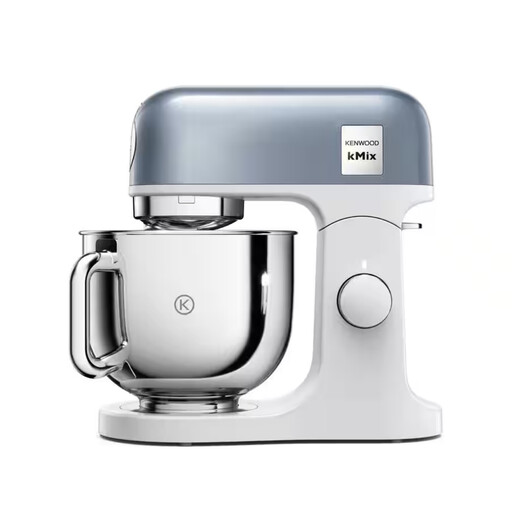
Kenwood kMix Editions stand mixer, blue
This is an option to compare if you also bake beyond picnic scones. Confirm the supplied beater and use the exact model’s instructions to choose a gentle mixing setting.
View on Joybuy
 No image available
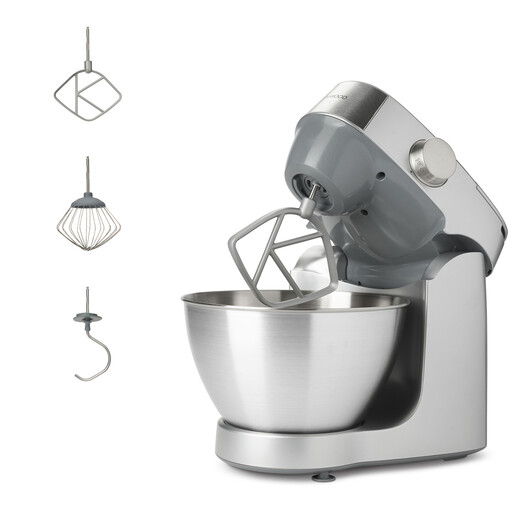
Kenwood Prospero+ KHC29.A0SI stand mixer, silver
Consider this 4.3L model if storage space matters as well as occasional baking. Its product name specifies 1000W and three bowl tools; identify the supplied mixing beater in the exact package before choosing it for scones.
View on Joybuy
 No image available
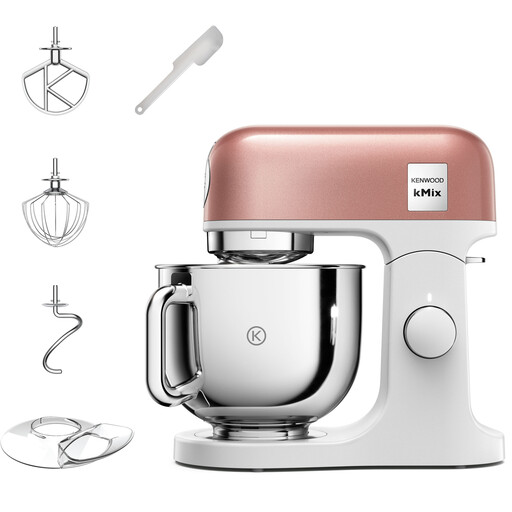
Kenwood kMix Editions KMX760API stand mixer, Apricot Pink
Consider this model for scones alongside other baking, while checking its manual for the appropriate beater and gentle mixing setting. Confirm its dimensions against your available space and follow the care instructions for each tool.
View on Joybuy
 No image available
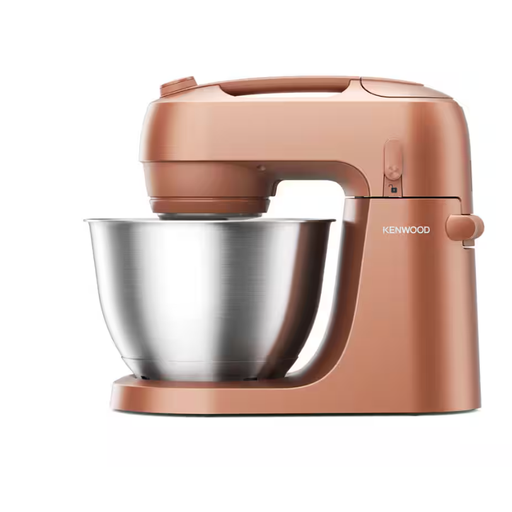
Kenwood Go stand mixer, Red Clay
Consider this model if you will make occasional scones and need to store the mixer between uses. Check its dimensions against your cupboard space and confirm the model’s gentle-speed guidance before mixing.
View on Joybuy
Common questions
Do I need a dough hook for savoury scones?
No: a dough hook should not be the deciding feature for this recipe. Kenwood’s published scone method uses a K-Beater for a low-speed crumb stage and a brief final mix, whereas KitchenAid describes its hook for kneading bread, pizza and pasta dough. Check the tools supplied with the exact mixer.
What bowl size should I choose for picnic scones?
Choose for your usual batch size and other baking jobs, not a bowl figure alone. Kenwood lists a 4L bowl for its Go KZM35.000GR and a 4.6L bowl for its Chef KVC3100W; compare the particular mixer’s capacity, tools and storage dimensions before ordering.
Can I put stand-mixer attachments in the dishwasher?
Check the instructions for each attachment rather than assuming all tools are dishwasher-safe. Bosch describes accessories for its MUM57830GB as generally dishwasher-safe, but that statement does not apply automatically to other models or attachments.
What if my stand mixer arrives faulty?
Contact the retailer and keep the order confirmation and product description. Which? explains that, under UK consumer-rights rules, a faulty product can generally be rejected for a refund within 30 days of taking ownership; after that, the retailer normally has an opportunity to repair or replace it first. A voluntary returns policy is separate from remedies for faulty goods.


