Occasional picnic cake bakers with little storage
If you usually make one sponge or a modest batch, the mixer's footprint matters between bakes as much as its bowl size does on baking day.


Choose a stand mixer by the amount of sponge batter your picnic recipe requires, then check its whisk, speed control, bowl access and storage footprint. A compact machine may suit occasional baking, while a larger bowl or more accessories make more sense if you regularly prepare several cakes or use the mixer for other recipes. Wattage alone will not tell you how well a mixer handles sponge batter.
If you usually make one sponge or a modest batch, the mixer's footprint matters between bakes as much as its bowl size does on baking day.
You want suitable whisking tools and manageable speed changes, and you will consider how effectively the attachment reaches the bowl rather than judging the machine by wattage alone.
You may prepare larger batches or use bowls and attachments for other recipes. The supplied tools matter more if those additional uses are already part of your plans.
Start with your recipe quantity and tins, then weigh sponge-mixing control against the space and effort of keeping the machine. Treat extra tools as useful only if you expect to use them.
| Concern | What to check | Who this matters to |
|---|---|---|
| Light, evenly mixed sponge | Check the supplied whisk or beater and the speed controls. Which? identifies mixing time and whether attachments reach the bowl sides as practical differences between tested mixers. | I want to control a light mixture without repeatedly stopping to scrape the bowl; around 36% of consumers put sponge-mixing control first. |
| Enough batter for the picnic | Compare your recipe quantity with the exact model's stated cake-batter capacity, not just its bowl volume. | If I am filling several tins, the batch needs to fit within the mixer's stated limit. About 21% of consumers make picnic-batch capacity their primary concern. |
| Storage and lifting | Measure the intended storage space and check the exact machine's dimensions and weight. | I will put the mixer away after an occasional bake, so I need to be comfortable moving and storing it; roughly 29% of consumers prioritise that practicality. |
| Use beyond sponge cakes | Compare the tools supplied with the exact variant and check the terms for any accessories you plan to use. | If I will also make other mixes, the included tools need a purpose beyond this picnic cake. Around 14% of consumers put broader baking use first. |
A power rating does not establish how evenly a particular mixer works through sponge batter. Which? also considers mixing time, ease of use and bowl coverage in its stand-mixer testing.
Check the exact whisk and beater arrangement, speed control and available model-specific mixing evidence alongside the power rating.
Bowl volume and a manufacturer's cake-batter limit measure different things; a bowl size alone cannot tell you whether your full recipe fits within that limit.
Compare the stated cake-batter capacity for the exact model with the quantity needed for your planned tins.
Kenwood lists the cited kMix KMX754 at 9.26 kg, while Bosch lists its Series 2 range at 3.0 kg. Those figures make storage and lifting worth considering, not a substitute for checking the weight of the model you intend to buy.
Measure your cupboard or worktop space and check the exact model's dimensions and weight before ordering.
A mixer kept in a cupboard also has to be lifted out and put away for each bake.
GOV.UK's guidance on CE and UKCA marking cited here applies to Great Britain; Northern Ireland has different market-placement arrangements.
For an appliance intended for Great Britain, check its manufacturer identification, applicable marking and understandable safety instructions. If it is intended for Northern Ireland, check the requirements for that market separately.
Bosch's Series 2 is a reference point for occasional bakers comparing kitchen footprint with cake-batter capacity.
Kenwood's cited kMix KMX754 offers a larger-bowl reference for bakers interested in variable speed and a manufacturer-described fold function.
KitchenAid's cited 5KSM175PS tilt-head model is relevant when access to the bowl and a supplied accessory set matter alongside sponge baking.
These stand mixers are relevant to preparing picnic sponge batter. Compare each exact variant's tools, cake-batter limit and storage requirements with your recipe before choosing.
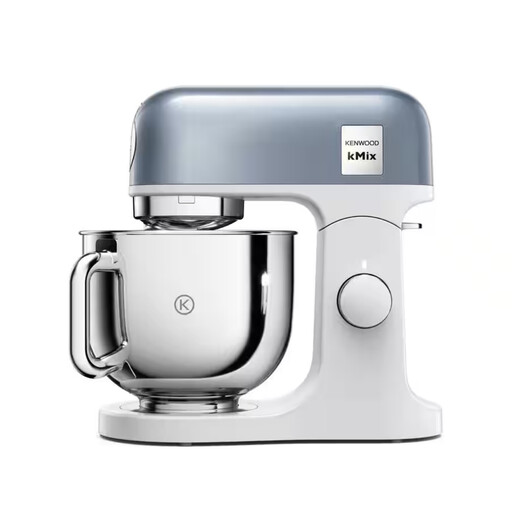 No image available
For a picnic sponge, compare the tools supplied with this Blue variant and its stated cake-batter limit with your recipe. Check its weight if you will lift it out of storage for each bake.
 No image available
If your picnic recipe calls for controlled whisking, confirm the tools and stated cake-batter limit for this KVC65.001WH variant. Check its dimensions against your intended storage space.
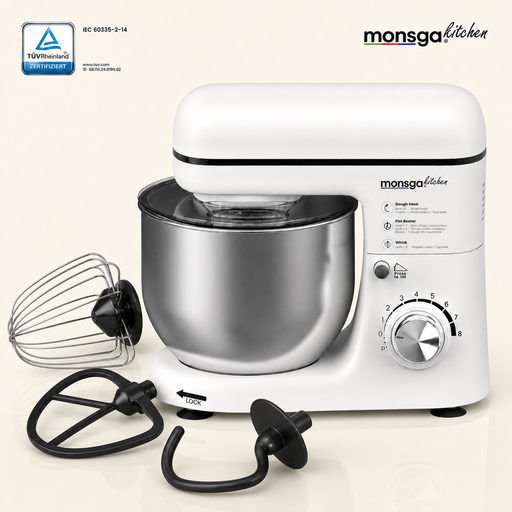 No image available
For a sponge recipe needing a whisk and adjustable mixing, this named configuration includes a whisk and eight speed settings. Its 5.0 L bowl figure and 1,000 W peak-power rating do not establish how much cake batter your recipe can make in one batch; confirm the model's cake-batter limit.
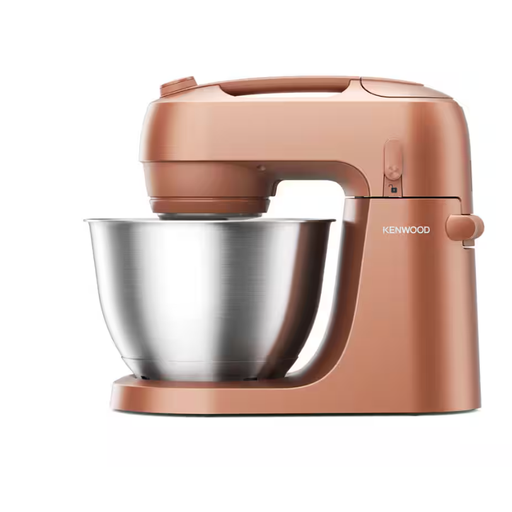 No image available
For occasional sponge baking where storage matters, compare this model's dimensions with the space you have. Confirm its included whisk and stated cake-batter limit against your recipe.
 No image available
For a picnic sponge, check which of this variant's three bowl tools suits your recipe and confirm its cake-batter limit. Its named configuration specifies a 4.3 L bowl and a 1,000 W rating; neither figure substitutes for that limit.
Compare the exact mixer's whisk and beater, speed control, bowl access and cake-batter capacity rather than choosing by power rating alone. Which? identifies mixing time, ease of use and attachment coverage of the bowl as differences in its stand-mixer testing.
Work from the batter quantity in your recipe and the number of tins, then check the exact mixer's stated cake-batter capacity. Bowl volume is a separate measure: Bosch states up to 2.4 kg of cake batter for its Series 2 range, while Kenwood states 2.72 kg for the cited KMX754.
Check the care instructions for each accessory supplied with the exact model. Bosch says accessories for its cited MUMS2VM40G are generally dishwasher-safe, but that does not establish the care instructions for every accessory or another mixer.
For a mixer intended for Great Britain, check the manufacturer's identification, applicable CE or UKCA information, and understandable instructions and safety information. GOV.UK says Great Britain continues to recognise CE marking alongside or instead of UKCA marking in applicable regimes; the Electrical Equipment (Safety) Regulations 2016 set requirements for identification and consumer-understandable safety information. Northern Ireland has separate market-placement arrangements.
Check the terms for the exact model, including duration, registration conditions and repair arrangements. Kenwood states a five-year guarantee for the cited kMix when registered, while KitchenAid states a five-year guarantee for the cited 5KSM175PS; those statements should not be assumed to cover other variants.