Family-batch cake bakers
You want room for a large red velvet mix, extra layers or repeated batches without routinely dividing the batter between bowls.


Choose a stand mixer by comparing your red velvet recipe quantity with the cake-mixture capacity stated for the exact model, rather than relying on motor wattage or bowl volume alone. A compact or 4.7L mixer may suit a single, moderate batch; consider a larger model if you regularly make extra layers or repeated batches, provided you have room to use and store it.
You want room for a large red velvet mix, extra layers or repeated batches without routinely dividing the batter between bowls.
You mainly make standard cake batches and want hands-free creaming, controlled mixing and access to the bowl while adding ingredients.
You bake for birthdays and gatherings but need a mixer that is practical to keep on the worktop or put away afterwards.
For a family red velvet cake, decide how much batter you need to mix at once before choosing a bowl size. Then check the cake-mixing tool, space needed to operate the machine and whether you would use its other attachments.
Consider it: If your recipe fits its stated cake-mixture limit and cupboard space is tight.
Trade-off: Bosch GB lists up to 2.4kg of cake batter for its 3.8L Series 2; that leaves less stated batch capacity than the larger models described below.
Consider it: If you usually make one moderate cake batch and want easy access when changing tools or adding ingredients.
Trade-off: KitchenAid UK lists a 4.7L bowl for the Artisan 5KSM125; check the quantity of any larger or repeated recipe before choosing it on bowl size alone.
Consider it: If extra layers or frequent large batches make a higher stated cake-mixture capacity useful.
Trade-off: Bosch GB states up to 3.5kg of cake mixture for its 5.5L Series 6, while Kenwood GB states up to 5kg for the 6.7L Chef XL KVL4100W. Check each model’s dimensions as well as its capacity.
| Concern | What to check | Who this matters to |
|---|---|---|
| Batch capacity | Compare your recipe quantity with the exact model’s stated cake-mixture capacity; bowl litres are not a direct conversion to batter quantity. | If I am making extra layers for the gathering, I want to know whether the batter fits in one mix. Around 33% of consumers would put batch capacity first. |
| Controlled cake mixing | Check for a supplied paddle or equivalent beater and adjustable speeds; confirm whether a pouring shield comes with the variant. | When I add flour and cocoa gradually, I want control over the mixing without assuming the machine will do every step for me. For around 25% of consumers, that workflow is the main concern. |
| Space and cleaning | Measure the storage space and clearance needed to operate the mixer; check the instructions for cleaning each removable part. | I bake for occasional celebrations, so I need a machine I can put away and clean afterwards. Space and upkeep would come first for around 25% of consumers. |
| Future uses | Check the included tools and confirm that any optional attachment fits the exact model. | If I also plan to make dough or other bakes, I want those uses to justify the tools I keep. Around 17% of consumers would prioritise versatility. |
Wattage does not tell you how much cake mixture the exact model can handle or which tools come in the box.
Compare the stated cake-mixture capacity, supplied beater, speed controls and dimensions alongside wattage.
Planetary action describes how an attachment moves around the bowl; it does not remove the need to check how the ingredients are combining.
Check the bowl during mixing and follow the recipe’s instructions for scraping down. Switch the mixer off before using a spatula in the bowl.
An optional attachment may depend on the mixer’s particular model or connection type, even within one brand’s range.
Choose a mixer with the cake-baking tools you need now, then use the manufacturer’s compatibility guide before selecting an additional attachment.
Kenwood’s Chef XL KVL4100W is a reference point if you regularly need a large cake batch.
The Artisan 5KSM125 is a 4.7L tilt-head option for bakers considering a moderate home cake batch.
Bosch’s Series 2 and Series 6 illustrate different capacity and storage choices within its mixer range.
These stand mixers are relevant to mixing cake batter for a family gathering. Compare the capacity stated for the exact variant with your recipe, and check the included tools and space requirements before choosing.
 No image available
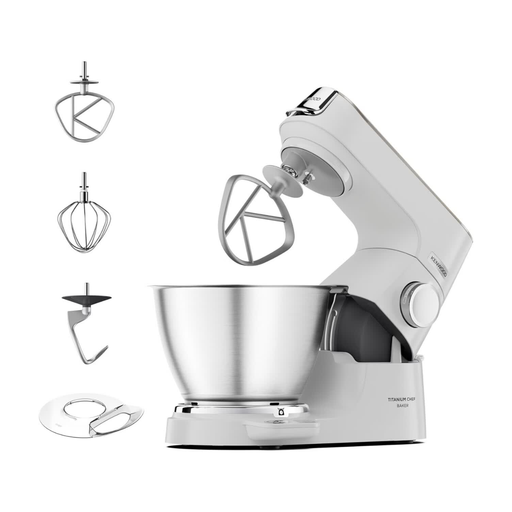
Consider this model if weighing ingredients as you prepare a cake appeals to you. Compare its stated cake-mixture limit with your recipe before planning one large batch.
 No image available
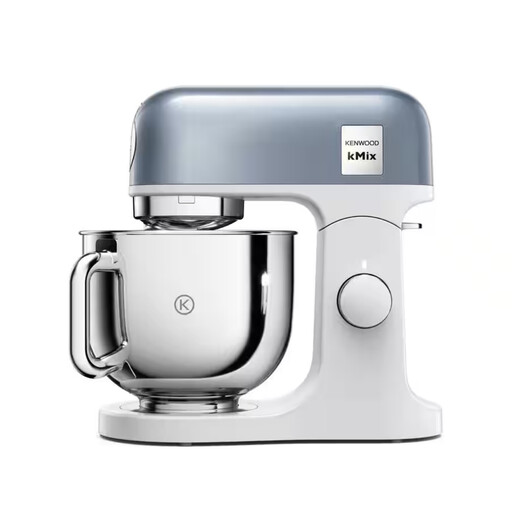
For a larger family cake, compare your batter quantity with the capacity stated for this exact mixer. Confirm the bowl material for this variant if it affects how you plan to handle or clean it.
 No image available
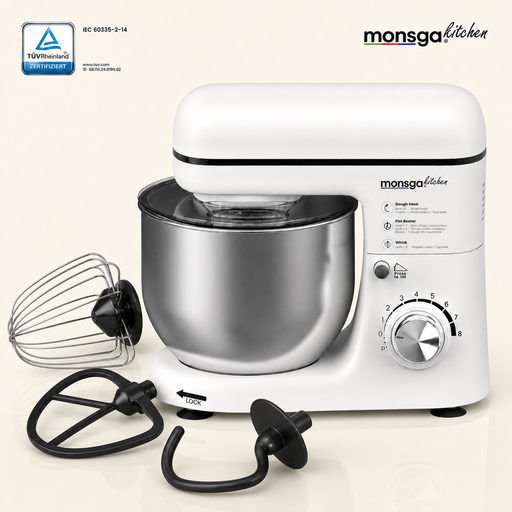
The named 5.0L bowl and eight speed settings may be useful when planning gradual additions to a cake mix. Check the manufacturer’s cake-mixture guidance against your recipe and confirm which mixing tools come with this exact variant.
 No image available
Consider the 4.3L variant if storage space matters more than maximum bowl volume. Its name specifies three bowl tools and 1000W; check the cake-mixture limit against your planned batch.
 No image available
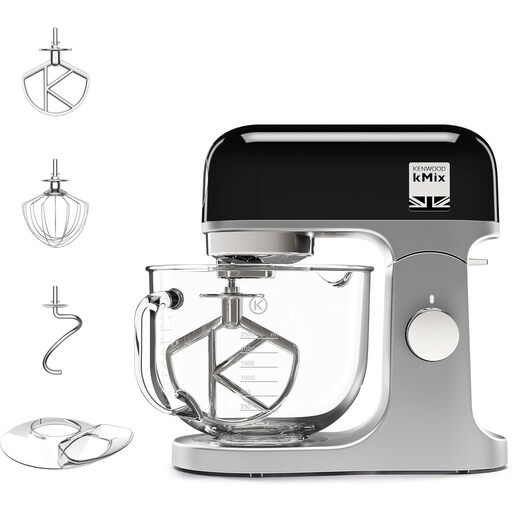
For a family cake, assess the named 5L bowl against the amount of batter you intend to make. The product name specifies a K-beater, whisk and dough hook; also check the cake-mixture limit, dimensions and bowl material for this variant.
Use a paddle or equivalent cake-mixing beater unless your recipe or mixer instructions specify otherwise. Kenwood GB’s red velvet recipe uses a K-beater to mix butter and sugar before gradually adding the dry ingredients.
Not if your recipe fits the capacity of a smaller model. Bosch GB lists up to 2.4kg of cake batter for its 3.8L Series 2; consider a larger mixer when your planned batch or regular baking needs more headroom, checking the exact model’s stated limit rather than converting bowl litres into batter quantity.
Follow the model’s instructions and check which individual parts are dishwasher-safe. Electrical Safety First advises keeping the powered mixer out of water and unplugging it when it is not in use.
In Great Britain, the Electrical Equipment (Safety) Regulations 2016 set requirements before electrical equipment is placed on the market, according to GOV.UK guidance for businesses. As a shopper, check the product information and instructions for the exact mixer rather than treating those business obligations as a certification of an individual listing.