Space-limited biscuit decorators
You make icing for biscuits or occasional celebration bakes, but need to use and store a mixer beneath or near kitchen cupboards. KitchenAid UK identifies its smaller tilt-head models as an option for tight spaces.


Choose a stand mixer with an included whisk, a bowl suited to your usual icing batch and enough room around it to add ingredients and operate the head. A compact tilt-head model suits occasional decorating when storage space is tight; a larger bowl makes more sense if the same machine will regularly handle broader baking, provided its size and weight work in your kitchen.
You make icing for biscuits or occasional celebration bakes, but need to use and store a mixer beneath or near kitchen cupboards. KitchenAid UK identifies its smaller tilt-head models as an option for tight spaces.
You mainly want to whisk icing to a thick, glossy consistency for decorating, rather than choose a machine around large dough batches. Good Food describes that consistency in its iced-biscuit recipe.
You want to make royal icing but also expect to use the mixer for cakes, biscuits or other baking. Bowl capacity and included tools matter alongside the space the machine occupies.
Start with the space in which you will actually operate the mixer, then check the whisk and your usual batch size before deciding whether extra baking capacity earns its place on the worktop.
| Concern | What to check | Who this matters to |
|---|---|---|
| Fit and storage | Measure the worktop or storage position and the clearance needed to raise or operate the head. | If cupboard space is tight, I need to know I can both store the mixer and open it where I will use it. Around 45% of consumers put fit and storage first. |
| Small-batch whisking | Confirm the exact model includes a whisk and check its guidance for your smallest icing batch. | For a few decorated biscuits, I care more about whisking my usual quantity than having a large bowl. Roughly 33% of consumers prioritise small-batch whisking. |
| Broader baking | Compare bowl volume and included tools with the other recipes you regularly make. | If the mixer will also handle cakes and larger batches, I want that wider use to justify the space it takes. About 22% of consumers make broader baking their primary concern. |
A mixer can fit beneath a cupboard yet leave too little room to raise its head, remove the bowl or add ingredients.
Compare the exact model’s dimensions with the position where you will use it, including the clearance above and around the bowl.
Good Food calls for royal icing to be beaten until thick and glossy. Bowl capacity alone does not establish how a particular whisk handles a small quantity.
Check that a whisk is included and ask the manufacturer or retailer about the smallest batch you expect to make.
Bosch GB labels the MUM57830GB as no longer available and the MUMS6ZM00G as currently unavailable. Their specifications can inform a comparison without establishing that either can be bought now.
Check the current listing and the applicable warranty terms for the exact model before deciding.
When royal icing contains raw or lightly cooked egg, sourcing and hygiene matter. The Food Standards Agency warns that no egg can be guaranteed free from Salmonella.
Follow current food-safety guidance for handling the eggs and consider who will eat the icing, particularly if serving vulnerable people.
Its UK range includes 3.3L mini tilt-head and 4.7L Artisan tilt-head models.
Its UK baking range includes kMix and Chef Baker stand mixers.
Bosch GB lists both compact MUM models and larger machines with integrated scales.
These mixers cover compact and mid-size choices for making royal icing alongside other baking. Check the exact model’s whisk, smallest suitable batch and operating clearance against the way you plan to use it.
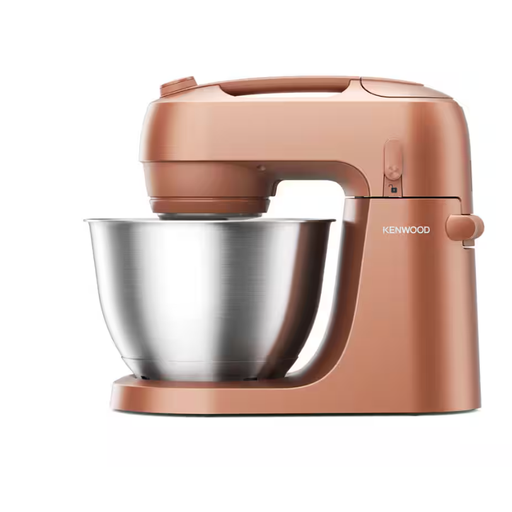 No image available
Consider this for occasional icing where the mixer may need to be moved or stored. Check the included whisk, your smallest batch size and the space needed to operate the head.
 No image available
The stated 4.3L bowl makes this a model to consider if icing is one of several baking tasks. Confirm that its supplied tools suit royal icing and that the mixer fits with room to operate its head.
The product name also specifies 1000W and three bowl tools; wattage alone does not establish suitability for a small icing batch.
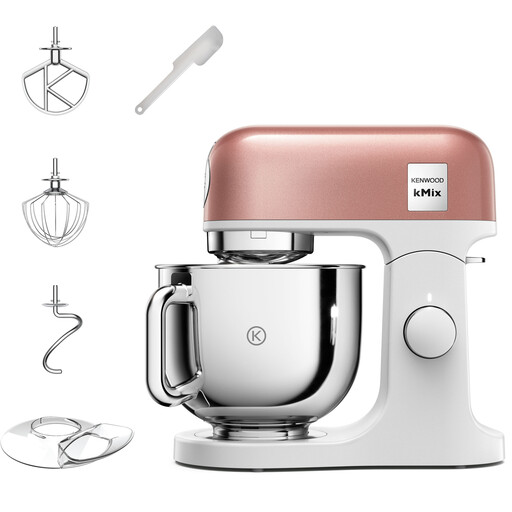 No image available
Consider this if the mixer will serve both royal icing and general baking. Before choosing it for a restricted worktop, confirm the exact dimensions, operating clearance and suitability for your usual icing quantity.
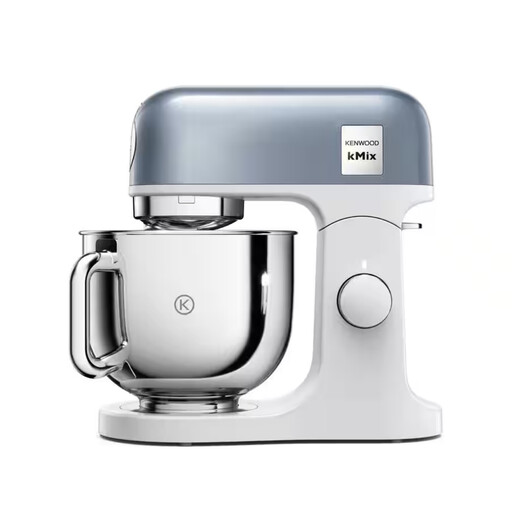 No image available
This is a choice to assess if you want the same mixer for icing and other bakes. Check its size and lifting weight if it will be stored between uses, as well as the clearance needed to raise the head and its suitability for small batches.
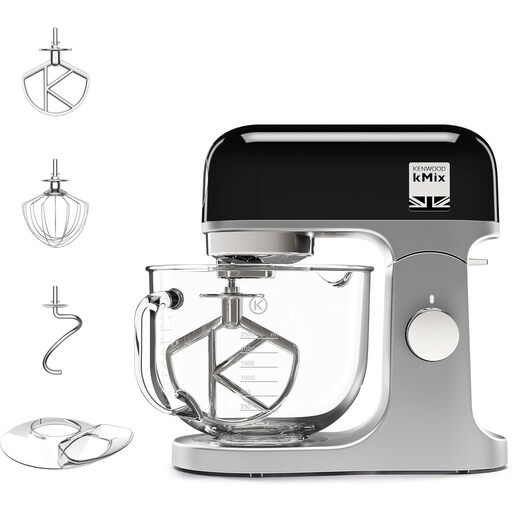 No image available
The stated 5L capacity is worth considering if you also make larger baking batches; for small icing batches, check whether the included whisk works with your usual quantity.
The product name specifies a K-beater, whisk and dough hook. Confirm the bowl material supplied with this exact variant, along with its dimensions and operating clearance.
No. Good Food’s iced-biscuit recipe allows a metal spoon or an electric mixer to beat the icing. A stand mixer is a choice to consider if you make icing repeatedly or also want a machine for other baking.
Measure the width and depth of its intended position, its storage height and the room needed to use it. A tilt-head model also needs clearance above it when the head is raised; compare your measurements with the exact model rather than bowl size alone.
Not on its own. Good Food’s method calls for icing to be beaten until thick and glossy, then adjusted for the intended decoration. Choose bowl capacity for your typical quantity and check whether the supplied whisk suits your smallest batch.
Handle and source the eggs carefully, and consider who will eat the icing. The Food Standards Agency warns that no egg can be guaranteed free from Salmonella; follow its current guidance when preparing raw or lightly cooked egg foods, especially for vulnerable people.