Scone-first small-batch bakers
If savoury scones are your main use, you may prefer the light, quick hand method described by Good Food to setting up a mixer for a modest batch.


For occasional small batches of savoury scones, a stand mixer is not necessary just to bring the dough together: Good Food’s recipe rubs butter into flour by hand or uses a food processor, then combines the dough lightly and quickly. A stand mixer makes more sense if you will also use it for other baking and can confirm that its supplied tool reaches your usual batch; bowl size and maximum capacity alone cannot settle that question.
If savoury scones are your main use, you may prefer the light, quick hand method described by Good Food to setting up a mixer for a modest batch.
If you also make cakes or whisk and knead other mixtures, a compact mixer may justify its worktop space. Check its dimensions against your storage space and whether its tool can reach your usual scone batch.
If the mixer will handle several baking tasks, supplied tools and speed settings may matter more than choosing the smallest appliance. Those features still do not establish how well a particular mixer handles a small scone batch.
Choose when: Scones are the main job and you want to follow Good Food’s published method for rubbing in butter and combining the dough lightly.
Trade-off: Hand mixing is not hands-free; using a food processor means using a separate appliance for the butter stage.
Choose when: Space is limited, but you will also use the mixer for other baking.
Trade-off: A compact bowl does not establish that the supplied tool will pick up your smallest batch.
Choose when: Scones are one of several regular baking jobs and the included tools suit those other recipes.
Trade-off: Broader capacity does not confirm small-batch pickup, and you still need room to use and store the machine.
| Concern | What to check | Who this matters to |
|---|---|---|
| Light, brief mixing | Check the available speed controls and the instructions for the supplied mixing tool; plan to stop once the dough comes together. | If I mainly make scones, I want control over the final combine rather than prolonged kneading. Around 42% of consumers would put dough handling first. |
| Space and small-batch pickup | Compare the machine’s dimensions with your space, then ask whether its tool reaches your usual quantity; do not treat bowl volume as a minimum batch size. | With little room to spare, I need a machine I can store and a tool that engages a modest batch. For around 33% of consumers, space and small-batch practicality come first. |
| Use beyond scones | Check which tools are supplied for your other recipes and the model’s cleaning instructions. | If I regularly bake other things, I want the mixer to earn its place through those tasks too. Broader baking use is the primary concern for around 25% of consumers. |
Kenwood GB, Bosch GB and KitchenAid UK publish bowl sizes or maximum capacities for the models discussed here. Those figures do not establish the smallest amount a supplied tool can pick up.
Ask about the minimum working quantity for the exact mixer and attachment before relying on it for your usual scone recipe.
Good Food’s scone methods call for bringing the dough together lightly and quickly, followed by very brief kneading. Extended machine mixing would work against that method.
If you use a mixer for the final combine, follow its instructions and stop as soon as a soft dough forms.
KitchenAid UK lists accessory compatibility by mixer type and bowl size, so a similar-looking tool is not necessarily a match for your model.
Check the complete mixer model and bowl configuration against the accessory listing before ordering a replacement or additional tool.
Bosch GB describes accessories for its MUMS2VM40G as generally dishwasher-safe. That does not extend to the powered mixer body.
Follow the exact model’s cleaning instructions. Electrical Safety First advises keeping the mixer body out of water and unplugging the appliance when it is not in use.
Kenwood GB lists the Go KZM35.000GR as a compact stand mixer with a 4 L bowl, six speeds and a K-Beater, whisk and dough tool.
Bosch GB presents the Series 2 MUMS2VM40G as a general-purpose mixer with a 3.8 L bowl, seven speeds and a whisk, stirrer and kneading hook.
KitchenAid UK lists the Artisan tilt-head 5KSM125 with a 4.7 L bowl, 10 speeds, a wire whisk, dough hook and paddle.
These stand mixers are options to consider if you also bake beyond scones. Before choosing one for a modest scone batch, check whether its supplied mixing tool can reach your usual quantity.
 No image available
Consider this if you want a mixer for baking tasks beyond scones. Its title specifies a 4.3 L bowl, 1000 W and three bowl tools; check that the supplied mixing tool reaches your usual small batch.
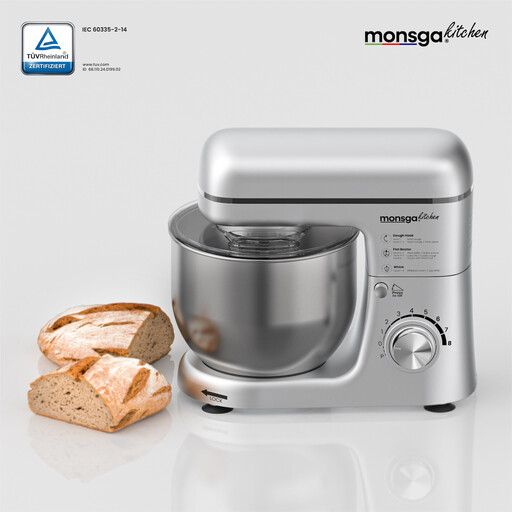 No image available
Consider this if you want the listed whisk and dough hook for other recipes as well as scones. The title specifies 1000 W peak power, eight speed settings and a splash guard; confirm small-batch pickup with the supplied beater rather than judging by the 5.0 L bowl.
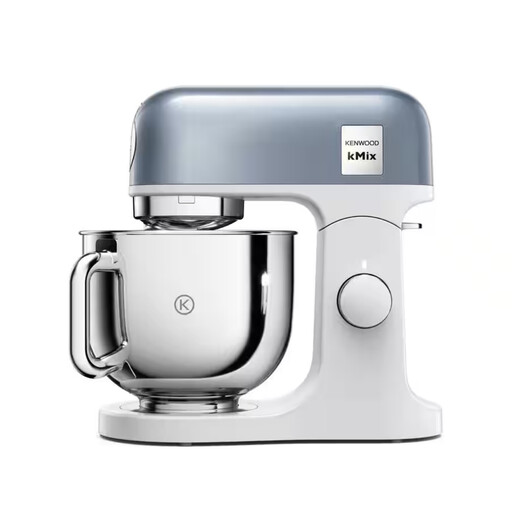 No image available
Consider this if whisking and kneading other mixtures are part of your baking plans. Check the supplied tools and whether its mixing beater can engage your usual scone quantity before choosing it for small batches.
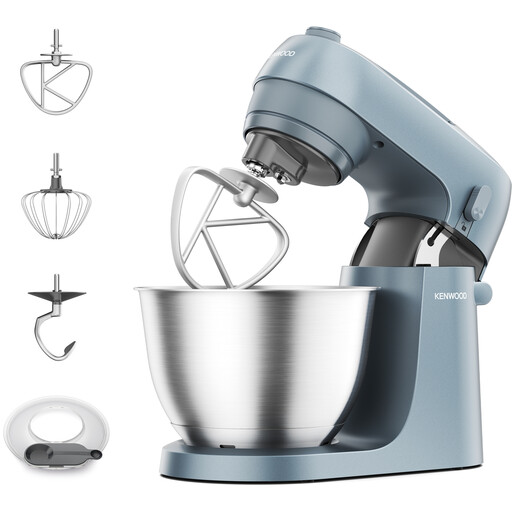 No image available
Consider this compact-model option if storage matters and you also bake beyond scones. Confirm the minimum batch its supplied beater can mix; the title says blue while the description identifies the colour as grey, so check the delivered variant if colour matters.
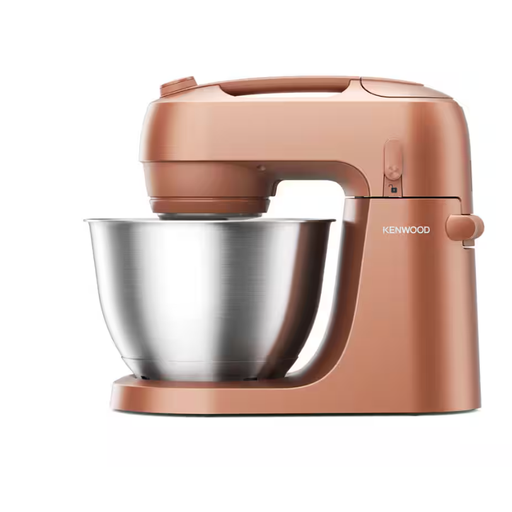 No image available
Consider this compact-option listing if you need to store the mixer between baking sessions and will use it for other tasks too. Check whether its supplied K-beater reaches your usual small scone batch before relying on it for that job.
No: Good Food’s savoury-scone recipe uses fingertips or a food processor for the butter stage, then a cutlery knife to bring the dough together. A stand mixer is easier to justify if you will use it for other baking and can confirm it handles your usual batch.
Not necessarily. Bowl volume and maximum capacity do not tell you the smallest amount an attachment can reach. Ask the manufacturer or retailer about the exact model, tool and quantity you intend to use.
Follow the manual for the exact mixer and its removable tools. Bosch GB describes accessories for the MUMS2VM40G as generally dishwasher-safe, while Electrical Safety First advises keeping the powered mixer body out of water and unplugging the appliance when it is not in use.
Stop using it, unplug it and contact the retailer or manufacturer rather than continuing to mix. Keep the appliance and its lead away from water.