Small-batch lunchbox bakers
If you usually make one modest batch, think about where the mixer will live and how easily you can set it up and clean it. A large stated dough capacity is less useful to you than a machine that fits your routine.


For savoury lunchbox scones, choose a stand mixer with a suitable flat beater or paddle, a controllable low speed and a bowl that works for your usual batch. A compact machine may be easier to accommodate if you bake small batches occasionally; a larger mixer makes more sense when you also prepare bigger batches or other recipes. Whichever you choose, stop mixing once the dough comes together rather than using the mixer to knead it.
If you usually make one modest batch, think about where the mixer will live and how easily you can set it up and clean it. A large stated dough capacity is less useful to you than a machine that fits your routine.
If you want help combining ingredients without overworking the dough, look for a suitable beater and control over the early mixing stage. Kenwood’s scone recipe uses a K-beater, while the National Trust advises combining cheese-scone dough only roughly.
If scones are one of several things you regularly bake, a larger bowl and the right accessories may matter more. Check the tools supplied with the exact model and whether its size suits the space available.
Start with how briefly you need to mix the dough, then judge bowl size against your usual batch, storage space and any baking you do beyond scones.
| Concern | What to check | Who this matters to |
|---|---|---|
| Gentle mixing | Check for a supplied flat beater, K-beater or paddle and a controllable low speed. Plan to stop once the dough combines. | If I care most about scone texture, I want help bringing the ingredients together without kneading the dough. Around 44% of consumers put gentle mixing first. |
| Small-batch practicality | Compare the mixer’s external dimensions and weight with your storage space, and check guidance for your smallest recipe quantity. | When I make a modest lunchbox batch, I need a mixer I can store and set up without difficulty. Compact everyday use is the primary concern for around 33% of consumers. |
| Wider baking use | Compare bowl size, supplied tools and optional-attachment compatibility for the exact model; maximum dough capacity does not establish small-scone-batch suitability. | If I bake larger batches or use a mixer for other recipes, I need it to do more than the occasional tray of scones. Around 23% of consumers prioritise that wider use. |
Kenwood’s scone recipe specifies a K-beater, and the National Trust advises against overworking cheese-scone dough. A large yeast-dough capacity does not tell you how a small scone batch will turn out.
Check the supplied beater and start gently. Stop the mixer when the ingredients have combined, then shape the dough by hand.
A bowl can suit your largest planned batch while the whole appliance is awkward to store or move for a quick bake.
Measure the intended cupboard or counter position, including clearance to lift the head or lower the bowl, and check the model’s external dimensions and weight.
A manufacturer’s stated cake-mixture or yeast-dough maximum describes a different task from combining a small quantity of savoury scone dough.
Use maximum capacities to assess larger recipes, but check the exact mixer’s tools and guidance against the smallest batch you intend to make.
A brand to consider when storage space is a priority. Bosch lists a 3.9 L bowl and seven speed settings for its MUM58259GB, while its Series 2 range includes compact models.
A brand to consider if scones are part of broader baking. Kenwood lists a 6.7 L bowl and supplied K-beater for the Chef XL KVL4100W, and its scone recipe uses a K-beater.
A bowl-lift option to consider for regular larger batches. KitchenAid lists a 6.6 L bowl and 11 speeds for its Artisan 5KSM70SHX.
These stand mixers are options to consider for savoury scone dough and other household baking. Check the supplied mixing tool and the fit for your usual small batch before choosing a model.
 No image available
Consider this model if you want to compare a 4.3 L bowl with the space available for everyday lunchbox baking. Its product name specifies 1000 W and three bowl tools; check which beater is supplied and whether it suits your smallest scone batch.
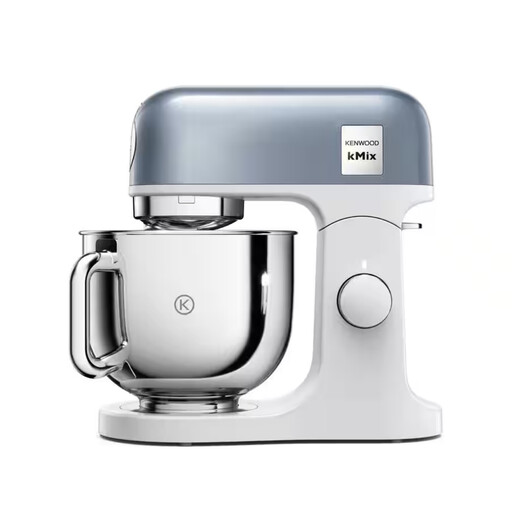 No image available
Consider this model if you also bake beyond lunchbox scones. Confirm the supplied beater, how you would control a brief mix and whether your smallest recipe quantity works in its bowl; check the weight and storage space if you would move it for each bake.
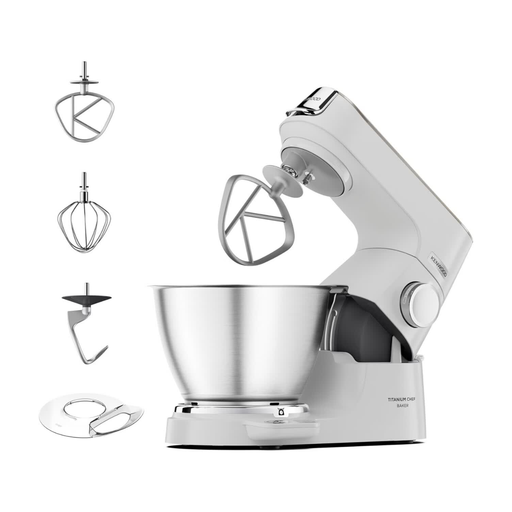 No image available
This model may suit someone who wants a mixer for regular baking as well as scones. Check that its supplied beater suits brief scone mixing, confirm the smallest batch you plan to make, and measure the space where you would keep it.
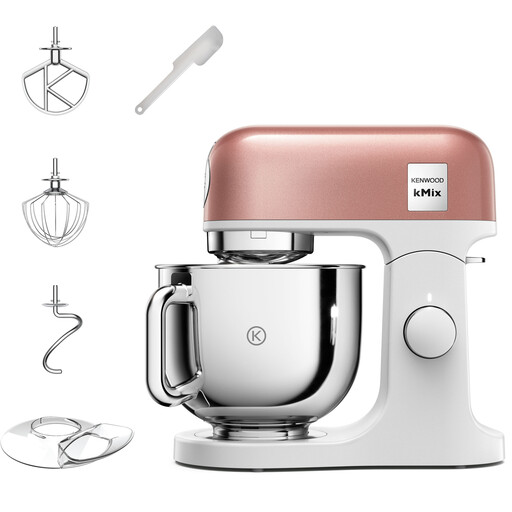 No image available
Consider this variant if you want to assess a kMix for scones and other recipes. Confirm that the tools supplied with this exact variant include a suitable flat beater, then check its small-batch guidance and storage dimensions.
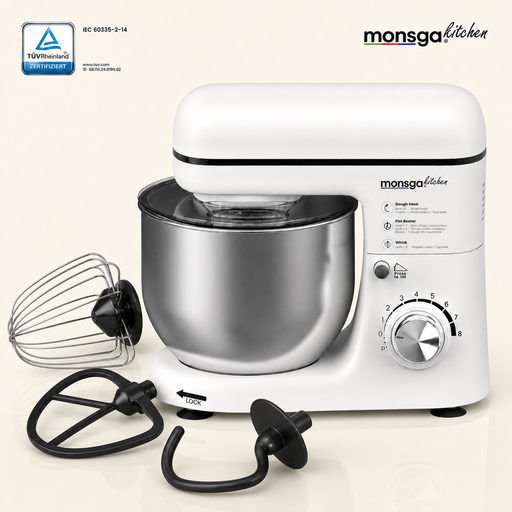 No image available
Consider this model if you also need a mixer for larger household baking tasks. Its product name specifies a 5.0 L bowl, eight speed settings and 1000 W peak power; confirm the exact beater supplied and whether the lowest usable speed and smallest batch suit your scone recipe.
Yes, as a brief mixing aid rather than a way to knead the dough. Kenwood’s scone recipe uses a K-beater on speed 1 to make coarse crumbs, while the National Trust advises combining cheese-scone dough roughly and avoiding overworking it. Follow the timings and controls appropriate to your recipe and mixer.
A dough hook is not the primary tool specified in Kenwood’s scone recipe; it calls for a K-beater. Check that the exact mixer supplies a suitable flat beater or paddle, and follow its recipe and manual guidance.
Choose around the batch you actually make and any larger recipes you plan to use the mixer for, rather than treating a bigger bowl as a scone-texture advantage. Check the selected model’s guidance for small quantities as well as its maximum stated capacity.
Clean the bowl and tools according to the exact model’s manual, particularly when preparing food for someone with an allergy. Bosch says many of its kitchen-machine attachments are dishwasher-safe but advises checking the manual for the particular part.
Check the exact model’s guarantee terms, manuals and route to spare parts or repairs before buying, especially if you expect frequent use. Bosch provides service and spare-parts information for the MUM58259GB model; support for another model should be checked separately.