Frequent buffet baker
If you make several trays at a time, compare each mixer’s stated food capacity with your recipe quantity. A larger bowl may reduce split batches, but it also needs space on the worktop and in storage.


Choose a stand mixer by the amount of shortbread dough you need to make per batch, then check that it has a suitable paddle or flat beater and controllable low speeds. A larger bowl-lift machine makes more sense for frequent large sessions if you have room for it; a smaller machine may be easier to store but could mean splitting the dough. Bowl volume alone does not establish how much shortbread a mixer can handle.
If you make several trays at a time, compare each mixer’s stated food capacity with your recipe quantity. A larger bowl may reduce split batches, but it also needs space on the worktop and in storage.
If you repeat the same recipe across batches, weighing ingredients and controlling the mixing stage may matter as much as bowl size. The Great British Bake Off’s shortbread method calls for mixing only until the flour forms large crumbs.
If the mixer comes out mainly for gatherings, check where it will live between uses and whether you can lift it comfortably. You will still need a suitable beater for the shortbread method you follow.
Start with the weight of dough your buffet recipe requires, then consider mixing control and where the machine will be kept. Manufacturers describe capacity in different ways, so a bowl’s litre figure is not a shortbread-dough limit.
| Concern | What to check | Who this matters to |
|---|---|---|
| Batch capacity | Compare your recipe quantity with the exact model’s relevant stated food capacity; allow room for the mixture to move. | If I am making several trays, splitting every batch adds preparation and cleaning time. Around 46% of consumers could put batch capacity first. |
| Texture and repeatability | Check for a suitable paddle or flat beater and controllable low speeds; consider integrated scales if you weigh repeated batches. | When I add flour, I want enough control to stop at large crumbs rather than mix until smooth. For around 36% of consumers, texture and repeatability could be the primary concern. |
| Storage and upkeep | Measure the storage space and overhead clearance; check the exact tools’ care instructions and model-specific support terms. | If I bake for gatherings only occasionally, I need a mixer I can put away and bring out without difficulty. Storage and upkeep could come first for around 18% of consumers. |
KitchenAid gives a cookie count for one large mixer, while Bosch and Kenwood use mixture or ingredient weights for other models. Those figures cannot be converted directly into a shortbread batch size.
Work out your recipe’s ingredient weight, compare it with guidance for the exact mixer and leave working room in the bowl.
Unexpected split batches also take more preparation and cleaning time.
The Great British Bake Off’s shortbread recipe uses a paddle and says to stop when the flour mixture forms large breadcrumbs. Continuing to knead is not part of that method.
Choose a suitable beater and speed control, then follow your recipe’s stopping point rather than waiting for a smooth dough.
Kenwood GB lists a 5L bowl for KVC65.001WH, while Joybuy describes a 4.6L bowl for a listing bearing that model code. The difference matters when you are choosing around batch size.
Before ordering that model, confirm the bowl size and included accessories against the manufacturer’s information, and ask the seller to clarify the listing.
A bigger machine may suit repeated batches but can be awkward if it must be lifted out of storage or lacks clearance for its head and attachments.
Measure the intended worktop and storage position, including overhead clearance, and check the exact model’s dimensions and weight.
Its 4.3L Classic tilt-head 5K45SS and 6.6L Artisan bowl-lift 5KSM70SHX illustrate different choices for storage and batch planning.
The Titanium Chef Baker KVC65.001WH is a reference point for bakers interested in direct-to-bowl weighing alongside a mid-size bowl.
Bosch’s stand-mixer range offers different sizes; its Series 6 is worth examining if integrated weighing matters to your workflow.
These compact and mid-size stand mixers are choices to compare if worktop space, storage or repeated home batches shape your decision. Check each machine against your shortbread recipe quantity; its bowl volume does not establish a shortbread-dough limit.
 No image available
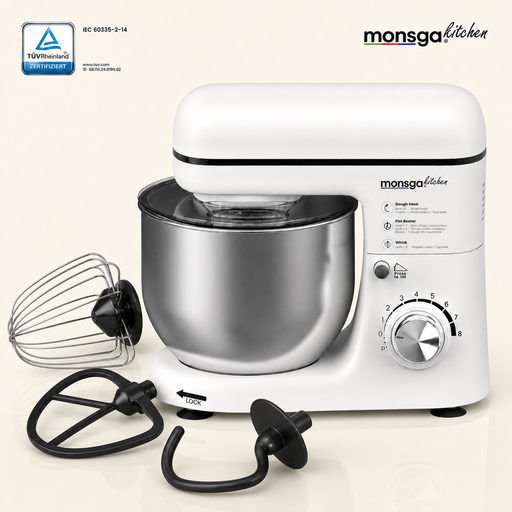
Consider this model if you need to put the mixer away between buffet sessions. Its product name specifies a 4.3L bowl, 1000W and three bowl tools; check which tool your shortbread recipe calls for and whether your planned batch fits.
 No image available
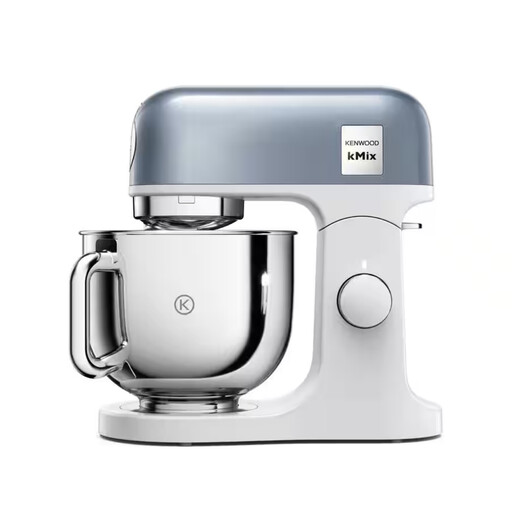
Consider this model if you want a beater for a shortbread recipe and room to assess repeated batches. Its product name specifies a 5.0L stainless-steel bowl, beater, whisk, dough hook, splash guard and eight speed settings; confirm a suitable recipe quantity rather than treating bowl volume as a dough limit.
 No image available
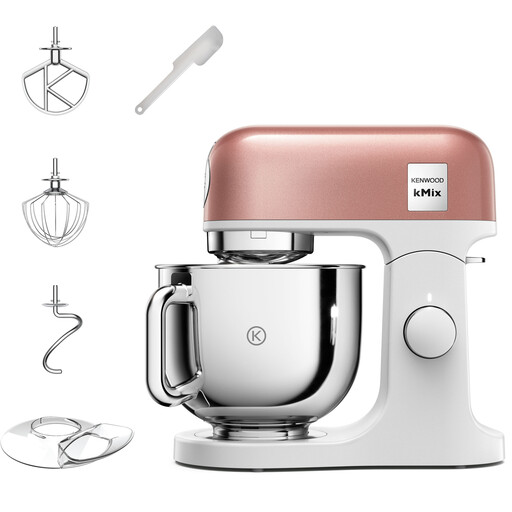
If you are considering a mid-size mixer for repeated shortbread batches, check this variant’s supplied beater and speed controls against your recipe. Also confirm the quantity it can mix and whether its weight suits your storage plans.
 No image available
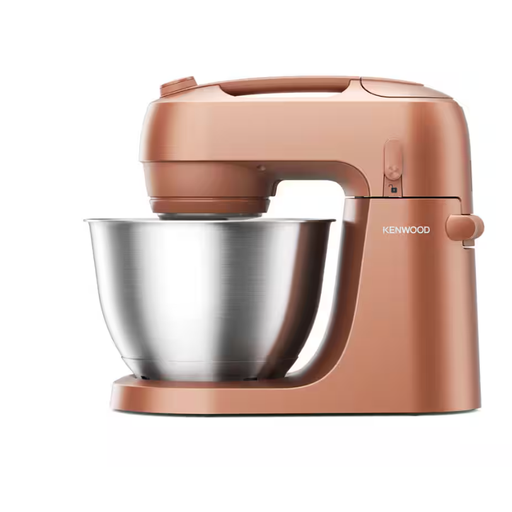
Consider this variant if careful mixing control is important to your shortbread method. Confirm its supplied beater, tool-care instructions and suitable batch quantity before deciding whether it fits your buffet workflow.
 No image available
If the mixer must be stored between occasional buffet sessions, check whether this model fits the space where you intend to keep it. Confirm that its supplied beater and batch guidance suit your shortbread recipe before ordering.
Use a paddle or flat beater when your recipe specifies one. The Great British Bake Off’s shortbread method uses a paddle and stops mixing the flour when large breadcrumbs form; a dough hook is not its default tool.
Base the choice on your recipe quantity and the exact mixer’s relevant capacity guidance, not bowl litres alone. KitchenAid states cookie counts for one model, while Bosch and Kenwood give other mixture or ingredient measures; none of those figures automatically sets a shortbread-dough limit.
Check the instructions for the exact model and tool. KitchenAid says the bowl, paddle and dough hook of its 4.3L Classic 5K45SS are dishwasher-safe, while its wire whisk should be washed in warm soapy water.
For delivery in Great Britain, check the listing’s model, manufacturer information, instructions and plug details against the product you intend to buy. The Office for Product Safety & Standards explains that the Electrical Equipment (Safety) Regulations 2016 set requirements for electrical equipment placed on the Great Britain market; Northern Ireland has separate guidance.
Yes, the stated cover can differ by model and by what part it covers. KitchenAid lists a two-year guarantee for 5K45SS and a five-year guarantee for 5KSM70SHX, while Kenwood lists a ten-year motor guarantee for KVC65.001WH. Check the terms and exclusions for the exact product before ordering.