Regular pie and tart bakers
If shortcrust is a frequent task, the beater and its recommended crumb-making method deserve close attention. A pastry-specific attachment is useful to consider only after checking that it fits your exact mixer.


For picnic shortcrust, start with a mixer and beater suited to combining fat and flour into crumbs, then choose a bowl that fits your usual recipe quantity and a machine you can store comfortably. Kenwood's shortcrust method uses a K-Beater, while KitchenAid offers a pastry beater for selected tilt-head mixers; a dedicated attachment is worth considering only if it fits your model and you will use it regularly.
If shortcrust is a frequent task, the beater and its recommended crumb-making method deserve close attention. A pastry-specific attachment is useful to consider only after checking that it fits your exact mixer.
If the mixer will also make cakes or biscuits, check its supplied tools as well as where it will live between bakes. An accessible storage spot may matter more to you than the largest bowl on offer.
If you make multiple pies or tarts in one session, compare your recipe quantities with model-specific capacity guidance. Integrated weighing may also be useful, but bowl size and machine dimensions still need to fit your kitchen.
Decide how you will make the pastry crumbs before comparing bowl sizes. Then check whether the mixer suits both your usual batch and the space available to use and store it.
| Concern | What to check | Who this matters to |
|---|---|---|
| Pastry beater and method | Check the supplied beater and the recipe or manual's instructions for reaching the crumb stage. For a separate pastry beater, confirm compatibility with the exact mixer. | I make shortcrust regularly and want a suitable way to work butter into flour without assuming the dough hook is the right tool. Around 43% of consumers put pastry tooling and control first. |
| Storage and everyday use | Measure the storage spot and operating clearance; check which general-purpose tools are supplied. | If I bake occasionally, the mixer needs to be easy to get out and useful for other recipes too. Storage and versatility come first for around 29% of consumers. |
| Batch size and weighing | Compare usable bowl volume and any pastry-specific capacity with your recipe; check whether the exact model has integrated scales. | Several picnic bakes in one session make recipe quantity and weighing convenience more important to me. For around 28% of consumers, batch preparation is the primary concern. |
KitchenAid describes its 5KSMPB5W pastry beater for selected 4.3 L, 4.7 L and 4.8 L tilt-head mixers. A matching bowl size alone does not establish compatibility with every model or with a bowl-lift machine.
Check the full mixer model number and KitchenAid's compatibility information before choosing the attachment.
Cake-mixture and yeast-dough figures describe different preparations. Kenwood gives a flour-for-pastry capacity for its Chef KVC3100W, but that figure belongs to that specific model.
Compare your recipe with the exact mixer's pastry guidance where available; do not convert a cake or yeast-dough rating into a shortcrust allowance.
Capacity is useful only if the mixer can be stored and operated where you intend to keep it. Bosch's stand-mixer buying guidance recommends an accessible storage location and matching bowl size to the quantities you make.
Measure the intended spot, including the clearance needed to use the mixer and its attachments.
For picnic food intended for babies or young children, mixer choice does not replace clean preparation and appropriate cooling and storage.
Plan those steps separately. NHS guidance for children's food advises cooling cooked food as quickly as possible, ideally within 1 to 2 hours, before putting it in the fridge or freezer.
Relevant if you want to follow a documented K-Beater shortcrust method while comparing different mixer sizes.
Relevant if a separate, pastry-specific beater appeals to you and you can establish an exact mixer match.
Relevant if bowl volume, weighing features and storage are prominent parts of your decision.
These stand mixers are relevant to making shortcrust with a suitable general-purpose beater and to other picnic baking. Check the exact model's supplied tools and pastry instructions before relying on it for the crumb-making stage.
 No image available
Consider this model if you want to plan a measured pastry batch as well as make other bakes. Check the exact model's pastry-flour capacity against your recipe rather than treating a flour figure as the weight of finished dough.
Measure your storage space and operating clearance before ordering.
 No image available
This model is worth considering if you want a mixer for occasional shortcrust and other baking tasks. Its name identifies a 4.3L bowl and three bowl tools; check which beater is supplied and follow the model's pastry guidance.
Check your recipe quantity against the exact model's instructions rather than using a general dough limit as a shortcrust limit.
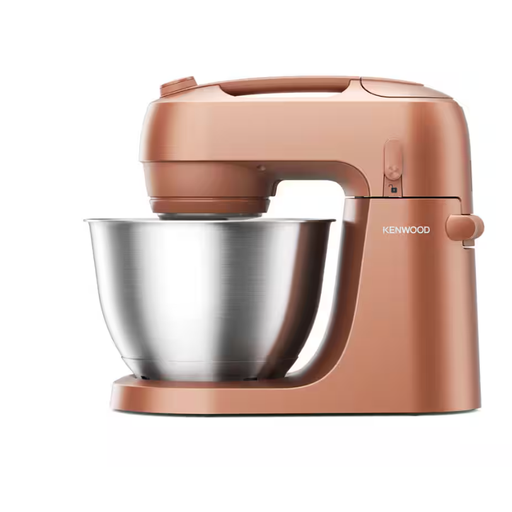 No image available
Consider this mixer if putting it away between occasional bakes is central to your choice. Check its measurements against your storage spot and allow room to operate it.
For shortcrust, confirm the supplied beater and suitable recipe quantity in the exact model's guidance.
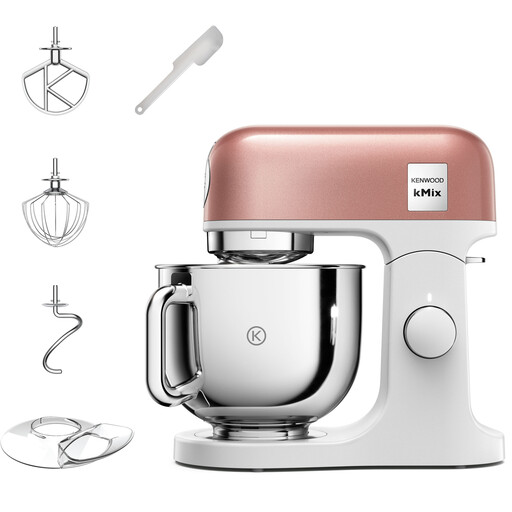 No image available
This model may suit someone choosing one mixer for pastry preparation and other baking. Check its supplied beater and the shortcrust method recommended for this exact model.
Compare your recipe quantity with model-specific guidance, and measure the intended storage space before buying.
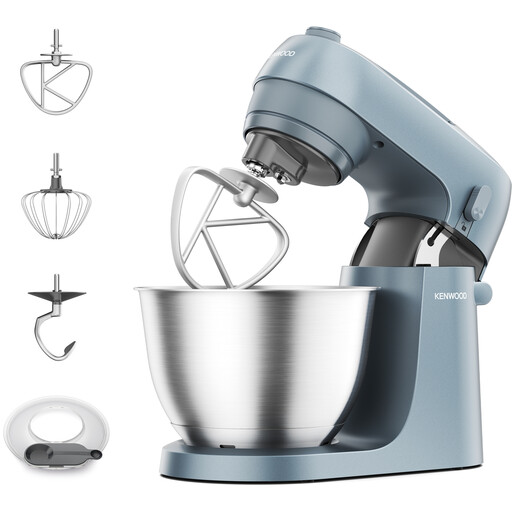 No image available
Consider this model if storage space and smaller picnic bakes shape your decision. Before choosing it for shortcrust, check the included beater's shape and the exact model's instructions for making pastry crumbs.
Make sure your recipe quantity and intended storage spot suit the machine.
Do not assume a dough hook is the tool for combining fat and flour. Kenwood GB's shortcrust recipe uses a K-Beater at speed 2 until crumbs form, then brings the dough together on the work surface; follow the instructions for your own mixer and recipe.
No: Kenwood's cited shortcrust method uses a K-Beater. If you make pastry regularly and are considering KitchenAid's 5KSMPB5W pastry beater, check that your exact mixer is among the selected 4.3 L, 4.7 L or 4.8 L tilt-head models KitchenAid specifies.
Choose around the amount you make in one session, not bowl volume alone. Bosch's buying guidance says to match bowl size to your quantities; for shortcrust, also check the exact mixer's pastry-capacity basis and whether you have room to use and store it.
A private picnic does not by itself establish that you are running a food business. If you start or take over a food business in the UK, the Food Standards Agency says you must register with your local authority at least 28 days before trading or food operations start; ask the local authority about an event involving sales or regular supply if you are unsure how your activity is classified.
Treat food handling as a separate task from choosing a mixer. For food intended for babies or young children, NHS guidance advises clean preparation surfaces and utensils, separation of raw meat and eggs from other foods, and cooling cooked food as quickly as possible, ideally within 1 to 2 hours, before refrigerating or freezing it.